
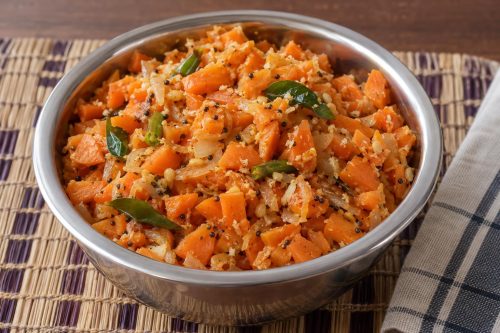
Carrot Poriyal is a simple South Indian stir fry that fits naturally into an everyday Tamil meal. The method follows the classic poriyal approach: a quick tempering of mustard seeds, urad dal and jeera, followed by onion and green chillies, then the carrot cooked covered on low flame until just soft. Grated coconut goes in right at the end. The result is lightly spiced and pairs well with steamed rice, Carrot Sambar or rasam. It is also one of the more forgiving poriyal recipes to begin with if you are new to South Indian cooking.
About the Recipe
The recipe uses four medium carrots cut into small, even pieces so they cook at the same rate. Covering the pan and adding a small splash of water does the work of steaming the carrots through without making them mushy.
The tempering sequence matters here. Mustard seeds go in first and must splutter before anything else is added. Urad dal follows and needs to turn light brown before the onion goes in. Grated coconut is stirred in only after the pan comes off the flame, so it stays fresh.
Why You Will Love This Recipe
Only a little effort is needed in making this poriyal. Four carrots, one onion, a few pantry staples and about 25 minutes of cooking time. There is no grinding, no soaking and no long list of spices to track down.
The grated coconut at the end lifts the dish without overpowering the carrot. If you already cook other poriyal recipes like Vazhaipoo Poriyal or Masala Beans Poriyal, the technique here is nearly identical, so there is very little new to learn.
Cooking Tips
A common beginner mistake is adding the carrot before the onion has softened. Raw onion underneath the carrot will stay sharp and undercooked. Give the onion a proper fry until it turns light brown before the carrot goes in.
Keep the water to just a small handful of sprinkles. Too much turns this into a watery vegetable dish rather than a dry stir fry. Check the carrot after about five minutes of covered cooking and press a piece with a spoon to judge doneness.
Top Tips
- Cut carrot pieces to a similar small size so they all cook through at the same time.
- Wait until the mustard seeds fully splutter before adding urad dal. Adding dal too early means the mustard seeds will not pop properly.
- Fry urad dal until it is a light golden brown, not dark brown. Dark dal turns bitter.
- Add only a small sprinkle of water before covering the pan. The carrot releases some moisture on its own as it cooks.
- Stir in grated coconut only after removing the pan from the flame so it does not dry out or turn greasy.
- If you prefer carrot poriyal without coconut, it still works well. The tempering and onion carry enough flavour on their own.
Serving and Storing Suggestions
Serve Carrot Poriyal as a side dish with steamed rice and sambar or rasam. It also works alongside a simple dal and chapati.
Leftovers keep well in a covered container in the refrigerator for up to two days. Reheat in a pan on low flame with a few drops of water to loosen it slightly. Avoid microwaving with a lid on, as the coconut can turn slightly rubbery. Do not freeze this dish as the texture of the carrot changes on thawing.
Similar Recipes
Nutrient Benefits
Carrots are a good source of beta carotene, which the body converts to vitamin A, and they also provide dietary fibre and potassium. Urad dal adds a small amount of protein and iron. The dish is cooked in just two teaspoons of oil, so it sits lightly as an everyday side.

Carrot Poriyal
Ingredients
- 4 , washed, scraped, cut into small pieces Carrot
- 1 , chopped Onion
- 4 , chopped Green Chilies
- 2 tblsp, grated Coconut
- Curry Leaves - few
- 2 tsp Oil
- 1/2 tsp Mustard
- 1 tsp Urad dal
- 1/2 tsp Jeera
- Asafoetida powder - a pinch
- Salt as per taste
Instructions
- Heat oil in a pan over medium flame
- Fry the mustard seeds till it starts to splutter.
- Add the urad dal, jeera, asafoetida powder
- Fry till urad dal turns light brown.
- Add chopped onion, green chillies along with curry leaves.
- Fry onion till light brown.
- Add carrot pieces and mix well.
- Add salt, sprinkle a handful of water and cover with a lid.
- Cook in low flame till the carrot is soft.
- Add coconut and mix well and remove to a serving bowl.
- Serve.
Sign up for our newsletter
Add Awesome Cuisine as a Preferred Source

Frequently Asked Questions
Can I make carrot poriyal without coconut?
Yes. The dish works without coconut. The tempering with mustard seeds, urad dal, jeera and the fried onion already gives it enough flavour. Simply skip the coconut at the end and serve as usual. Several home cooks make it this way when fresh coconut is not available.
Why does my carrot poriyal turn out watery?
This usually happens when too much water is added before covering the pan. The recipe calls for just a handful of water, roughly one to two tablespoons. The carrot also releases some of its own moisture as it cooks on low flame. If the dish looks wet when you lift the lid, cook it uncovered on medium flame for a minute or two to let the excess moisture evaporate.
How small should I cut the carrot pieces?
Small cubes or short thin pieces work best, roughly one centimetre in size. If the pieces are too large they will take longer to cook and may stay hard in the centre while the outside softens. Uniform size is more important than the exact shape, so whether you dice or cut into thin rounds, keep them consistent.
Can I skip the urad dal or jeera if I do not have them?
Urad dal is part of the standard South Indian tempering and gives the dish a faint nuttiness when it turns golden. You can leave it out if needed, but the texture and flavour will be slightly different. Jeera can also be skipped without affecting the overall dish too much. Mustard seeds and curry leaves are the two elements worth keeping if possible, as they define the base character of the poriyal.
What is the best way to check if the carrot is cooked?
Press a piece of carrot against the side of the pan with a spoon. It should give way easily without crumbling or turning to mush. Alternatively, pick up a piece and press it between your fingers. It should be soft all the way through but still hold its shape. If it still feels firm at the centre, cover and cook for another two to three minutes on low flame.


Good one. As mentioned by Devesagayam – boiling carrot in cooker/oven prior to cooking it on kadai is the best option.