Kesar Sandesh is a sweet delight that uses saffron to create a two-tone layered confection. The cheese, called chenna, is made fresh by curdling full cream milk with lemon juice. The texture of the final sweet depends almost entirely on how well the cheese is drained and kneaded, so those two steps are worth taking seriously.
Once the cheese is smooth and cooked briefly with sugar, one half is coloured a deep yellow with dissolved saffron. The two portions are then layered on a buttered tray and left to set before cutting into squares. If you have made paneer before, the curdling process here is identical and you will feel right at home.
About the Recipe
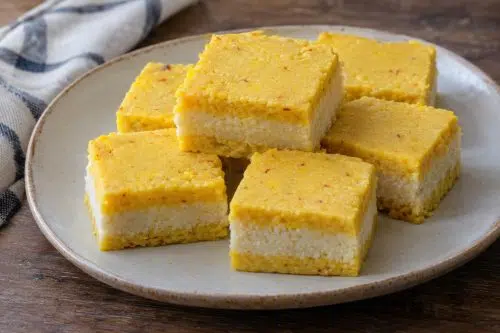
This kesar sandesh is built around alternating yellow and white layers. The yellow comes from saffron that is dry-roasted, pounded fine and dissolved in hot milk before being mixed into one portion of the cooked cheese.
The cheese itself is made by boiling full cream milk and adding lemon juice to curdle it. After draining through cheesecloth for 20 to 30 minutes, the cheese is kneaded with powdered sugar and cooked in a heavy pan for 10 to 15 minutes until it thickens and turns glossy. The mixture is then divided, one half coloured with saffron, and the two portions are layered on a buttered tray to set.
Why You Will Love This Recipe
Making the chenna yourself gives you real control over the texture. Shop-bought sandesh can be grainy or too sweet, but when you knead the fresh cheese thoroughly, the result is noticeably smoother.
The layered presentation also looks more involved than it actually is. Once the cheese is cooked and divided, assembling the layers takes only a few minutes. The saffron colour sits vividly against the white layer, so the cut squares look attractive on a platter without any extra garnish.
Cooking Tips
The most common beginner mistake is under-draining the cheese. If the cheesecloth is not hung for the full 20 to 30 minutes, the mixture will be too wet and will not thicken properly in the pan.
A second failure point is over-cooking the cheese-sugar mixture. Pull it off the heat as soon as it looks glossy and holds its shape slightly when stirred. Cook it too long and it will turn rubbery once cooled.
Use a heavy-bottomed pan throughout to prevent the mixture from scorching at the base.
Top Tips
- Roast the saffron in a completely dry pan on low heat for no more than 30 seconds before pounding, otherwise it can turn bitter.
- If the milk does not curdle after the first addition of lemon juice, add one more tablespoon and stir gently. Do not add all the lemon juice at once.
- Rinse the cheese under the tap while it is still in the cheesecloth to remove the lemon flavour before hanging it to drain.
- Knead the drained cheese on a clean surface until it is completely smooth and free of grains before adding the sugar. Graininess at this stage will not disappear during cooking.
- Butter the tray lightly before spreading the layers so the set sandesh lifts out cleanly when you cut it.
- Let the layered mixture cool completely at room temperature before cutting into squares. Cutting while warm will cause the layers to slip.
Serving and Storing Suggestions
Arrange the cut squares on a flat platter and serve at room temperature or lightly chilled. Kesar Sandesh keeps well in a covered container in the refrigerator for up to two days. Beyond that the texture begins to dry out.
Do not freeze the sandesh as the cheese tends to become crumbly once thawed. Bring refrigerated pieces to room temperature for about 10 minutes before serving so the saffron flavour comes through more clearly.
Similar Recipes
Nutrient Benefits
Full cream milk contributes calcium and protein to each piece of sandesh. Because the whey is drained away during chenna-making, the final sweet retains the protein from the curd solids. Powdered sugar is the main source of energy in the recipe. Saffron is used in a small quantity, so its role here is flavour and colour rather than nutrition.
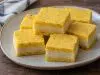
Kesar Sandesh
Ingredients
- 1/2 tsp Saffron
- 1 1/2 cups Full Cream Milk
- 4 tbsp Lemon Juice
- 1/2 cup, powdered Sugar
Instructions
- Roast the saffron in a dry pan and pound to a fine powder.
- Dissolve in 2 tbsp of hot milk. Keep aside.
- Heat the full cream milk in a pan over a high heat.
- Bring to a frothing boil, stirring continuously.
- Reduce the heat and add the lemon juice to curdle the milk.
- If the milk does not curdle, then add 1 more tbsp of lemon juice.
- Remove from the heat and set aside to cool.
- Pour the cheese-whey mixture into a moist cheesecloth.
- Pick up the cheesecloth by its corners, twist it loosely just to seal the cheese inside and rinse under the tap for a few minutes.
- Hang the cloth for 20 to 30 minutes to allow the excess water to drain.
- Remove the cheese on a clean work surface and crumble till it becomes fluffy and even.
- Blend in the sugar and knead till smooth and grainless.
- Transfer the cheese-sugar mixture to a heavy bottomed pan.
- Cook for 10 to 15 minutes until the mixture becomes a little thick and glossy.
- Divide the mixture into two portions.
- Mix the dissolved saffron into one portion till it turns yellow.
- Divide the yellow cottage cheese mixture into 2 portions again.
- Spread three alternate layers of yellow, white and yellow mixture on a buttered tray to form a 2 inch thick cake.
- Keep aside to cool and then cut into 1 1/2 inch thick squares.
- Arrange on a platter and serve.
Sign up for our newsletter
Add Awesome Cuisine as a Preferred Source

Frequently Asked Questions
Can I use store-bought paneer instead of making the cheese at home?
You can, but the texture will be noticeably different. Fresh chenna made by curdling milk is softer and more pliable than packaged paneer, which tends to be firmer and drier. If you do use store-bought paneer, grate it finely and knead it for longer than you think is necessary before adding the sugar. Drier paneer needs more work to reach a smooth, pliable stage.
Why does my sandesh turn grainy even after kneading?
Graininess usually comes from one of two places. Either the cheese was not drained long enough and still contains too much moisture, or it was not kneaded sufficiently before the sugar was added. The cheese should feel completely smooth and slightly oily from its own fat before you mix in the sugar. If you can still feel small lumps when you press the cheese between your fingers, keep kneading. Adding sugar to under-kneaded cheese locks in the graininess and cooking will not fix it.
How do I know when the cheese and sugar mixture is cooked enough in the pan?
Look for two things. The mixture should pull away slightly from the sides of the pan when you stir it, and it should look glossy rather than dull or wet. This typically happens between 10 and 15 minutes over a medium-low heat. Do not rely on timing alone since the moisture content of your cheese will vary. If the mixture still looks wet and sticky after 15 minutes, give it another 2 to 3 minutes but watch it closely. Overcooked sandesh will be hard and rubbery once it cools.
My milk is not curdling with lemon juice. What should I do?
The recipe already accounts for this and advises adding one more tablespoon of lemon juice if the milk does not curdle after the first addition. Make sure the milk is at a proper boil before you add the lemon juice, and reduce the heat before adding it. Adding lemon juice to milk that is not hot enough will slow down or prevent curdling. Stir gently after each addition and give it a minute to react before deciding whether to add more juice.
Can I make Kesar Sandesh without the layered presentation and just mix the saffron through the whole batch?
Yes. Mix the dissolved saffron into the entire cooked cheese mixture instead of dividing it. The sandesh will be uniformly yellow throughout and will taste the same. The layered look is purely visual. If you skip the layering, simply spread the entire saffron-coloured mixture onto the buttered tray in one layer, let it cool and cut into squares as directed.