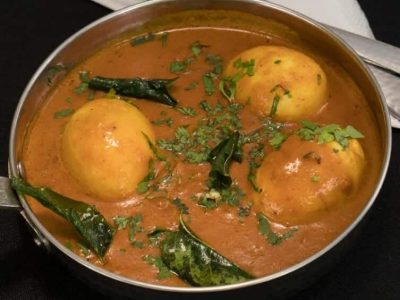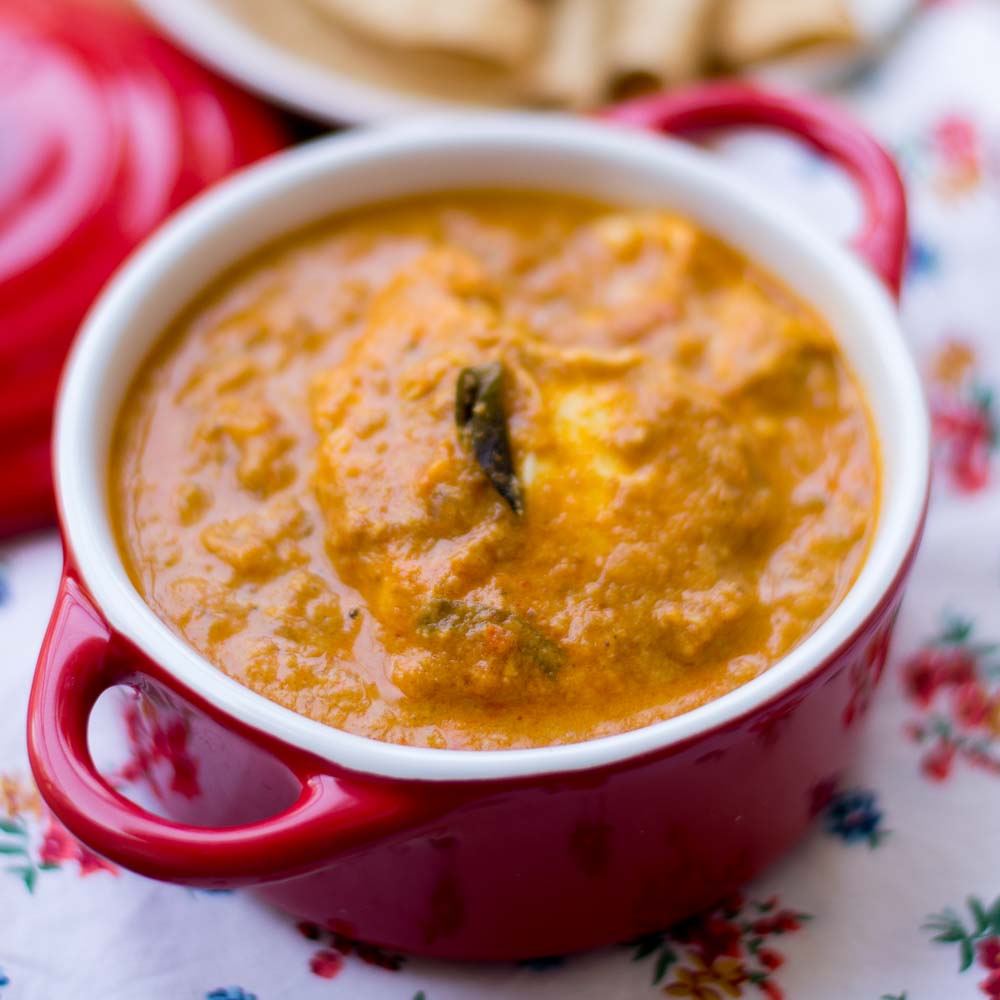
Egg Kara Kuzhambu is one of those recipes I kept coming back to on evenings when I wanted something sharp and satisfying but did not want to spend an hour at the stove. The craving was always for that specific combination: the sour pull of tamarind against something with heat and weight. Boiled eggs in gravy felt too mild. This version, with the spiced omelette pieces cooked right into the kuzhambu, was the answer.
What made me stick with this recipe is the smell of peppercorns and coconut ground together without water. That dry, coarse paste going into the eggs before they hit the tawa – that is the detail that changes the whole dish. I have made this at least thirty times by now and I still find myself drawn to it on a Tuesday evening when the pantry looks half empty and rice is already on the stove.
About the Recipe
Every ingredient here is a standard South Indian pantry item. Sambar onions, tamarind, a handful of spices, a few eggs – nothing requires a special trip to the market. From start to finish, you are looking at about 40 minutes, which includes grinding both spice pastes and making the omelettes. I tend to make this on days when I have leftover rice and want something that will actually make it feel like a proper meal rather than just reheated food.
Why you will love this recipe
The two-grind method is what gives this dish its depth. One paste goes into the eggs before cooking, and the other builds the gravy base. That means the spice is layered, not just sitting on the surface of the sauce.
The tamarind brings sharpness, the coconut and peppercorn in the eggs bring a low heat and mild sweetness, and the fenugreek seeds in the tempering add a slight bitterness that keeps everything from tasting flat. On a weeknight, this also means you are basically cooking two elements at once: grind, make the omelettes while the oil heats, then build the gravy. There is very little idle waiting time. The omelette pieces soak up the tamarind base in the last two minutes of cooking, which means each piece carries both flavours by the time it reaches the plate.

Cooking Tips
The most common beginner mistake here is overcooking the omelette. You want it just set, not brown and stiff, because it will go back into the hot gravy and cook further. If it is already rubbery before it hits the pan, the final texture will be tough. Also, when you add the tamarind extract, make sure the masala has cooked long enough that the oil is visibly separating at the sides – if you rush this step, the raw smell of the spices will carry through into the finished gravy.
Top Tips
- Grind the second paste completely dry, without any water. Even a small splash will make it watery and it will not blend into the eggs properly.
- Keep the omelette flame at medium. High heat browns the outside before the inside sets, which gives you an uneven texture once the pieces go into the gravy.
- Use a flat tawa rather than a curved kadai for the omelettes. It gives you an even thickness across the whole surface, which makes cutting easier.
- Sambar onions (small shallots) are important here, not regular onions. They break down differently and give the gravy a sweeter, more rounded base.
- I always let the omelettes cool for at least five minutes before cutting. Cutting them hot causes them to crumble rather than hold their shape in the gravy.
- The tamarind extract should be about one cup, but if your tamarind is particularly sour, dilute it slightly. Taste before you pour.
Serving and Storing Suggestions
This recipe serves two to three people comfortably when paired with steamed rice. Prep and cook time together come to around 40 minutes. Serve hot, directly from the pan – the omelette pieces start to soften as they sit in the gravy, which is actually pleasant if you like a more absorbed texture. Leftovers keep well in the refrigerator for up to two days. Reheat gently on a low flame with a splash of water to loosen the gravy, as tamarind-based dishes tend to thicken once cold.
Similar Recipes
- Mutta Kuzhambu (whole boiled eggs in onion-tomato gravy)
- Chettinad Egg Curry
- Poondu Kuzhambu (garlic tamarind gravy)
- Vendakkai Kara Kuzhambu (okra in tamarind gravy)
- Kathirikai Kuzhambu (brinjal tamarind curry)
Nutrient Benefits
Eggs carry all the heavy lifting here in terms of protein, with roughly six grammes per egg. Because the omelettes are made with minimal oil on a tawa rather than deep fried, the fat content stays reasonable. Tamarind provides a small amount of iron and the shallots and garlic add compounds that support digestion – useful in a dish that already uses fenugreek, which is traditionally associated with settling the stomach after a meal.

Egg Kara Kuzhambu
Ingredients
- 4 Eggs
- 3/4 cup Sambar Onions (peeled)
- 1 Tomato
- 1 Green Chillies
- 5 cloves Garlic
- 1/4 tsp Turmeric Powder
- 1/4 tsp Saunf
- 1/2 tsp Red Chilli Powder
- 1/4 tsp Mustard Seeds
- 1/4 tsp Fenugreek Seeds
- 1 cup Tamarind Extract
- Curry Leaves (few)
- Coriander Leaves (few)
- 3 tsp Oil
- Salt as per taste
Grind together #1:
- 4 Sambar Onions (peeled)
- 1 Tomato
- 5 cloves Garlic
- 1/4 tsp Cumin Seeds
- 1/4 tsp Saunf
Grind together #2 (without adding water):
- 1/4 tsp Peppercorns
- Coconut (2 one inch pieces)
- 1/4 tsp Cumin Seeds
- 1 Green Chilli
Instructions
- Break the eggs in a pan.
- Add the ground ingredients #2 and mix well.
- Heat a tawa over medium flame.
- Make omelettes using the egg mixture and keep aside to cool.
- Cut the omelettes into bite sized pieces and keep aside.
- Heat oil in a pan over medium flame.
- Fry the mustard seeds, fenugreek seeds and saunf for 30 seconds.
- Add the sambar onions, curry leaves, chopped tomatoes and garlic.
- Saute until thickened.
- Add the ground ingredients #1.
- Now add turmeric powder, red chilli powder and salt.
- Mix well.
- When the oil starts to separate pour the tamarind extract and bring to a boil.
- Cook until it starts to thicken.
- Add the chopped omelettes and cook for another 2 minutes.
- Garnish with coriander leaves.
- Serve with rice.
Sign up for our newsletter
Add Awesome Cuisine as a Preferred Source

Tip: If the kuzhambu is too thick, add 1 cup of water (or as desired) at step 14.
Frequently Asked Questions
Q: My omelette pieces broke apart when I added them to the gravy. What went wrong?
A: This usually happens when the omelettes are cut while still warm, or when the pieces are stirred too aggressively in the gravy. Let the omelettes cool fully before cutting, and once you add them to the kuzhambu, stir gently just once or twice and then leave them to cook undisturbed for the final two minutes.
Q: Can I use regular large onions instead of sambar onions?
A: You can, but the result will taste noticeably different. Sambar onions are sweeter and break down into the gravy more smoothly. If you use large onions, chop them fine and cook them longer than the recipe suggests, until they are fully soft and beginning to colour.
Q: The gravy tastes too sour. How do I fix it?
A: Add a small pinch of jaggery or sugar to the gravy and stir it through. This balances the tamarind without making the dish sweet. Next time, taste your tamarind extract before adding it and dilute with a little water if it seems very sharp.
Q: Can I make the omelettes in advance?
A: Yes, and it actually helps. Making the omelettes a couple of hours ahead and keeping them covered at room temperature means they are fully cooled and firm by the time you need to cut them. They hold their shape much better in the gravy that way.
Q: I do not have fresh coconut. Can I use desiccated coconut for the second grind?
A: Desiccated coconut will work in a pinch, but soak it in a teaspoon of warm water for five minutes before grinding. Completely dry desiccated coconut does not grind to a smooth paste and tends to stay slightly gritty, which you will notice in the omelette texture.