
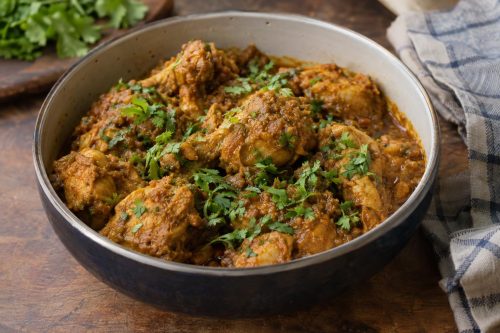
Dhaniya Murgh is a simple, no-fuss chicken dish where coriander powder does the heavy lifting. There is no long list of whole spices and no slow-cooked base to build. The chicken goes straight into the pan with the tomato puree, ginger garlic paste and spices, cooks covered on a low flame until tender, and then the heat is raised to bring it to the consistency you want. The result is a warm, earthy dish that fits comfortably into an everyday meal without much effort. If you enjoy other coriander-forward preparations, the Coriander Chicken Curry on the site is worth a look as well.
About the Recipe
There is no separate step here for frying onions or building a base gravy. The chicken pieces cook directly in the tomato puree and spice mixture with a small amount of water, so the puree does two things: it provides moisture for the initial cooking and forms the body of the gravy.
The coriander powder quantity is noticeably higher than in most chicken recipes. That is intentional. It gives this dhania chicken recipe its distinctive earthy flavour. Fresh coriander leaves added at the end reinforce that same note without overpowering the finished dish.
Why You Will Love This Recipe
The strongest reason to make this recipe is how little it asks of you. There is no marinating time, no separate tempering step and no need to watch the pan constantly once the lid goes on. The chicken cooks in its own moisture along with the tomato puree, so the risk of burning or drying out during the covered stage is low.
The other appeal is flexibility in the final texture. A few extra minutes on high flame and you have a dry preparation that works well with rotis. Pull it off the heat a little earlier and you have a light gravy that pairs well with rice. Both outcomes come from the same set of instructions.
Cooking Tips
The most common beginner mistake here is adding too much water at the start. Stick to 1/4 cup initially and check before adding more. Too much water makes it harder to dry the dish out later and can dilute the spice flavour.
During the covered cooking stage, keep the flame genuinely low or the tomato puree can stick and catch at the bottom before the chicken is cooked through. Once the lid comes off, stir occasionally so the masala coats the pieces evenly as the liquid reduces.
Top Tips
- Use bite-sized pieces of roughly equal size so they cook through in the same amount of time.
- Start with 1/4 cup of water and add more only if the pan looks dry before the chicken is tender.
- Keep the flame on the lower end during the covered stage to avoid the tomato puree sticking to the bottom.
- Taste for salt only after the liquid has reduced, as the flavour concentrates as it cooks down.
- Add the fresh coriander leaves only after removing from the flame so they stay bright and do not wilt into the gravy.
- If you want a dry finish, make sure the chicken is fully cooked before raising the flame, otherwise you risk the outside drying out before the inside is done.
Serving and Storing Suggestions
Dhaniya Murgh works well with plain rotis, phulkas or steamed rice. For a more complete meal, serve alongside a simple dal and sliced onions. If there is leftover gravy, it can be mixed into rice the next day.
Store leftovers in a covered container in the refrigerator for up to two days. Reheat gently on a low flame with a splash of water to loosen it, as the masala tends to thicken once cold.
Similar Recipes
Nutrient Benefits
Chicken is a good source of protein and provides B vitamins including niacin and B6. Coriander powder contributes small amounts of iron and dietary fibre. Tomato puree adds vitamin C and vitamin A. Together, the ingredients make this a reasonably balanced dish when served as part of a meal with a grain and a vegetable side.
Dhaniya Murgh
Ingredients
- 500 gms, cut into bite-sized pieces Chicken
- 1/2 cup Tomato Puree
- 2 tsp Ginger Garlic Paste
- 1/4 cup Coriander Powder
- 1/2 tsp Garam Masala Powder
- 3/4 tsp Red Chilli Powder
- Salt as per taste
- Coriander Leaves - handful, chopped
Instructions
- Heat a pan over medium flame.
- Add the chicken pieces, tomato puree, ginger garlic paste, garam masala powder, coriander powder, red chilli powder and salt.
- Pour 1/4 to 1/2 cup of water.
- Reduce flame and cover the pan with a lid.
- Cook for 5 minutes and remove the lid.
- Cook till the chicken pieces are tender.
- Increase flame to medium and cook till it is dry or till a little gravy remains (as desired).
- Garnish with coriander leaves.
- Serve hot.
Sign up for our newsletter
Add Awesome Cuisine as a Preferred Source

Frequently Asked Questions
Can I use bone-in chicken pieces instead of boneless for this recipe?
Yes, you can. Bone-in pieces will take longer to cook through, so extend the covered cooking time and check that the meat near the bone is no longer pink before removing the lid. You may also need to add a little more water during cooking to prevent the pan from drying out before the chicken is done.
The recipe uses 1/4 cup of coriander powder, which seems like a lot. Is that correct?
Yes, that quantity is intentional. This dhania chicken recipe is built around coriander powder as the primary spice, so the amount is higher than in a typical chicken curry. Coriander powder is mild by nature, so a larger quantity works well here without making the dish sharp or unpleasant. It is what gives the dish its distinctive earthy flavour.
What should I do if the masala starts sticking to the pan during the covered cooking stage?
Lower the flame further and add a small splash of water, around two to three tablespoons, then replace the lid. The tomato puree can catch at the bottom if the heat is too high or if the pan is thin. A heavy-bottomed pan helps here. Stir once gently before replacing the lid to loosen anything that has settled.
Can I add onions to this recipe even though they are not listed in the ingredients?
The recipe as written does not use onions, and the method does not include a step for frying them. If you want to add onions, you would need to fry them separately in oil before adding the other ingredients, which changes both the method and the overall texture of the dish. It is worth trying the recipe as written first to get a sense of the base flavour before making changes.
How do I know when the chicken is cooked through during the covered stage?
After five minutes covered, remove the lid and press a piece of chicken with a spoon. Fully cooked chicken will feel firm rather than soft and yielding. You can also cut into a thicker piece to check that the inside is white with no pink remaining. If it still looks undercooked, replace the lid and continue for a few more minutes before checking again.


YES IT’S VERY TESTY