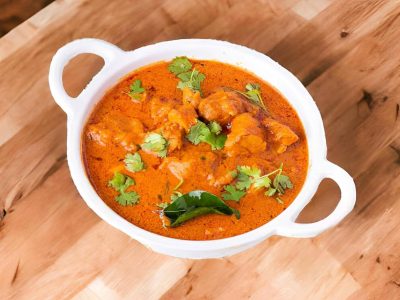
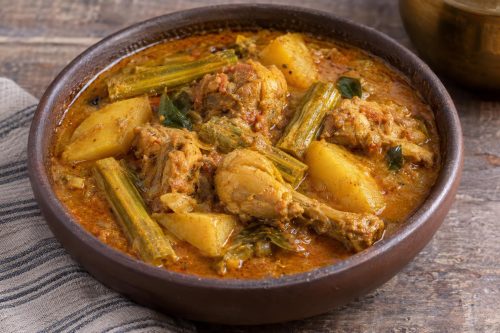
This chicken drumstick and potato curry is a South Indian style dish that cooks three main ingredients together in a single pot. The drumstick vegetable adds a mild, slightly fibrous texture that soaks up the spiced gravy well, and the potatoes help thicken things as the curry simmers. The base is built from a broiled ginger, garlic and sombu paste blended with shredded coconut paste, giving the gravy body and a warm, aromatic flavour. If you enjoy a coconut chicken curry or a potato curry with coconut milk, this recipe brings both elements together in one pot.
About the Recipe
The recipe depends on two ground pastes working together. The ginger, garlic and sombu paste is broiled before grinding, which removes rawness and adds a slightly toasted quality to the base.
The coconut paste goes in after the tomatoes have softened, so it blends into the masala evenly. Drumstick pieces, potatoes and chicken are added together with enough water to cover, then left to simmer until the gravy thickens and the chicken is cooked through.
Do not use tamarind and lime for this recipe. The coconut paste already balances the spices without any added sourness.
Why You Will Love This Recipe
Three very different ingredients cook in the same pot without any one of them turning mushy or bland. The drumstick pieces hold their shape and take on the spiced gravy from the inside, while the potatoes quietly thicken the sauce as they cook.
The coconut paste gives the gravy a full, slightly creamy texture without making it heavy.
It is also the kind of curry that tastes better the next day once the flavours have settled, which makes it a practical choice when cooking for more than one meal.
Cooking Tips
The most common mistake is rushing the masala base. The oil must visibly separate from the spice paste before you add the tomatoes, otherwise the curry will taste raw.
Use the reserved masala water in small amounts to prevent sticking, not to thin the base.
When the chicken, drumsticks and potatoes go in, add just enough water to nearly cover them. Too much water at this stage makes it hard to get the gravy to thicken without overcooking the vegetables.
Top Tips
- Broil the ginger, garlic and sombu before grinding to remove the raw edge from the paste.
- Keep the masala water from grinding the spice paste and add it gradually while cooking the base, a spoonful at a time.
- Wait until the oil clearly floats on the surface before adding the tomatoes. This tells you the masala is properly cooked.
- Stir the coconut paste in thoroughly after the tomatoes soften so it blends evenly into the masala rather than clumping.
- Cut the potatoes lengthwise into four pieces rather than cubes so they hold their shape during the long simmer.
- Do not add tamarind pulp or lime juice to this curry. The coconut paste provides enough balance.
Serving and Storing Suggestions
Serve hot with plain steamed rice or chapathis. The thick gravy coats rice well and the drumstick pieces are best eaten fresh while still warm.
Leftovers keep in the refrigerator for a couple of days. Reheat gently on a low flame with a small splash of water to loosen the gravy, as the coconut paste tends to thicken further once chilled. Avoid boiling hard when reheating or the potatoes will start to break apart.
Similar Recipes
- Chicken and Sweet Potato Coconut Curry
- Coconut Chicken Curry
- Potato Curry with Coconut Milk
- Mutton Curry with Potatoes
- Sri Lankan Chicken Curry
Nutrient Benefits
Chicken is a good source of protein. The drumstick vegetable contributes iron and vitamin C, and potatoes provide potassium and carbohydrates, making this curry filling enough to serve as a complete meal with rice or bread.
Chicken, Drumsticks and Potato Curry
Ingredients
- 2 , finely sliced Onions
- Curry leaves - a few
- 8 to 10 tbsp Oil
- 1/2 tsp Turmeric powder
- 3 tbsp Coriander powder
- 2 tbsp Chilli powder
- Extra tomatoes
- Drumsticks - cut into 2 inch long pieces
- Pototoes - skinned, cut into 4 pieces lengthwise
- 1 (skinned, cleaned, cut into desired pieces, washed properly and drained) Chicken
- Salt to taste
- Grind to paste:
- Coconut - shredded and made into a paste
- Ginger, garlic, sombu - made into a fine paste (after broiling)
Instructions
- Heat some oil in a pan. Add sliced onions and curry leaves. Saute till it turns golden brown.
- Put in the ginger-garlic-sombu paste. Stir fry on low flame. Add a little of the leftover masala water if required.
- Cook for about 2 minutes or till the oil floats on the surface. Sprinkle salt according to taste followed by chilli powder, coriander powder, turmeric powder. Blend well.
- Keep cooking for 2 to 3 more minutes, adding a little more of the masala water as and when needed. Wait till you get an aroma and the oil separates from the masala.
- Put in the chopped tomatoes. Keep cooking till the tomatoes become soft and well cooked.
- Combine the coconut paste. Stir well so that the paste blends with the masala.
- Add the drumsticks, potatoes and chicken pieces. Pour enough water. Mix thoroughly and cover with a lid. Allow it to simmer for quite some time.
- Wait till the vegetables and chicken pieces are sufficiently boiled and gravy has thickened. Extinguish the flame.
- Serve hot with rice or chapathis.
- Tip
- You can use extra tomatoes, if required. Do not use tamarind pulp or lime juice for this curry.
Sign up for our newsletter
Add Awesome Cuisine as a Preferred Source

Frequently Asked Questions
What is sombu and can I replace it?
Sombu is the Tamil name for fennel seeds. It is broiled along with ginger and garlic before being ground into a paste. Fennel seeds are available in most Indian grocery stores. If you cannot find them, you can leave them out, though the paste will taste noticeably different. Sombu gives the curry base a mild, slightly sweet and anise-like quality that balances the chilli and coriander powders.
Can I use boneless chicken instead of a whole chicken cut into pieces?
You can, but bone-in chicken pieces give the gravy more depth during the long simmer. Boneless chicken cooks faster and may become dry if left to simmer for the same amount of time as bone-in pieces. If using boneless chicken, add it after the drumstick vegetable and potatoes have had about ten minutes in the pot, then continue simmering until just cooked through.
How do I know when the masala base is properly cooked?
Watch for two signs. First, the oil will begin to separate and float visibly on the surface of the masala. Second, the mixture will start to smell fragrant rather than sharp or raw. Both together tell you the spice paste has cooked enough. If you add the tomatoes before this point, the finished curry may taste slightly raw in the base even after the chicken is done.
Why does the recipe say not to use tamarind or lime juice?
The coconut paste already provides a natural richness that balances the heat from the chilli powder and the earthiness of the coriander powder. Adding tamarind pulp or lime juice on top of this would make the gravy sour in a way that competes with the coconut. The tomatoes added during cooking provide enough gentle acidity for this curry.
My gravy is too thin after simmering. What should I do?
Continue simmering with the lid slightly open so the extra liquid can evaporate. The potatoes will also release starch as they cook, which naturally thickens the gravy over time. If the chicken and vegetables are already fully cooked but the gravy is still thin, remove the lid completely and cook on a medium flame for a few more minutes, stirring occasionally. Avoid adding flour or cornflour as a thickener since the coconut paste is meant to do that job.