
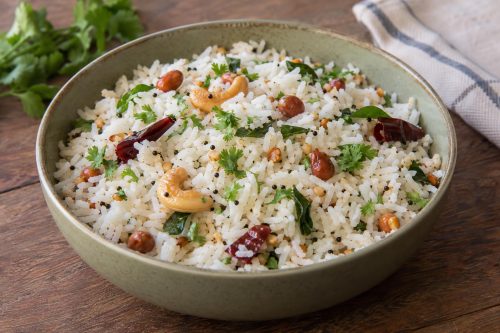
Coconut rice is a South Indian staple that looks modest but packs a lot of texture and flavour into a short cooking time. The recipe starts with a tempering of mustard seeds, urad dal, dry red chilli and curry leaves, then builds with roasted cashewnuts, peanuts and freshly grated coconut before the cooked rice goes in. Roasting the coconut until golden makes a noticeable difference to the final taste. If you have leftover cooked rice on hand, this comes together in well under fifteen minutes and needs no side dish to feel complete.
About the Recipe
This coconut rice recipe follows the South Indian style of using fresh grated coconut rather than coconut milk. The tempering is done in oil and includes asafoetida powder, which balances the richness of the coconut and nuts. Cashewnuts and peanuts are fried before the coconut goes in, so they stay crisp in the finished dish. The rice is added last and tossed through the pan so the grains stay separate. Day-old cooked rice works particularly well here because the grains are drier and mix more evenly without clumping.
Why You Will Love This Recipe
The textures are what make this dish worth coming back to. The roasted coconut turns slightly chewy and nutty, the cashewnuts and peanuts stay crunchy, and the rice grains stay separate and light. There is no sauce or gravy involved, so nothing goes soggy.
The practical appeal is just as strong. If you have leftover rice sitting in the fridge, this recipe gives it a completely different character without any complicated preparation. The tempering takes only a few minutes and the whole dish is ready before you would have finished cooking something from scratch.
Cooking Tips
The most common mistake is adding the coconut to a pan that is too hot, which causes it to burn on the outside before it roasts evenly. Keep the flame at medium and stir the coconut continuously once it goes in.
Do not rush the tempering either. The mustard seeds must finish popping and the urad dal must turn golden before you add the nuts. If the rice is cold and clumped from the fridge, break it apart with your fingers before adding it to the pan so it mixes through evenly.
Top Tips
- Use day-old cooked rice rather than freshly cooked rice. Freshly cooked rice holds more moisture and tends to clump when tossed in the pan.
- Roast the coconut on medium flame and keep stirring. It goes from pale to burnt quickly, so do not leave the pan unattended at this stage.
- Fry the cashewnuts and peanuts before adding the coconut. They need longer in the oil to colour properly and adding them too late leaves them soft.
- Break up cold refrigerated rice with your hands before it goes into the pan. This prevents large clumps that do not mix through the coconut evenly.
- Add salt only after the rice is mixed in. Salting earlier can draw moisture from the coconut and make the tempering wet.
Serving and Storing Suggestions
Coconut rice is best eaten on the day it is made. It works well on its own as a light meal or alongside a simple raita or pickle. A mild potato curry also pairs well with it.
If you have leftovers, store them in an airtight container in the refrigerator for up to one day. Reheat in a pan over low flame with a few drops of oil. A microwave tends to make the coconut and nuts go soft.
Similar Recipes
- Karuveppilai Sadam (Curry Leaf Rice)
- Cucumber Rice
- Methi Rice (Fenugreek Rice)
- Mixed Vegetable Rice
- Capsicum Tomato Rice
Nutrient Benefits
Freshly grated coconut provides dietary fibre. Peanuts and cashewnuts add protein and healthy fats alongside a useful amount of magnesium. Urad dal, even in the small quantity used for tempering, contributes a little plant protein. Curry leaves and coriander leaves add small amounts of iron and vitamins. This dish is naturally gluten-free when asafoetida powder labelled gluten-free is used.
Coconut Rice
Ingredients
- 1 cup Rice cooked
- 1/2 Coconut grated
- 2 tbsp Oil
- 1/4 tsp Asafoetida Powder
- 1 Dry Red Chilli broken
- few Curry Leaves
- 1 tsp Mustard Seeds
- 1 tsp Urad Dal
- 2 tbsp Cashewnuts
- 2 tbsp Peanuts
- as per taste Salt
- handful Coriander Leaves
Instructions
- Heat oil in a pan over medium flame.
- Add the mustard seeds, urad dal red chilli, asafoetida powder and curry leaves.
- Fry until mustard seeds start to pop and dal turns golden.
- Add the cashewnuts and peanuts.
- Fry for 2 minutes.
- Add the coconut and roast until golden.
- Add the cooked rice and mix well.
- Add salt and mix again.
- Garnish with coriander leaves.
- Serve.
Sign up for our newsletter
Add Awesome Cuisine as a Preferred Source

Frequently Asked Questions
Can I use freshly cooked rice for this coconut rice recipe?
You can, but freshly cooked rice has more moisture and tends to stick together when tossed through the coconut and tempering. Spread it out on a plate or tray and let it cool and dry for at least twenty to thirty minutes before using it. Day-old refrigerated rice is easier to work with because the grains are already dry and separate.
What can I do with leftover coconut rice?
Leftover coconut rice keeps well in an airtight container in the refrigerator for up to one day. Reheat it in a pan over low flame with a few drops of oil rather than in a microwave, which softens the nuts and coconut. You can also eat it at room temperature as part of a packed lunch. The flavour is generally good the next day, though the nuts will lose some of their crunch.
Can I use desiccated coconut instead of fresh grated coconut?
Desiccated coconut is much drier than fresh grated coconut and roasts faster, so it can burn before it colours evenly. If you use it, reduce the roasting time and watch the pan closely. The texture and flavour will be noticeably different from fresh coconut. Fresh or frozen grated coconut gives a better result for this recipe.
Why does the recipe include asafoetida powder?
Asafoetida is a standard part of South Indian tempering and is used in a very small quantity here. It adds a mild savoury background note to the dish. If you do not have it or prefer to leave it out, the recipe still works. Just skip it and proceed with the rest of the tempering as written.
Is this Indian coconut rice the same as Thai coconut rice?
No, these are two different dishes. Thai coconut rice is made by cooking raw rice directly in coconut milk, giving a creamy, slightly sweet result. This South Indian coconut rice uses already cooked plain rice tossed through a tempering of mustard seeds, curry leaves, urad dal and freshly roasted grated coconut. The texture is dry and the flavour is savoury.
Excellent