
Capsicum and Peanut Curry came into my regular cooking through a photocopied recipe a colleague gave me years ago, scribbled with margin notes about how much tamarind to use and a reminder to not skip the jaggery. She was from Karnataka, and she insisted this was the kind of thing her family made on rainy evenings when the fridge was half empty but dinner still needed to happen.
The peanuts were what caught my attention first – pressure cooked separately so they stay firm, not mushy, which gives the curry something to hold onto. I have made this enough times now that I do not need the paper anymore, but I still think of her note about the jaggery every single time I add it in.
About the Recipe
Most of the ingredients here are pantry staples – dried red chillies, chana dal, coriander seeds, sesame seeds, and tamarind are things many Indian kitchens already have on hand. The capsicums and peanuts do the heavy lifting in terms of substance. From start to finish, this takes about 45 minutes, including the pressure cooking.
I reach for this recipe specifically on days when I want something with real flavour but cannot spend the evening at the stove. It works well as a weekday lunch with rice or even with chapati if that is what you have.
Why you will love this recipe
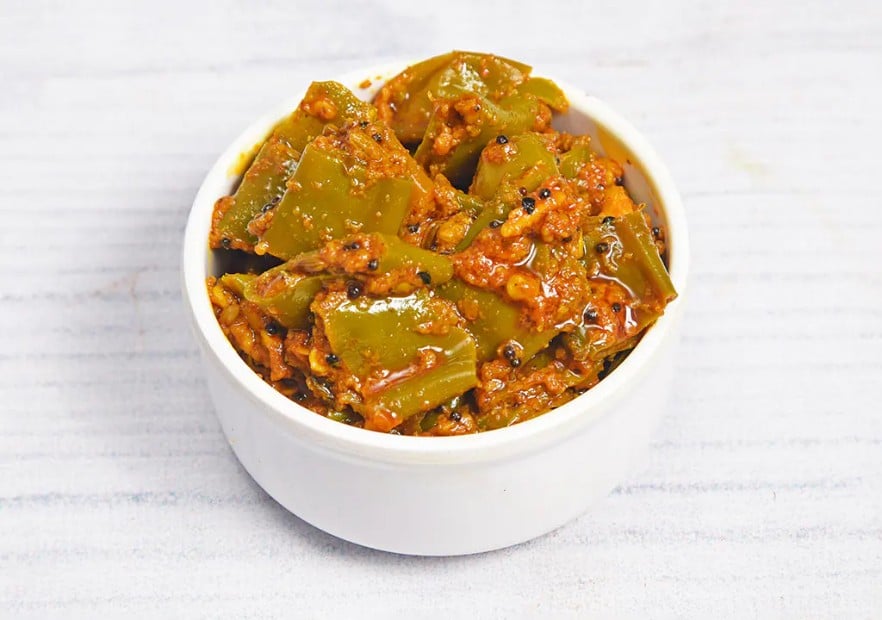
The freshly ground masala is the reason to make this. Toasting coriander seeds, sesame, chana dal, and dried red chillies together in a pan before grinding them with coconut and tamarind produces a paste with a layered, slightly nutty flavour that a store bought powder just cannot replicate. The peanuts add body without making the curry heavy.
Meanwhile, the jaggery softens the tamarind’s sharpness just enough so the curry feels balanced rather than sour. Once you have made the masala and cooked down the capsicums, the whole thing comes together quickly – which makes it genuinely useful on a weeknight when you want something that tastes like effort without requiring it.
Cooking Tips
The most common beginner mistake here is over-roasting the masala ingredients. The chana dal should turn golden, not brown – keep the heat low and stir gently because sesame seeds burn quickly and bitter masala is hard to recover. Another thing to watch: add only as much water as instructed when grinding the masala paste, otherwise it goes thin and the curry loses body. If your capsicums release a lot of moisture during simmering, reduce the final water addition by a few tablespoons so the curry does not end up watery.
Top Tips
- Pressure cook the peanuts first so they are ready to add later without holding up the rest of the cooking.
- Keep the heat genuinely low when toasting the masala ingredients – the sesame seeds will start to jump and smell nutty when they are ready, which is your cue to take the pan off the heat.
- Do not skip the tamarind or swap it for lemon juice. Tamarind gives a rounder, less sharp sourness that suits this curry specifically.
- Use a sturdy frying pan with a lid for the capsicum step – the steam trapped inside is what softens them in those 8 minutes without making them fall apart.
- The masala paste can be ground and kept refrigerated a day ahead, which makes the actual cooking go even faster.
- I add the jaggery before tasting for salt because jaggery changes the perceived saltiness slightly – taste and adjust salt only after the jaggery goes in.
Serving and Storing Suggestions
This recipe serves 3 to 4 people as part of a regular meal with plain steamed rice. Preparation and cooking together take roughly 40 to 45 minutes. Leftovers store well in an airtight container in the refrigerator for up to 2 days – reheat gently on the stove with a small splash of water because the curry thickens as it sits. I would not recommend freezing it as the capsicums turn soft and lose their texture on thawing.
Similar Recipes
- Capsicum and Potato Curry
- Peanut Chutney
- Gojju (Karnataka style tamarind based vegetable curry)
- Capsicum Rice
- Groundnut Curry
Nutrient Benefits
Peanuts bring a reasonable amount of plant protein and healthy fats to this dish, making it more filling than a typical vegetable curry. Capsicums are high in Vitamin C, and the sesame seeds in the masala add small amounts of calcium and iron. The tamarind contributes tartaric acid, which is known to support digestion. Taken together, this is a vegetarian meal that holds you through the afternoon without relying on dairy or meat for substance.

Capsicum and Peanut Curry
Ingredients
- 1/2 cup Peanuts
- 5 Green Capsicum (cut into 1/2 inch squares)
- Salt as per taste
- 1 tbsp Jaggery (powdered)
For Masala:
- 2 tsp Oil
- 2 tsp Coriander Seeds
- 2 tsp White Sesame Seeds
- 1/2 tsp Asafoetida Powder
- 4 Dried Red Chillies
- 1 tsp Chana Dal
- 3 tbsp Coconut (grated)
- Tamarind - a small marble sized balls, without seeds or strings
For Tempering:
- 2 tsp Oil
- 1 tsp Mustard Seeds
- 1/2 tsp Jeera
- 1 Dried Red Chilli (broken)
- 1 sprig Curry Leaves
Instructions
- Pressure cook the peanuts with 3/4 cup of water ofr 5 minutes.
- Heat the oil for masala in a frying pan.
- Add the remaining masala ingredients, except coconut and tamarind.
- Fry over low heat, tossing gently, till dal turns golden.
- Remove from heat.
- Mix in coconut and tamarind.
- Grind to a ffine consistency, adding 1/4 cup of water.
- Heat oil for tempering in the same pan.
- Add the remaining tempering ingredients.
- Fry over moderate heat.
- Add the capsicums.
- Sprinkle in 1/4 cup of water, cover pan and simmer for 8 minutes, till capsicums are tender.
- Transfer the contents of pan to a bowl.
- Add salt, jaggery and masala with 1 1/2 cups of water to the same pan.
- Whisk well.
- Bring to boil over high heat.
- Lower heat and simmer for 10 minutes.
- Add the peanuts and capsicums.
- Simmer for another 5 minutes till well blended.
- Serve hot with plain rice.
Sign up for our newsletter
Add Awesome Cuisine as a Preferred Source

Frequently Asked Questions
My masala paste turned out very dark and slightly bitter. What went wrong?
The chana dal or sesame seeds were likely over-roasted. This happens fast on medium or high heat. The dal should turn light golden, not brown, and the sesame seeds should just start to colour. If the masala tastes bitter, it is best to start the masala again rather than use it, because bitterness does not cook out in the final curry.
Can I use red or yellow capsicum instead of green?
Yes, you can. Red and yellow capsicums are sweeter and will make the curry slightly less sharp. The cooking time stays the same. I prefer green capsicum here because its mild bitterness balances the jaggery and tamarind better, but the other colours work fine if that is what you have.
The curry looks quite thin after adding the water. Should I add more masala or cook it down longer?
Cook it down longer first. Simmer uncovered on low heat for a few extra minutes and it will thicken on its own as the masala and peanut starches absorb the liquid. Adding more masala at this stage will shift the flavour balance and likely make it too sour or spicy.
I do not have a pressure cooker. Can I cook the peanuts a different way?
Yes. Soak the peanuts in water for 2 to 3 hours beforehand, then boil them in a regular pot with enough water to cover, for about 25 to 30 minutes until tender. Drain and use them exactly as the recipe says. They should be cooked through but still firm enough to hold their shape in the curry.
How much tamarind is a marble sized ball exactly?
It is roughly 1 teaspoon of tightly packed tamarind pulp, or about 8 to 10 grammes. If you are using ready made tamarind paste instead of raw tamarind, use about half a teaspoon and adjust to taste because pastes vary in concentration. The curry should taste faintly sour but not sharp – the jaggery will balance it.