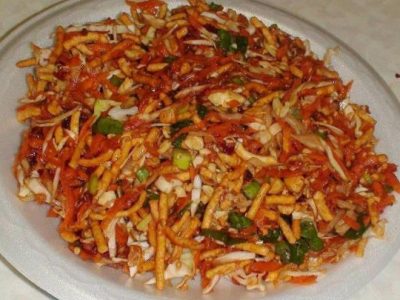
This Groundnut Dumpling recipe brings together two separate preparations that meet at the last moment. The filling is a coarsely ground mix of roasted groundnuts, butter-fried onion, tamarind, garlic and red chilli. The outer layer is a thin maida crepe cooked in butter, pliable enough to fold around the filling before it sets. Grated paneer added at the end gives the filling a little body. There is no deep frying, and the whole recipe moves quickly once both components are ready.

About the Recipe
The filling is made in two stages. First, groundnuts, urad dal, bengal gram dal, red chilli, curry leaves, coriander leaves and garlic are fried together in oil. Separately, butter-fried onion pieces and tamarind are ground with the fried groundnut mixture until coarse. The batter is a simple mix of maida, salt, a pinch of sugar and water, kept at dosa batter consistency. Each crepe is cooked covered on a low flame for 30 to 60 seconds, then filled and folded immediately while still warm.
Why You Will Love This Recipe
The crepe stays soft and slightly yielding while the groundnut filling has a coarse, grainy bite. The tamarind brings a background sourness that keeps the filling from tasting flat, and the grated paneer adds a mild creaminess without taking over. Cooking the crepe covered on a low flame keeps it tender so it folds cleanly without cracking. It is also a genuinely different way to use roasted groundnuts beyond the usual Peanut Chutney.
Cooking Tips
The most common mistake is making the batter too thick. It should flow and spread like dosa batter, not sit in a mound. A thick crepe will not fold without breaking.
Keep the flame low when cooking and always use a lid so the top surface sets without needing to flip. Fold the crepe immediately after adding the filling as it stiffens quickly once it cools.
Grind the filling coarsely. A smooth paste will make the filling wet and the crepe will tear.
Top Tips
- Let the fried groundnut mixture cool completely before grinding so residual heat does not turn it into a paste.
- Keep the maida batter at dosa batter consistency by adding water gradually and checking the pour before making the first crepe.
- Cook each crepe covered on the lowest flame setting and check at 30 seconds as thinner crepes set faster.
- Fold the crepe into a bag shape immediately after placing the filling as it becomes difficult to fold once it cools.
- Grind the filling in short pulses to keep the texture coarse and avoid over-grinding into a smooth chutney.
- Add the grated paneer just before folding, not into the ground mixture, so it stays fresh and does not make the filling wet.
Serving and Storing Suggestions
Serve the dumplings immediately after folding while the crepe is still soft. They work well as a tea time snack or as part of a light lunch.
The filling can be made a few hours ahead and kept covered at room temperature. The batter can also be prepared in advance and stored in the refrigerator for up to half a day.
Do not store assembled dumplings as the crepe will turn soggy once moisture from the filling transfers to it.
Similar Recipes
Nutrient Benefits
Roasted groundnuts provide protein and fat, making the filling reasonably satisfying for a snack-sized portion. Paneer adds further protein along with calcium. Urad dal and bengal gram dal contribute plant-based protein to the filling base. Tamarind supplies small amounts of iron and potassium.

Groundnut Dumpling
Ingredients
- 1/2 cup Roasted Groundnuts
- 1 tsp Sugar
- 3 tsp Butter
- 1 , cut into 4 pieces Onion
- 5 to 6 Garlic
- Urad Dal -1 tsp
- 1 tsp Bengal Gram Dal
- 4 Red Chilli
- 2 tsp Curry Leaves
- 1 small goosebery sized ball Tamarind
- 1 cup Maida
- 1 cup, grated Paneer
- Coriander Leaves
- Oil
Instructions
- Heat 1 tsp of oil in a pan.
- Add mustard seeds, urad dal, bengal gram dal and red chilli.
- Add groundnuts and fry.
- Add the curry leaves and coriander leaves.
- Continue to fry for a few seconds and add garlic.
- Switch off the gas and let it cool.
- In an another pan, add butter and onion pieces.
- Roll it around and let it fry nicely.
- Add the tamarind and rest of the ingredients.
- Grind it coarsely adding salt in between.
- Add the 4 pieces of onion and grind.
- Transfer the coarsely grinded ingredients to a bowl.
- Add maida in a bowl.
- Add salt and a little sugar.
- Mix nicely using water and ensure no lumps remain.
- This should be like a dosa batter.
- In a non stick pan, heat butter on a low flame.
- Pour 2 to 3 tblsp of the batter and spread it out like a small dosa.
- Close it with a lid and cook for 30 to 60 seconds.
- Transfer this to a plate.
- Keep one tsp of the coarsely ground ingredients and a little grated paneer.
- Close it like a bag immediately.
- Serve during lunch or as a tea time snack.
Sign up for our newsletter
Add Awesome Cuisine as a Preferred Source

Frequently Asked Questions
Can I use whole wheat flour instead of maida for the crepe?
You can substitute whole wheat flour but the crepe will be slightly thicker and less pliable. Add a little extra water to keep the batter at the same flowing consistency as dosa batter and fold the crepe quickly before it cools, as whole wheat crepes stiffen faster than maida ones.
What does coarsely ground mean in this recipe and how do I achieve it?
Coarsely ground means the mixture should have visible small pieces rather than a smooth paste. Use short pulses in a mixer or grinder and stop as soon as the ingredients are broken down but still have some texture. Running the grinder continuously will turn it into a fine paste, which makes the filling wet and harder to hold inside the crepe.
My crepe is tearing when I try to fold it. What went wrong?
There are two likely reasons. The batter may have been too thick, producing a crepe that is stiff rather than pliable. The other reason is waiting too long before folding. The crepe must be folded immediately after it comes off the pan while it is still warm. Once it cools even slightly, it will crack along the fold line.
Can I prepare the groundnut filling the day before?
The filling can be prepared and stored covered in the refrigerator overnight. Bring it to room temperature before using as cold filling placed on a warm crepe will cause the crepe to cool and stiffen before you finish folding. The batter is best made fresh or stored in the refrigerator for no more than half a day.
Is there a substitute for paneer in the filling?
Grated firm tofu works as a substitute and gives a similar mild, slightly crumbly texture. Crumbled fresh cottage cheese is another option but it is wetter than paneer, so squeeze out any excess moisture before using it. Avoid processed cheese as it will melt into the filling and change the texture entirely.