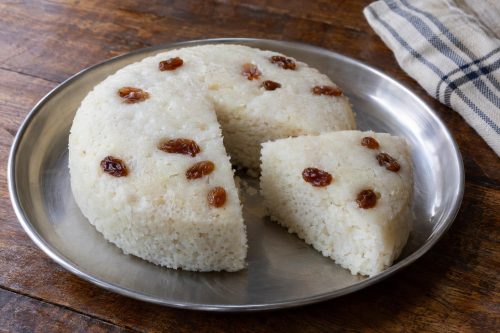
Vattayappam is a traditional Kerala steamed cake made from a fermented rice flour batter. The name refers to its round shape, and the finished cake is a soft, slightly spongy disc that is neither too sweet nor too heavy. This recipe uses fine rice flour, semolina gruel, grated coconut ground to a paste, and coconut milk. The batter ferments in two stages before being steamed in a pressure cooker without the weight. It works equally well as a breakfast item or a teatime snack. If you have been looking for a reliable vattayappam recipe with rice flour, this gives you a clear process from start to finish.
About the Recipe
The recipe works in two fermentation stages. The first rise, after combining the rice flour, yeast mixture and semolina gruel, develops the base of the batter. The second rise, after adding the coconut paste and coconut milk, loosens and lightens it further. Both stages need a full six hours each, so plan ahead.
The batter is poured into a greased 8-inch mould, topped with raisins and steamed for 15 minutes without the pressure cooker weight. Cut into wedges while still warm for clean slices.
Why You Will Love This Recipe
The texture is the main reason to make this. The batter ferments twice and is steamed rather than fried, so the finished cake is genuinely soft all the way through without being wet or dense.
The combination of ground coconut paste and coconut milk gives a rounded, natural sweetness that does not overpower. The ingredient list is short and there is no frying involved. If you enjoy recipes built around rice flour, this one is worth the patience the fermentation requires.
Cooking Tips
The most common mistake is rushing the fermentation. If the batter has not risen properly after either stage, the steamed cake will be dense. Keep the bowl in a warm, draught-free spot.
When steaming, do not place the pressure cooker weight on the lid. Steam that cannot escape will make the surface wet and uneven. Grease the mould thoroughly so the cake releases cleanly, and allow it to cool slightly before cutting or the wedges will crumble.
Top Tips
- Dissolve the sugar fully in the warm water before adding the yeast, and wait until the mixture looks foamy before using it.
- Let the semolina gruel cool completely before mixing it with the rice flour and yeast. Adding it warm can kill the yeast.
- Cover the bowl loosely during both fermentation stages. A tight cover traps the gases and can affect the rise.
- Steam without the pressure cooker weight so excess steam escapes. Cooking with the weight on will make the surface wet.
- Press the raisins gently into the surface of the batter just before steaming so they stay in place after cooking.
- Run a knife around the edge of the mould before turning the cake out to avoid tearing the sides.
Serving and Storing Suggestions
Vattayappam is best eaten warm, cut into wedges. It works well at breakfast alongside a cup of tea or coffee, or as a light afternoon snack.
Leftovers keep in an airtight container at room temperature for up to a day, or in the refrigerator for up to two days. Reheat by steaming briefly for a few minutes. Microwaving tends to make the texture rubbery.
Similar Recipes
Nutrient Benefits
Rice flour provides carbohydrates for energy. Coconut milk and grated coconut contribute fat and make each wedge reasonably filling. Semolina adds a small amount of protein and iron. Raisins bring natural sugars along with a little fibre and potassium.
Vattayappam
Ingredients
- 250 g Rice Flour fine
- 1/2 cup Sugar
- 1/2 cup Warm Water
- 1/2 tsp Yeast
- 1/2 cup Semolina
- 1 1 1/2 cup Water
- 1 cup Coconut grated and ground to a paste
- 3/4 cup Coconut Milk
- as per taste Salt
- few Raisins
Instructions
- Dissolve 1 tsp sugar in warm water and sprinkle yeast in it. Keep aside.
- Cook semolina with water to make a gruel. Allow it to cool.
- Combine the flour, yeast and gruel to make a dough.
- Set aside to rise for 6 hours.
- Add the ground coconut paste and dilute the dough with the coconut milk.
- Add salt and allow it to rise for 6 hours.
- Pour into a 8 inch diameter greased mold.
- Place some raisins on top and steam in a pressure cooker without placing the weight.
- Cook for 15 minutes.
- Cut into wedges and serve.
Sign up for our newsletter
Add Awesome Cuisine as a Preferred Source

Frequently Asked Questions
Can I make vattayappam with jaggery instead of sugar?
Yes, jaggery works as a substitute. Dissolve it in the warm water before adding the yeast, just as you would with sugar. Jaggery has a stronger, more caramel-like flavour and a darker colour, so the finished cake will look and taste noticeably different from the sugar version. The fermentation process works the same way either way.
What does vattayappam mean in English?
Vattayappam roughly translates to round appam or circular steamed cake. Vattam means circle or round shape in Malayalam, and appam refers to a type of rice cake. The name simply describes the shape of the finished dish, which is steamed in a round mould and cut into wedges to serve.
Why does the batter need to ferment twice and for so long?
The first fermentation lets the yeast work through the rice flour and semolina gruel and begin developing the batter’s structure. The second fermentation, after adding the coconut paste and coconut milk, gives the batter a final lift and helps it become lighter. Cutting either stage short will give you a denser, flatter cake. Plan for at least 12 hours in total. It is easiest to start the batter the evening before you intend to steam it.
Can I use store-bought coconut milk instead of fresh?
Yes, canned or packaged coconut milk works here. Use full-fat coconut milk for the best texture. Thin or light coconut milk may make the batter too loose and the finished cake less soft. If the batter seems too thick after adding the coconut milk, a small splash of water can help, but avoid diluting it too much.
My vattayappam turned out dense. What went wrong?
The most likely cause is insufficient fermentation. If the batter did not rise visibly during either stage, the yeast may not have been active. Check that the water used to dissolve the yeast was warm but not hot, as very hot water kills yeast. The batter should look puffy and slightly bubbly after each rise. Steaming with the pressure cooker weight on is another common cause. It prevents proper steam circulation and can make the cake dense and wet on top.