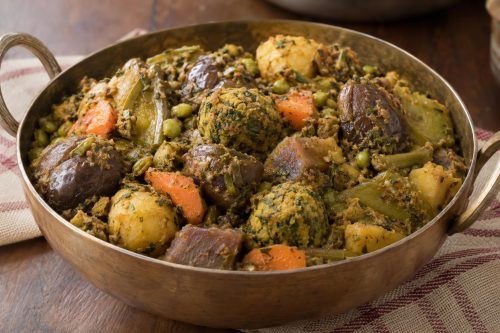
Oondhiyu (Undhiyu) Recipe is one of the most well-known dishes from Gujarati cooking, built around a combination of winter vegetables and a freshly ground coconut masala. What makes it distinctive is the technique of stuffing the masala directly into slitted vegetables before cooking, so the spice mixture penetrates each piece rather than just coating the outside. The recipe uses surti papdi, multiple types of yam, brinjals, sweet potatoes, carrots and toor dana, all brought together with methi muthiya, which are steamed dumpling made from fenugreek leaves
and flour that add a slightly bitter, earthy note to the finished dish.
About the Recipe
This recipe uses a pressure cooker for the initial cooking stage, which keeps the vegetables intact without turning them mushy. The masala is made by grinding fresh coconut, green garlic, coriander, roasted cumin, chilli paste, ginger paste, chilli powder, sugar, lemon juice and salt together. Half goes into the vegetable slits before cooking; the rest is added after. The final slow-cook in a pan is what allows the oil to separate and the masala to settle into the vegetables properly. Skipping this step will leave the dish tasting raw and under-developed.
Why You Will Love This Recipe
The strongest reason to make this dish is the layering of textures. You get the slight bite of surti papdi, the softness of yam and sweet potato, the meatiness of brinjal and the chew of methi muthiya, all in a single pot. Because the masala is stuffed into the vegetables rather than added only to the cooking liquid, every piece carries the flavour of coconut, green garlic and coriander right through to the centre. The addition of sugar and lemon juice in the masala gives the dish a gentle sweet-sour balance that keeps it from feeling heavy despite the number of vegetables involved.
Cooking Tips
The most common beginner mistake is overcooking in the pressure cooker. Two whistles is enough. More than that and the vegetables will break apart when you transfer them to the pan. When making the criss-cross slits, cut deep enough to hold the masala but stop before the segments separate, otherwise the vegetables will fall apart during pressure cooking. Keep the flame low during the final pan-cook stage and stir gently to avoid breaking the stuffed vegetables.
Top Tips
- Cut the criss-cross slits deep but leave the base intact so the vegetables hold their shape throughout cooking.
- Fill the slits firmly with masala so it does not fall out when the vegetables are added to the pressure cooker.
- Do not exceed two whistles in the pressure cooker. The vegetables continue to cook from residual steam even after the heat is off.
- Add the methi muthiya only after transferring to the pan, not during pressure cooking, or they will become too soft.
- Use fresh green garlic if available as it gives the masala a milder, more aromatic quality than dried garlic.
- Wait until the oil clearly separates at the edges before taking the dish off the flame. This is the sign that the masala has cooked through.
Serving and Storing Suggestions
Serve Oondhiyu hot, straight from the pan. It goes well with puris or rotis and a simple Coriander and Peanut Chutney on the side. Leftovers can be stored in a covered container in the refrigerator for up to two days. Reheat gently on a low flame with a splash of water to loosen the masala. The flavour is often better the next day once the spices have had more time to settle into the vegetables.
Similar Recipes
Nutrient Benefits
This dish brings together a wide range of vegetables in a single serving. Sweet potatoes and purple yam provide carbohydrates and some natural sugars. Surti papdi and toor dana contribute plant-based protein and dietary fibre. Fresh coconut adds fat along with some minerals. Coriander, green garlic and fenugreek leaves in the muthiya each provide small amounts of vitamins and minerals. Using this many vegetables in one dish means a varied nutrient profile with each portion.
Oondhiyu (Undhiyu)
Ingredients
- 1/2 kg, stringed and slit Surti Papdi
- 1/2 kg, peeled and cubed Purple Yam
- 250 gms, peeled and cubed Yam
- 250 gms, peeled Small Potatoes
- 250 gms, peeled and sliced Sweet Potatoes
- 250 gms Small Brinjals
- 100 gms, peeled and sliced Carrots
- 50 gms Toor Dana (fresh green pulse)
- 1 Methi Muthiya
- (Methi Muthiya is a steamed dumpling made from fenugreek leaves
- and flour)
- 1 tsp Carom Seeds
- 1 tblsp Green Chilli Paste
- 1 tblsp Ginger Paste
- Ground to a Masala
- 1/2 , grated Fresh Coconut
- 30 gms, chopped Coriander
- 30 gms, chopped Green Garlic
- 2 tsp, roasted Cumin Seeds
- 2 tsp Coriander Powder
- 1 tblsp Chilli Paste
- 1 tblsp Ginger Paste
- 1 tsp Chilli Powder
- 30 gms Sugar
- Juice of 1 Lemon
- Salt to taste
- For the tempering:
- 1/2 tsp Carom Seeds
- 1/2 tsp Asafoetida
- 6 tblsp Oil
Instructions
- Make a criss-cross slit in the potatoes, brinjals, sweet potatoes and yams taking care not to separate the segments.
- Fill half the masala mixture into the slits of the vegetables. Keep the rest of masala for later use.
- Heat the oil in a pressure cooker and add the asafoetida and carom seeds.
- Add the surt papadi, potatoes, yam, 8 toor dana, carrots, potatoes and sweet potatoes, purple yam, brinjals and one cup of water and pressure cook for two whistles.
- Transfer the cooked vegetables into a large pan and add the muthiyas, the remaining masala and 1 cup of water.
- Cook on a slow flame till the oil separates.
- Serve hot.
Sign up for our newsletter
Add Awesome Cuisine as a Preferred Source

Frequently Asked Questions
Can I make Oondhiyu without a pressure cooker?
Yes, you can cook the vegetables in a heavy-bottomed pan with a lid instead. Add about two cups of water, cover tightly and cook on a medium flame until the vegetables are tender. This will take longer than the pressure cooker method, roughly 30 to 40 minutes, and you will need to check occasionally to make sure the water has not dried out completely before the vegetables are cooked through.
What are methi muthiya and can I skip them?
Methi muthiya are small steamed dumplings made from fenugreek leaves mixed with flour and spices. They add a slightly bitter, earthy flavour and a chewy texture that is quite different from the rest of the vegetables in the dish. You can skip them if they are unavailable, but the dish will lose some of its characteristic texture contrast. If you want to include them, they can be made separately by mixing fenugreek leaves with gram flour, a little oil, carom seeds, salt and chilli, shaping into small cylinders and steaming until firm.
What is surti papdi and what can I use if I cannot find it?
Surti papdi is a flat, broad variety of field bean commonly used in Gujarati cooking. It has a firm texture that holds up well during cooking. If you cannot find it, you can use fresh flat green beans or regular broad beans as a substitute, though the texture will be slightly different. Frozen papdi, available in some Indian grocery stores, is a reasonable alternative when fresh is not in season.
Why does the recipe ask for oil to separate at the end?
When you cook the masala on a slow flame and wait for the oil to separate and appear at the edges of the pan, it means the moisture in the fresh coconut and other masala ingredients has cooked off and the spices have had enough time to cook through properly. If you stop before this point, the masala can taste raw, particularly the coconut and the chilli paste. It is a reliable visual sign that the dish is ready rather than a fixed time.
Can I prepare any part of this dish in advance?
Yes. The coconut masala can be ground a few hours ahead and kept covered in the refrigerator. You can also string and slit the surti papdi and peel and cube the yams in advance, keeping the cut vegetables submerged in water to prevent discolouration. The methi muthiya can be steamed a day ahead and refrigerated. Assembling and cooking the full dish on the day you plan to serve it gives the best result.