
Darbesh is a traditional Bengali sweet that sits within the laddu family. It is also known as Darbesh mithai or Dorbesh, and it is easy to recognise by its two-toned bundis and the richness that khoya brings to the finished sweet. The process has two clear parts: making the bundis and preparing the sugar syrup. Once the bundis are soaked and the syrup has done its work, the mixture is enriched with khoya, cashew nuts, raisins, cardamom and nutmeg, then rolled by hand into round laddus. The result is a sweet that is soft inside with a pleasantly dense bite.
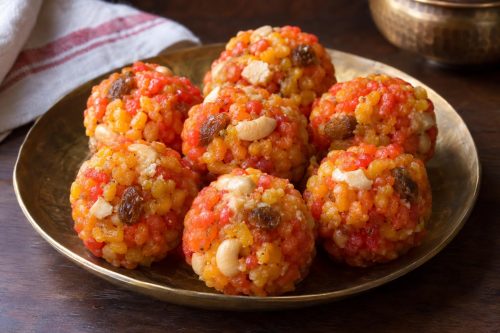
About the Recipe
The batter for this Darbesh recipe uses besan and rice flour together, which gives the bundis a little more body than besan alone. The batter should be pourable but not thin, close to a pakora batter in consistency. Pouring it through a perforated ladle into hot oil creates the small round bundis. The key at this stage is to fry them until just done and not until crisp, as they need to absorb the sugar syrup properly. Khoya adds density and a milky richness to the final laddu that the syrup alone cannot provide.
Why You Will Love This Recipe
The most satisfying part of this recipe is how the bundis change after sitting in the warm sugar syrup. They go from small fried pieces to something soft and cohesive that holds together when pressed into a laddu. Adding khoya, raisins and cashew nuts while the mixture is still slightly warm means everything binds well and the cardamom and nutmeg distribute evenly through the sweet. If you enjoy Dry Fruits and Nuts Balls or Nuts Burfi, you will find the richness of Darbesh very familiar.
Cooking Tips
The most common beginner mistake is over-frying the bundis until they turn crispy. Crispy bundis will not absorb the syrup well and the final laddu will feel dry and hard. Fry them only until just cooked through and still with some give.
Also make sure the batter is not too thin. Thin batter produces flat, irregular bundis rather than round ones.
Mix in the khoya and dry fruits while the bundi mixture is still warm, not piping hot and not fully cold, so the laddus shape and hold together easily.
Top Tips
- Keep the batter at a thick, pourable consistency similar to pakora batter. Too thin and the bundis will not form properly.
- Do not over-fry the bundis. They should be cooked through but still soft enough to absorb the sugar syrup.
- Dip the bundis in the syrup while the syrup is still warm so they soak evenly during the five-minute simmer.
- Add the khoya, raisins, cashew nuts, cardamom and nutmeg when the mixture is slightly warm, not piping hot, so the laddus hold their shape when rolled.
- Divide the batter evenly before adding colour so that the red and yellow bundis are roughly equal in number.
Serving and Storing Suggestions
Darbesh is best served at room temperature. It works well as part of a festive spread or as an everyday sweet alongside tea.
Store the laddus in an airtight container at room temperature for up to two days, or refrigerate them for up to four to five days. If refrigerated, allow them to come back to room temperature before serving, as cold laddus tend to feel firmer than they should. Do not stack them loosely without a container as they can break apart.
Similar Recipes
Nutrient Benefits
Besan provides a reasonable amount of plant-based protein and is a source of iron and folate. Khoya contributes calcium and fat from milk solids. Cashew nuts add magnesium and healthy fats, while raisins provide quick energy and small amounts of iron. As with most Indian sweets, Darbesh is best enjoyed in moderate portions given its sugar and oil content.

Darbesh
Ingredients
- 750 ml, for deep frying Oil
- 200 gms Khoya or dried milk
- 1 , crushed Big cardamom seeds
- 1 pinch Baking powder
- 250 gms Besan or gram flour
- 2 tbsp Cashew nuts
- 50 gms Rice flour
- 1 tsp Nutmeg powder
- 2 tbsp Raisins
- Red and yellow colour - few drops
- 4 cups, for syrup Water
- 4 cups, for syrup Sugar
Instructions
- Making the bundis
- Take rice flour, baking powder and besan in a bowl and whip them together with water to make the batter. Keep in mind that it will be similar to the batter of a pakora.
- Split the batter into two equal halves. Add the red colour to one half of the batter and the yellow color to the other half.
- Take the oil in a pan and heat it. To the heated oil, add the batter. But make sure that you pour the batter through a perforated ladle.
- As you deep fry, you will see the bundis getting formed. But be careful not to over fry so that the bundis do not turn crispy.
- Making the syrup
- Boil the water in a pan. Add the sugar to the boiled water so as to make the syrup.
- Next, dip the bundis in the sugar syrup. Simmer on medium flame for about 5 minutes and keep stirring frequently. Turn off the flame and cover it with a lid.
- Let it cool down. But make sure that you mix nutmeg powder, raisins, khoya, cashew nuts and the crushed cardamom seeds with the bundis when it is still a little warm.
- Use your hand to make round shaped bundi laddus.
- Darbesh is ready.
Sign up for our newsletter
Add Awesome Cuisine as a Preferred Source

Frequently Asked Questions
What is Darbesh and how is it different from a regular laddu?
Darbesh, also known as Darbesh mithai or Dorbesh, is a Bengali sweet made from small fried besan and rice flour balls called bundis that are soaked in sugar syrup and then mixed with khoya, raisins, cashew nuts, cardamom and nutmeg before being shaped into round laddus. Unlike a motichoor laddu, which uses very fine bundis, Darbesh bundis are slightly larger and the addition of khoya gives the sweet a denser, milkier quality.
Why are my bundis turning out flat instead of round?
Flat bundis usually mean the batter is too thin. The batter should be thick enough to hold a drop shape when it falls through the holes of the perforated ladle into the oil. If it is too watery, it spreads before it can set. Add a small amount of besan and mix again until the batter reaches a pakora-like consistency before continuing.
Can I skip the khoya or use a substitute?
Khoya is important here because it adds the milky richness that binds the laddu and gives it its characteristic texture. If you cannot find khoya, you can use store-bought mawa or make a quick version by reducing full-fat milk on low heat until it becomes thick and solid. Condensed milk is sometimes used as a shortcut but it adds extra sweetness, so reduce the sugar syrup slightly if you go that route.
How do I know when the bundis have soaked enough syrup?
After simmering the bundis in the sugar syrup for about five minutes with frequent stirring, turn off the flame and cover with a lid as the recipe instructs. Let the mixture sit until it is just slightly warm to the touch. At that point the bundis should feel soft and the syrup should be mostly absorbed. If the mixture looks very wet and loose, give it a few more minutes uncovered before adding the khoya and dry fruits.
Can I make Darbesh without food colour?
Yes. The red and yellow colours are traditional and give Darbesh its recognisable two-toned appearance, but they do not affect the taste or texture of the sweet. You can leave the batter plain if you prefer, or use natural alternatives such as a small amount of beetroot juice for red and turmeric for yellow, though turmeric will add a faint earthy note to the flavour.

I like it. I need your web side.i need sandes recipe