
Ragi Dosa is one of those recipes I got badly wrong the first time and kept making anyway. My original mistake was treating the batter like regular dosa batter — thick, slow poured, and coaxed into shape. The dosas stuck, tore at the edges, and came off the tawa in pieces.
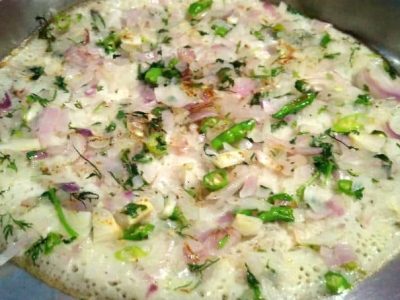
It took me a few failed batches to understand that ragi batter needs to be noticeably thinner than you think, almost watery in consistency, and that you should pour it quickly and let it spread on its own rather than pushing it around. Once I stopped fighting it, everything changed. The detail that made this recipe feel like mine was adding a generous handful of sliced onion directly into the batter. It creates these small pockets on the surface that go slightly caramelised as the dosa cooks — nothing dramatic, just a sweetness that balances the earthiness of the ragi in a way that keeps me coming back to this version specifically.
About the Recipe
Making this on a weekday morning is completely realistic. The batter comes together in one bowl with no special equipment, and the whole process from mixing to serving takes about thirty to thirty-five minutes, including the resting time.
Every ingredient here — ragi flour, rice flour, urad dal flour, rava, buttermilk — is available at any Indian grocery store and in most general supermarkets that stock Indian staples. I make this most often on Saturday mornings when I want something filling but do not want to spend an hour in the kitchen before the rest of the family is even awake.
Why you will love this recipe
The absence of fermentation is what gives this recipe a real place in a regular cooking routine. Most dosa recipes require soaking and fermenting overnight, which means you have to plan ahead. This one does not. You decide at eight in the morning that you want dosa, and by eight thirty, you are eating.
The combination of ragi flour with buttermilk gives the dosa a gentle tang without any waiting, and the cumin and ginger come through clearly in every bite. The batter, once mixed, sits for just twenty minutes while you prep the rest of breakfast, then it is straight onto a hot tawa. That twenty-minute rest is worth keeping — it lets the rava hydrate fully and makes spreading noticeably easier.
Cooking Tips
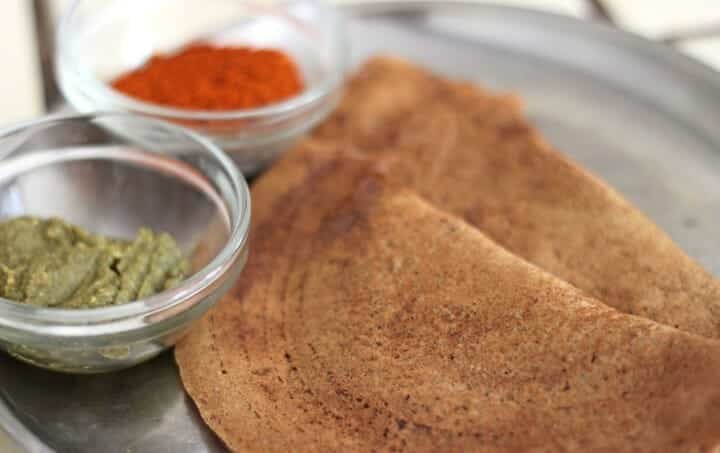
The most common beginner mistake with ragi dosa is making the batter too thick. If it pours slowly and holds its shape on the ladle, it will not spread and will likely stick. The batter should pour like thin buttermilk. If the dosa tears when you try to flip it, it is not ready — wait another thirty seconds.
I always check the underside by lifting one edge gently with a flat spatula before flipping. Ragi dosa crisps unevenly if the tawa is not hot enough when you start, so let it heat on medium for at least two minutes before the first pour.
Top Tips
- Rest the batter for at least twenty minutes before cooking. This gives the rava time to absorb moisture and makes the batter easier to spread without it pulling back.
- Use a cast iron or heavy non-stick tawa for the best results. Thin tawas heat unevenly and make it harder to get a consistent colour across the dosa.
- If the first dosa sticks, wipe the tawa with a halved onion dipped in a little oil. This is a quick way to season the surface between pours.
- Do not use cold buttermilk straight from the refrigerator. Bring it to room temperature first so the batter stays at an even consistency throughout.
- Slice the onions finely rather than chopping them. Thin slices distribute more evenly across the batter and cook through properly on a medium flame.
- Any leftover batter keeps well in the refrigerator for up to one day. Stir it once before using and add a splash of water if it has thickened.
Serving and Storing Suggestions
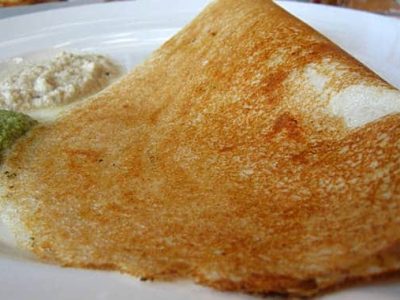
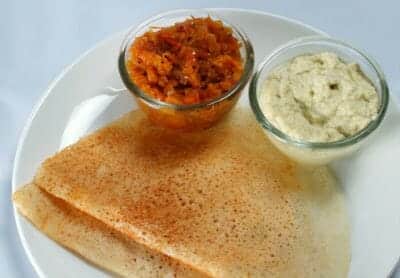
Prep time is about ten minutes, with twenty minutes resting and roughly fifteen to twenty minutes of cooking time across batches. This recipe makes around eight to ten medium dosas, enough for three to four people. Serve hot, directly off the tawa, with coconut chutney, tomato chutney, or a simple onion chutney.
Ragi dosa loses its crispness quickly as it cools, so serving in batches rather than all at once makes a difference. Leftover batter keeps in the refrigerator for one day in a covered bowl.
Similar Recipes
- Neer Dosa
- Oats Dosa
- Wheat Flour Dosa (Godhumai Dosai)
- Pesarattu (Green Moong Dal Dosa)
- Jowar Dosa
Nutrient Benefits
Ragi is one of the better sources of plant-based calcium, which makes this dosa a genuinely useful option if you are looking to add more calcium to everyday meals without supplements or dairy. It is also high in dietary fibre, which means the dosas keep you full longer than a plain maida or even a standard rice dosa would.
The buttermilk adds a small amount of probiotics, and the green chilli and ginger contribute to digestion. For a breakfast that takes under forty minutes, the nutritional return is solid.
Ragi Dosa
Ingredients
- 2 cups Ragi Flour
- 2 tbsp Rice Flour
- 2 tbsp Urad Dal Flour
- 2 tbsp Rava (Sooji)
- 5 to 6 Green Chillies finely chopped
- 2 inch Ginger minced
- 2 Onions finely sliced
- big handful Coriander Leaves finely chopped
- 2 tsp Cumin Seeds
- 1/2 cup Buttermilk
- Salt as per taste
- Oil as required
Instructions
- Combine the ragi flour, rice flour, urad dal flour and little salt in a bowl.
- Add all the other ingredients except oil and mix well without any lumps.
- Gradually add some water and mix well to make a slightly thin batter.
- Heat a tawa over medium flame.
- Pour a ladleful of the batter and spread evenly.
- Apply oil around the edges and cook on both sides until browned.
- Remove and serve hot with chutney of choice.
Sign up for our newsletter
Add Awesome Cuisine as a Preferred Source

Frequently Asked Questions
My ragi dosa kept sticking to the tawa even though I used oil. What went wrong?
The most likely cause is that the tawa was not hot enough before you poured the batter. Let it heat on medium flame for at least two minutes before the first dosa. Also check your batter consistency — if it is too thick, it will not spread quickly and will stick as it sits. The batter should be thin enough to pour and self-spread when the ladle tilts.
Can I skip the urad dal flour or rice flour if I do not have them?
You can skip one of them in a pinch, but both serve a purpose. Rice flour adds crispness and urad dal flour gives the dosa a little body and helps it hold together when flipping. If you skip both, the dosa will be softer and more prone to tearing. If you only have one, use whichever you have and reduce the water slightly to compensate.
My dosa batter turned out too thick after resting. Can I still use it?
Yes, just add water a tablespoon at a time and stir well until it reaches the right consistency. Rava absorbs moisture as the batter sits, so thickening is normal. The target consistency is closer to thin lassi than to regular dosa batter.
How do I know when the dosa is ready to flip?
Watch the top surface of the dosa. When the wet, dark patches disappear and the surface looks dry and matte, it is ready. Lift one edge with a flat spatula to check the underside — it should be a deep reddish brown with slightly crisped edges. If it resists, give it another thirty seconds rather than forcing the flip.
Can I make this without buttermilk?
Yes. Mix one tablespoon of plain curd (yoghurt) into half a cup of water and whisk it until smooth. That works as a direct substitute. You can also use plain water if you have no curd at all, though the slight tang from buttermilk does add something to the overall flavour of the batter.
image via food & remedy youtube video

Thank you for sharing this recipe