
Chettinad Meen Kuzhambu is one of the most recognisable fish curries from Tamil Nadu’s Chettinad region. Two oils are used: gingelly oil for frying the whole spices that go into the masala, and castor oil for building the curry base. The masala is ground coarse rather than smooth, and that texture makes a real difference to how the gravy carries the fish. Tamarind extract adds a sharp, clean sourness that balances the heat from both the red chilli powder and the dry red chillies in the masala. Serve with plain rice, idli or dosa.
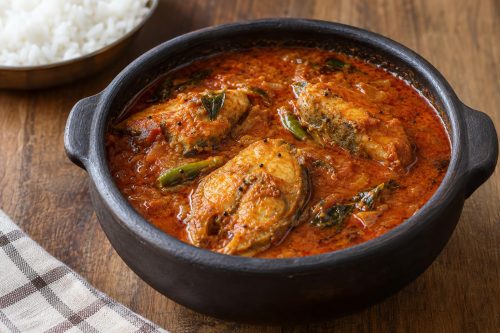
About the Recipe
The recipe uses two separate oils by design. Gingelly oil is used to fry the masala spices, including coriander seeds, cumin, saunf, peppercorns, dry red chillies and curry leaves, before grinding them coarse. Castor oil then carries the base of fenugreek, mustard, shallots, green chillies, tomatoes and ginger garlic paste.
Tamarind extract goes in after the masala to build the gravy. Fish is added last and cooked for just five minutes, which keeps it from overcooking and breaking apart in the pot.
Why You Will Love This Recipe
The freshly ground masala is what makes this Chettinad fish curry taste different from versions made with ready-made powders. Frying the spices separately in gingelly oil before grinding draws out their full flavour. Grinding them coarse rather than smooth means the masala stays present in every spoonful.
The tamarind and tomato combination gives the kuzhambu a tangy, slightly thick consistency that coats the fish well without being heavy. If you enjoy a curry where the spice work is visible and the sourness is upfront, this one will suit you.
Cooking Tips
The most common mistake is adding the fish too early, before the tamarind has simmered into the gravy. If the fish goes in too soon, it overcooks by the time the raw tamarind taste cooks out. Let the tamarind simmer for the full three to five minutes first.
Once the fish is in, do not stir vigorously. Gently swirl the pan or spoon the gravy over the fish instead. Vanjaram holds together well, but even firm fish will break if stirred hard during those final five minutes.
Top Tips
- Grind the masala coarse, not into a smooth paste. A slightly rough texture gives the gravy more body.
- Fry each masala ingredient separately in gingelly oil before combining and grinding. Spices have different roasting times and frying them together risks burning the smaller ones.
- Let the tamarind extract simmer for the full three to five minutes before adding the fish. This removes the raw sourness and allows the gravy to thicken slightly.
- Use sambar onions (shallots) rather than regular onions. They are smaller, sweeter and dissolve more naturally into the gravy base.
- Once the fish pieces are in the pan, handle them gently. Swirl the pan rather than stirring to keep the fillets intact.
- Castor oil has a strong flavour. If it is unavailable, gingelly oil can be used for the base as well, though the flavour will differ slightly from the traditional version.
Serving and Storing Suggestions
Serve hot with steamed rice, which absorbs the tamarind gravy well. Idli and dosa also work, particularly for a South Indian breakfast or brunch.
Leftover curry keeps in the refrigerator for up to two days. Reheat gently on the stovetop over low heat and add a small splash of water if the gravy has thickened too much. Avoid microwaving, as uneven heat can break the fish pieces.
Similar Recipes
- Vanjaram Meen Varuval (Seer Fish Fry)
- Chettinad Lamb Bone Sambar (Chettinad Elumbu Kuzhambu)
- Mangalore Fish Curry
- Chinchecha Kalwan (Tamarind Fish Curry)
- Kerala Fish Curry
Nutrient Benefits
Seer fish is a good source of protein and provides omega-3 fatty acids. Tamarind contributes iron and some B vitamins. Shallots and tomatoes add vitamin C and potassium. Gingelly oil is lower in saturated fat compared to many other cooking oils and provides vitamin E.

Chettinad Meen Kuzhambu (Chettinad Fish Curry)
Ingredients
- 400 gms, cleaned, washed (preferably Vanjaram/Seer Fish) Fish Fillets
- 1/2 tsp Fenugreek Seeds
- 4 to 5, slit Green Chillies
- 300 gms, chopped Tomatoes
- 200 gms, finely sliced Sambar Onions (Shallots)
- 2 tblsp Ginger Garlic Paste
- 2 tsp Mustard Seeds
- Curry Leaves - handful
- 2 tsp Red Chilli Powder
- 2 tblsp Castor Oil
- 3/4 to 1 cup Tamarind Extract
- Salt as per taste
- For the masala:
- 1 1/4 tblsp Coriander Seeds
- 8 to 10, round ones Dry Red Chillies
- 1 tsp Cumin Seeds
- 1 tsp Saunf
- 1/2 tsp Black Peppercorns
- Curry Leaves - few
- 2 tblsp Gingelly Oil
Instructions
- Heat gingelly oil in a pan over medium flame.
- Fry all the masala ingredients separately for 45 to 60 seconds and remove.
- Allow it to cool and grind to a coarse paste with a little water.
- Heat castor oil in a pan over medium flame.
- Fry the fenugreek seeds and mustard seeds for 30 to 45 seconds.
- Add the curry leaves, onions, green chillies and tomatoes.
- Saute well for 2 to 3 minutes.
- Add the ginger garlic paste and ground masala.
- Simmer for a minute and pour enough water.
- Add salt, tamarind extract and simmer for 3 to 5 minutes.
- Add the red chilli powder and stir well.
- Add the fish pieces and cook for 5 minutes or until the fish is cooked through.
- Ensure the fish pieces do not break.
- Remove from flame.
- Serve hot with rice, idli or dosa.
Sign up for our newsletter
Add Awesome Cuisine as a Preferred Source

Frequently Asked Questions
Can I use a fish other than Vanjaram for this Chettinad fish curry?
Vanjaram (seer fish) is recommended because its firm flesh holds together during the five minutes of cooking in the gravy. Other firm-fleshed fish such as king fish, snapper or pomfret also work well. Avoid soft or flaky fish like tilapia or basa, as they are likely to break apart in the simmering kuzhambu.
What is the role of castor oil in this recipe and can I skip it?
Castor oil is used for tempering the fenugreek and mustard seeds and for sauteing the base ingredients. It has a distinct quality that is traditional to Chettinad cooking. If castor oil is unavailable, gingelly (sesame) oil is the closest substitute and is already used in the masala step. The curry will still taste good, but the flavour will be slightly different from the traditional version.
My gravy tastes too sour. How do I fix it?
The sourness comes from the tamarind extract. If the gravy is too sharp, the most likely cause is using more than one cup of tamarind extract or not simmering it long enough. Simmering for the full three to five minutes before adding the fish mellows the raw tamarind taste. If the curry is already cooked and still too sour, add a small amount of water and let it simmer for another two to three minutes. A pinch of jaggery can also balance excess sourness without changing the overall flavour significantly.
Why does the recipe use two different oils?
Gingelly oil is used in the masala step because it pairs well with the dry spices and adds a nutty note to the ground paste. Castor oil is used for the curry base because it is traditional in Chettinad cooking and contributes a particular richness to the gravy. If you use only one oil throughout, the curry will still cook correctly but the flavour will be simpler.
How coarse should the masala paste be?
The masala should be ground to a rough, slightly textured paste rather than a completely smooth one. Add a small amount of water while grinding to help it come together, but stop before it becomes a fine puree. A coarser grind means the spice particles stay present in the gravy and you can taste each element distinctly. If the paste is too smooth, the masala tends to blend into the background.

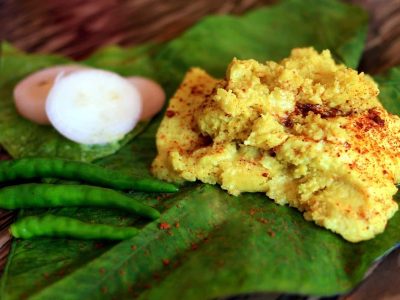


In some places it is used as an alternative to regular oil. It has a strong taste hence not many prefer it.