Coriander Chicken Curry was one of the first dishes I got badly wrong before I got it right. The first time I made it, I added the green paste too early, and by the time the chicken was cooked, the paste had darkened to a murky olive and lost all that fresh coriander brightness. The curry was still edible, but it was nothing like what I had in mind.
The second attempt, I held the paste back until the very end, and that small change made the whole difference. Now I make this at least twice a month, usually on Sundays when I have a full bunch of coriander sitting in the fridge that I need to use up. There is something very specific about the smell when the grated coconut and coriander hit the pan together, a warm, slightly earthy hiss, that still makes me stop and pay attention every single time.
About the Recipe
Every ingredient in this recipe is available at a standard Indian grocery store, and none of them require soaking or advance preparation. The most time-consuming part is making the green paste, which takes about ten minutes to sauté and grind. From start to finish, you are looking at roughly forty to forty-five minutes.
I would make this on a weeknight when I want something that feels homemade and substantial but does not need me standing over the stove for an hour. The cashew nuts thicken the paste without any cornflour or cream, which keeps the texture clean rather than heavy.
Why you will love this recipe
The paste does most of the work. Because you grind fresh coriander, coconut, cashew nuts, and spices together before anything else, by the time it hits the curry, it is already fragrant and layered. You are not building flavour slowly over an hour. You are adding it in concentrated form right at the end.
That method means the chicken stays central and the green paste wraps around it without overwhelming. The spice level is easy to read from the ingredients, so you can adjust the green chillies before you even turn on the stove. I like that this one works just as well spooned over plain rice as it does scooped up with a soft roti.
Cooking Tips
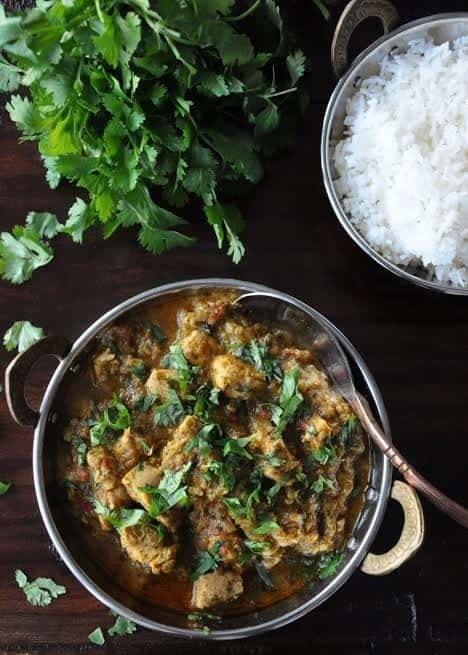
The most common beginner mistake here is adding the green paste too soon. If you put it in while the chicken is still cooking, the paste loses its colour and the fresh coriander flavour dulls greatly. Wait until the chicken is fully cooked and the gravy has reduced a little, then stir in the paste and bring it to a boil. Also, when you sauté the paste ingredients, keep the flame at medium. Coconut scorches quickly on high heat, and once it burns, it turns bitter and there is no coming back from that.
Top Tips
- Grind the paste while the chicken is simmering so you are not waiting around. That way both are ready at the same time.
- Use sambar onions (shallots) rather than regular onions here. They cook faster and give a slightly sweeter base that works better with the coconut.
- If your blender struggles with thick pastes, add two to three tablespoons of water when grinding. Too much water will make the paste loose, so add it gradually.
- Toast the cashew nuts lightly in the same pan before adding the other paste ingredients. It takes thirty seconds and makes the finished paste taste less raw.
- The curry thickens noticeably as it cools. If you are reheating leftovers, add a small splash of water and stir over a low flame before serving.
- Coconut oil is worth using here if you have it. The aroma it gives to the whole-spice tadka in step six is part of what makes this dish smell the way it does.
Serving and Storing Suggestions
This recipe serves three to four people. Total prep and cook time is around forty-five minutes, including the time to make the green paste. Serve hot with steamed rice, dosa, pulao, or roti. Leftovers keep well in an airtight container in the refrigerator for up to two days. The flavour actually settles and deepens overnight, so day-two leftovers are often better than day one.
Similar Recipes
- Coconut Milk Chicken Curry
- Green Masala Chicken
- Chettinad Chicken Curry
- Chicken Korma
- Kerala Style Chicken Curry

Coriander Chicken Curry
Ingredients
- 500 gms Chicken (chopped)
- 50 ml Coconut Oil
- 1 bunch Coriander Leaves
- 100 gms Shallots (Sambar Onions)
- 2 to 3 Tomatoes
- 3 to 4 Green Chillies
- 2 tbsp Ginger Garlic Paste
- 3 to 4 tbsp Cashew Nuts
- Curry Leaves (few)
- 1/2 Coconut (grated)
- Salt as per taste
- Cinnamon (a small piece)
- 1 to 2 Cloves
- 1 to 2 Cardamoms
- 1 tsp Coriander Powder
- 1/2 tsp Red Chilli Powder
- 1/4 tsp Cumin Powder
- 1/4 tsp Pepper Powder
- 1/8 tsp Saunf Powder (+ 1/8 tsp)
Instructions
- Heat 1 to 2 tblsp oil in a pan over medium flame.
- Add coriander powder, coriander leaves, grated coconut, red chilli powder, green chillies and cashew nuts.
- Saute for 1 minute and remove.
- Cool and then grind to a smooth paste.
- Heat remaining oil in another pan over medium flame.
- Add cinnamon, cloves, cardamoms, 1/8 tsp saunf powder, curry leaves, shallots, tomatoes, ginger garlic paste and saute for 2 to 3 minutes.
- Add the chicken pieces and mix well until evenly coated.
- Add salt, pepper powder, remaining saunf powder and cumin powder.
- Mix well.
- Pour enough water and simmer for 5 to 10 minutes or until chicken is cooked.
- Add the ground paste, stir and bring to a boil.
- When the gravy starts to thicken, remove from flame and serve hot as a side with rice, dosa, pulao or roti.
Sign up for our newsletter
Add Awesome Cuisine as a Preferred Source

Frequently Asked Questions
My green paste turned dark and lost its colour. What went wrong?
The paste was most likely added too early. You need to wait until the chicken is fully cooked before stirring in the ground paste. Adding it while the heat is still high or while the chicken is still releasing juices causes the coriander to oxidise and darken. Add the paste at the end, stir well, and just bring it to a boil before switching off the flame.
Can I use desiccated coconut instead of fresh grated coconut?
You can, but the paste will taste noticeably different. Fresh grated coconut has moisture and a mild sweetness that desiccated coconut lacks. If fresh is not available, use desiccated coconut soaked in a couple of tablespoons of warm water for ten minutes before grinding. It will not be identical, but it is a workable substitute.
The curry is too thin and watery. How do I fix it?
Simmer the curry uncovered for a few extra minutes after adding the paste. The cashew nuts and coconut in the paste help thicken the gravy as it reduces, but if you added too much water during the chicken-cooking stage, it will need time to concentrate. Keep the flame at medium-low and stir occasionally so the bottom does not catch.
I do not have saunf powder. Can I skip it or substitute something?
Saunf powder (fennel seed powder) adds a gentle anise-like warmth that is subtle but present in the background. You can skip it if you genuinely do not have it. The curry will still work. If you want to substitute, a very small pinch of ground star anise can approximate the flavour, but use less than the recipe calls for as star anise is stronger.
Can I make this with bone-in chicken instead of boneless chopped pieces?
Yes, and bone-in pieces actually give the gravy more body. The cooking time will increase. Add an extra ten to fifteen minutes to the simmering stage in step ten, and check that the chicken is cooked through before adding the paste. A lid on the pan during this stage helps if the gravy starts drying out before the chicken is done.