
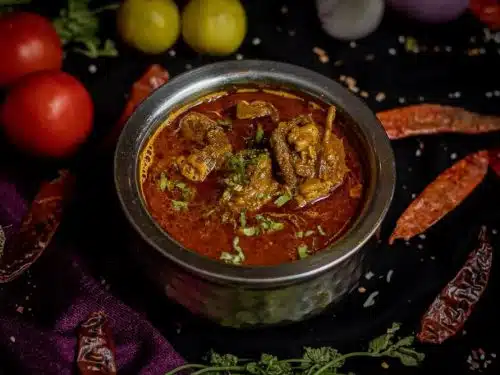
Rajasthani Mutton Curry came into my regular cooking because of a craving I could not place at first. It was not quite the spicy mutton curries I grew up eating, and it was not the restaurant-style gravies I had tried to replicate. It had something else going on, something drier and more intense, with a faint smokiness underneath the heat.
Once I traced it back to mustard oil and the freshly ground whole spice powder, I started making this version and kept coming back. The curd added at the end is the one detail I pay most attention to now. If you add it too fast on a high flame, it will split and the gravy turns grainy. Low flame, slow stir, and it absorbs cleanly into the mutton.
About the Recipe
Every ingredient in this recipe comes from a standard Indian kitchen. The whole spices you dry roast and grind take about five minutes and make a noticeable difference to the final flavour. The mutton needs 30 to 45 minutes of covered simmering, so plan for roughly an hour start to finish. I make this on weekends when I want something substantial without spending the entire afternoon on it.
The lime juice squeezed at the end is not decoration. It cuts through the richness of the curd-based gravy and pulls the whole thing together.
Why you will love this recipe
A freshly ground spice powder is what sets this apart from curries made entirely with pre-packed masalas. Dry roasting mace, cumin, cardamom, cinnamon, cloves, and bay leaf takes only a few minutes on a medium pan, and the fragrance once you grind them is immediate and distinct.
Mustard oil adds a sharp, slightly pungent base note that softens as it heats, giving the gravy a character that neutral cooking oils do not produce. The sugar in the middle of cooking might seem odd, but it helps the mutton pieces brown evenly and adds a very slight caramelised depth without making anything sweet. The lime juice at the end keeps the gravy from feeling heavy. Altogether, this is a curry that has a clear and specific flavour profile, and once you have made it, you will recognise exactly what to expect next time.
Cooking Tips
The most common mistake is adding the curd on a high flame. It will curdle and leave you with a split gravy that no amount of stirring will fix. Always reduce the flame fully before adding the curd, and keep stirring until it is absorbed. Another point where beginners go wrong is not frying the mutton long enough before adding liquid.
Those golden-brown edges on the mutton pieces are not just visual. They build the base flavour of the entire gravy. Give it the time it needs.
Top Tips
- Dry roast the whole spices on a low flame and keep stirring. They burn faster than you expect, and burnt mace or cloves will make the powder bitter.
- Mutton from the shoulder or leg works better here than ribs. These cuts hold up during the long simmer without falling apart completely.
- Whisk the curd until it is smooth before adding it to the pan. Lumpy curd added directly will not incorporate evenly.
- If the gravy thickens too much before the mutton is fully cooked, add a small splash of warm water, not cold, to avoid dropping the pan temperature suddenly.
- Mustard oil should be heated until it just begins to smoke lightly before you add the onions. This removes the raw sharpness of the oil without losing its character.
- Make the ground spice powder a day ahead if you want to save time. Store it in a small airtight jar and it keeps well for two to three days.
Serving and Storing Suggestions
Serves 3 to 4 people. Preparation and cooking time is around 1 hour to 1 hour 15 minutes. Serve hot with roti, phulka, or steamed rice. A side of sliced onion and a wedge of lime on the plate keeps it simple and traditional.
Leftovers store well in the refrigerator for up to two days in a covered container. Reheat on a low flame with a tablespoon of water stirred in, because the gravy tightens considerably once chilled.
Similar Recipes
- Rajasthani Laal Maas
- Mutton Rogan Josh
- Dhaba Style Mutton Curry
- Keema Matar
- Mutton Do Pyaza
Nutrient Benefits
Mutton is a good source of protein and iron, both of which matter if you are cooking for a family that eats meat regularly. The whole spices used here, particularly cinnamon, cloves, and cardamom, have long been used in Indian cooking for their digestive properties. Curd adds a small amount of calcium and also helps tenderise the mutton during cooking. The lime juice at the end contributes vitamin C, which helps the body absorb the iron from the meat more effectively.

Banjara Maas (Rajasthani Mutton Curry)
Ingredients
- 500 gms Mutton (washed, trimmed, chopped)
- 1/4 tsp Coriander Seeds (crushed)
- 2 tbsp Mustard Oil
- 1 Onion (julienned)
- 2 Dry Red Chillies
- 2 tsp Ginger Garlic Paste
- 1/2 tsp Turmeric Powder
- 1/2 tsp Red Chilli Powder
- 1 tsp Coriander Powder
- Salt as per taste
- 1/4 tsp Sugar
- 1/2 cup Curd (whisked)
- 2 to 3 tsp Lime Juice
Dry roast and Grind to a powder:
- Mace (few pieces)
- 1/4 tsp Cumin Seeds
- 2 Cardamoms
- Cinnamon (a small stick)
- 2 Cloves
- 1/4 Bay Leaf
Instructions
- Heat oil in a deep pan over medium flame.
- Saute the onions till they start to change colour.
- Add the red chillies and fry till crisp.
- Add the ginger garlic paste and fry for a minute.
- Add the turmeric powder, red chilli powder, coriander powder and mix well.
- Add some water and mix well.
- Add the mutton pieces and salt.
- Fry till the mutton pieces turn golden brown.
- Add sugar and mix well until the mutton pieces are evenly coated and browned.
- Reduce flame and add the curd.
- Stir to mix well until the curd has been absorbed.
- Cover the pan with a lid and simmer for 30 to 45 minutes.
- Remove the lid and simmer until the gravy starts to thicken.
- Add the ground powder and mix well.
- Add the coriander seeds and simmer for a minute.
- Remove and transfer to a serving dish.
- Sprinkle the lime juice and serve hot with roti or rice.
Sign up for our newsletter
Add Awesome Cuisine as a Preferred Source

Frequently Asked Questions
My gravy looks split and oily after I added the curd. What went wrong?
The curd was most likely added when the flame was still too high. Once curd hits a hot pan above a certain temperature, the proteins in it separate and you get an oily, grainy texture. Unfortunately, once it splits, it is difficult to fully correct. For next time, reduce the flame completely before adding the curd, and keep stirring continuously until it absorbs into the mutton.
Can I use regular refined oil instead of mustard oil?
You can, and the curry will still taste good, but it will lose that slightly sharp, smoky quality that mustard oil gives this dish. If you want something closer to the original flavour, try using at least half mustard oil mixed with a neutral oil. Cold-pressed mustard oil available at most Indian grocery stores works well here.
The mutton is still tough after 45 minutes of simmering. What should I do?
Some cuts of mutton, particularly if the pieces are large or the animal was older, take longer than 45 minutes to become tender. Add a small amount of warm water, cover the pan again, and give it another 15 to 20 minutes on a low flame. A pressure cooker is also a practical option if you are short on time. Two to three whistles on medium heat will get most mutton tender before you finish the gravy.
I do not have all the whole spices for the ground powder. Can I leave some out?
Mace and bay leaf are the ones that contribute the most distinctive notes, so try to keep those if possible. Cardamom and cinnamon are also worth including. Cloves can be reduced to one if two feels like too much. Cumin is easy to find and should not be skipped. If you are truly missing one or two, the powder will still work, just with a slightly simpler flavour.
How do I know when the mutton pieces are browned enough before adding the curd?
You are looking for a golden to deep brown colour on the outside of the pieces, and the mutton should come away from the pan surface without sticking when you turn it. The hiss and sizzle in the pan will quieten a little as the moisture releases and then evaporates. If it still looks pale or feels like it is steaming rather than frying, give it more time on medium heat before moving to the next step.

wow is the word.love the recipe.i wonder why they call it banjaara?