
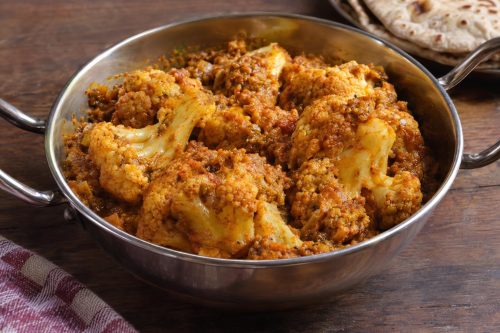
Gobi Dum is a slow-cooked cauliflower dish where the florets are coated in a freshly ground masala and cooked covered on a low flame until the oil separates and the spices have fully worked into the vegetable. This dish takes time, and that is the point.
The masala is built in two parts, ground separately and then mixed together. The coarse onion-garlic paste gives body and texture. The smooth paste of poppy seeds, cashewnuts, coconut and red chillies adds richness and colour. Together they form a coating that clings to the florets rather than pooling at the bottom of the pan.
This is a good dish to make when you want something substantial without any meat. Serve it with Garlic Naan or pulkas and it holds its own as a main course.
About the Recipe
Covering the pan and keeping the flame low allows the cauliflower to steam and fry at the same time. One cup of water goes in at the start, but by the time the dish is done, roughly 45 minutes later, that water will have cooked off and the oil will have separated from the masala. That separation is the sign the dish is ready.
The masala is applied directly onto the florets before cooking, including underneath and inside each piece. If it only sits on the surface, the interior of the cauliflower will taste plain. Take the time to coat each piece properly before arranging them in the pan.
Why You Will Love This Recipe
Poppy seeds and cashewnuts bring a quiet richness, grated coconut adds mild sweetness, and ten red chillies give genuine heat. The coarsely ground onion and garlic hold their presence through the long cook and remain clearly noticeable in the finished dish.
Cooking covered on a low flame for close to 45 minutes leaves the cauliflower completely tender without falling apart. The masala reduces and clings rather than forming a sauce, so every floret stays well coated.
This makes it a practical dish to serve. It does not go watery as it sits, so it holds up well if there is a short wait before the meal reaches the table.
Cooking Tips
Cut the florets on the larger side. Small pieces will overcook and break apart during the long cook. Bigger florets hold their shape and still cook through completely.
Soak the florets in salted water before applying the masala. This draws out any insects hiding inside the cauliflower and seasons the vegetable slightly before cooking begins.
Apply the masala underneath and inside each floret, not just on the outer surface. It will not penetrate during cooking the way a liquid curry would, so the initial coating is the only chance to get flavour into the interior.
Use a wide, shallow pan so the florets sit in a single layer. If they are piled on top of each other, the ones at the bottom will soften too quickly while the ones on top stay undercooked.
Stir carefully and infrequently. The florets become fragile once they begin to soften and rough handling will break them. A gentle turn every so often is enough to keep the masala from sticking to the pan.
Serving and Storing Suggestions
Serve Gobi Dum hot straight from the pan alongside pulkas or naan. It also works well with plain rice. Leftovers keep in a covered container in the refrigerator for a couple of days. Reheat gently in a pan on a low flame with a small splash of water to loosen the masala.
Similar Recipes
- Gobi Palak
- Cauliflower Tikka Masala
- Dum Ke Baingan
- Cauliflower Tomato Curry
- Gobi 65 (Cauliflower 65)
Nutrient Benefits
Cauliflower provides vitamin C and dietary fibre. Cashewnuts and coconut add fat and some protein. Poppy seeds contribute small amounts of calcium and iron. Together the main ingredients make this a reasonably nourishing vegetarian dish.
Gobi Dum
Ingredients
- 2 Big Cauliflower
- 3 tbsp Butter or oil
Grind Coarsely 1 :
- 7 or 8 Onion big
- 10 to 12 flakes. Garlic
Grind to smooth paste 2 :
- 1 tbsp Poppy seeds
- 10 or 12 Cashewnuts
- 10 Red chillies
- Salt - as required
- 1/2 tsp Turmeric powder
- 4 Cloves
- 3 Cinnamon
- 1 1/2 tsp Cumin seeds
- 1 1/2 tbsp Dhania
- 1 cup Grated coconut
Instructions
- Separate each cauliflowerinto big flowerettes.
- Soak in salted water for 10 to 15 minutes.
- Grind masala 1 and 2 separately and mix together.
- Apply this on cauliflower, taking care to apply underneath and inside also.
- Heat oil in a shallow pan, arrange the flowerettes, if there is any extra masala pour on top, add 1 cup of water, cover and keep on a low flame, till the flower is cooked completely and oil should separate from the masala ( approximately 45 minutes).
- Take care to stir in between carefully, so that masala does not stick to the pan.
- Serve hot with pulkas or Nans
Sign up for our newsletter
Add Awesome Cuisine as a Preferred Source

Frequently Asked Questions
Can I use fewer red chillies if I want a milder dish?
Yes. Reduce the red chillies in the smooth paste to suit your preference. Starting with five or six instead of ten is a reasonable adjustment. Taste the raw masala before applying it to the cauliflower, and keep in mind that the long cooking time will mellow the heat a little, so the finished dish will be slightly less sharp than the raw paste suggests.
How do I know when the Gobi Dum is fully cooked?
Two things will happen when the dish is ready. The cauliflower florets will be completely tender when you press them gently with a spoon, and the oil will have separated from the masala and pooled around the edges of the pan. Both should happen by around the 45-minute mark on a low flame.
Can I use frozen cauliflower for this recipe?
Fresh cauliflower is strongly recommended. Frozen cauliflower releases a lot of water as it thaws and cooks, which makes it difficult for the masala to cling to the florets, and the pieces are more likely to break apart during the long cook. If fresh is unavailable, thaw frozen florets completely and pat them very dry before applying the masala.
Should I use butter or oil, or can I use both?
The recipe gives you the choice of butter or oil, not both together. Either works. Butter adds a slightly richer flavour to the finished dish, while a neutral oil lets the spices come through more cleanly. If you use butter, watch the heat carefully in the early stages as it can brown faster than oil on a low flame.
What can I serve with Gobi Dum besides pulkas and naan?
Plain steamed rice works well because the thick masala coating on the florets acts almost like a dry curry. Chapati or phulka are also good options. If you are serving it as part of a larger meal, a simple dal alongside it rounds things out nicely. For a bread option, Garlic Naan pairs particularly well with the spiced coconut masala.
it’s excellant dish i come 2 know about this recipy first time