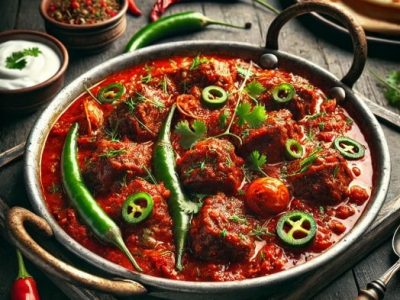
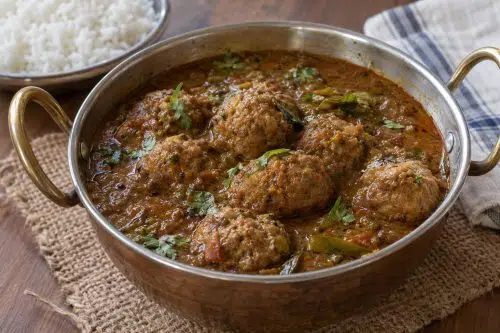
Mutton Kola Urundai Kuzhambu is a Tamil recipe built around two distinct preparations that come together in the final dish. The kola urundai is made by grinding partially cooked kheema with a paste of fried gram dal, cashew, khus khus, saunf and whole spices, then binding the mixture with raw kheema and egg. The balls go straight into the gravy without frying first. They simmer in a tamarind and tomato-based sauce, staying moist while the gravy thickens around them. By the time the dish is ready, the urundai and the kuzhambu are genuinely inseparable.
About the Recipe
What sets this mutton kola urundai recipe apart is the two-stage meat preparation. Cooking three-quarters of the kheema first with whole spices before grinding it into the paste gives the balls a cooked interior from the start. The remaining raw meat and egg are added purely for binding, which keeps the balls firm rather than crumbly once they go into the hot gravy.
The tamarind pulp needs enough simmering time to lose its raw sourness before the balls are added. Getting that stage right makes a real difference to the finished dish.
Why You Will Love This Recipe
The urundai stay firm through simmering because the binding method is deliberate. Using a portion of pre-cooked meat in the grind means the balls do not need to be fried to hold their shape. It also means they can absorb the tamarind gravy gradually from the outside as they cook.
That gradual absorption is exactly what the recipe tip points to when it says the meatballs have to be firm in the gravy for best results. You get urundai that are seasoned all the way through, and a gravy that has body from the liquid the balls release during simmering.
Cooking Tips
The most common beginner mistake is adding the meatballs to gravy that has not simmered long enough, which leaves a sharp raw tamarind taste in the finished dish. Let the tamarind pulp cook until the raw smell is completely gone before the urundai go in.
When grinding the meat mixture, avoid over-processing it into something too smooth. A little texture helps the balls stay firm. Once the balls are in the gravy, keep the simmer gentle so they do not break apart.
Top Tips
- Boil exactly three-quarters of the kheema with the whole spices and keep the remaining quarter raw. This ratio is what the binding relies on.
- Broil the cashew and khus khus before making the paste. This removes any raw flavour and makes the paste smoother.
- Simmer the tamarind gravy until the raw smell is fully gone before adding the meatballs. Adding them too early leaves a sharp, uncooked sourness in the dish.
- Keep the meatballs at a medium size. Very large balls take longer to absorb the gravy and may not cook evenly during simmering.
- Use a thick-bottomed pan for the gravy. It prevents the tamarind base from catching and burning during the long simmer.
- Do not stir the gravy aggressively once the meatballs are in. Gentle movement keeps them intact.
Serving and Storing Suggestions
Serve Mutton Kola Urundai Kuzhambu hot with plain steamed rice, dosa or idly. The tamarind gravy pairs particularly well with rice, where the sourness cuts through the richness of the meat.
Leftovers keep well in the refrigerator for up to two days in a covered container. Reheat on a low flame with a small splash of water to loosen the gravy, as it thickens considerably once cooled. The kuzhambu tends to taste even better the next day after the flavours have had time to settle.
Similar Recipes
- Chettinad Kola Urundai Kuzhambu
- Mutton Kuzhambu
- Erachi Urundai (Mutton Balls)
- Mutton Kofta
- Mutton Masala Vadai (Keema Masala Vadai)
Nutrient Benefits
Mutton kheema is a source of protein and iron. Fried gram dal adds plant protein and some fibre to the meatballs. Cashew and khus khus contribute small amounts of fat. Tamarind provides vitamin C. Served alongside rice, the dish offers a reasonable balance of protein and carbohydrates in a single meal.
Mutton Kola Urundai Kuzhambu
Ingredients
- 200 gms Mutton Kheema
- 50 gms Fried Gram Dal
- 4 Green Chillies
- 3 to 4 Cashew Nuts
- 2 tsp Khus Khus
- 2 tsp Saunf
- 1 tsp Pepper
- 2 gms Cinnamon
- 1/2 bunch Coriander
- 1 Egg
- 2 tsp Oil
- 1 tsp Cardamom
- Salt as per taste
- 1/2 cup Tamarind Pulp
- For Gravy:
- 100 gms Onion
- 50 gms Tomato
- 3 Green Chillies
- 2 tsp Coriander Powder
- 2 tsp Chilli Powder
- 1 pinch Turmeric Powder
- 50 ml Oil
- Salt to Taste
- 3 flakes Garlic
- 1/4 inch piece Ginger
- 1 tsp Fenugreek
- 1 tsp Mustard Seeds
- 1 sprig Curry Leaves
Instructions
- Boil 3/4th of the meat with whole masalas.
- Broil cashew, Khus Khus and make into a paste adding gram dal, green chillies, coriander, pepper, Saunf.
- Grind together the cooked meat and the paste adding oil and salt.
- Add the remaining raw meat and egg for binding.
- Make small-medium sized balls and keep aside.
- To make the gravy, chop onion, tomato and slit green chillies.
- Make a paste of garlic and ginger.
- Heat oil in a thick bottomed pan, temper with fenugreek seeds, mustard and curry leaves.
- Saute onions till golden brown in colour and add ginger garlic paste.
- Mix in tomatoes, chilli, turmeric and coriander powder. Add salt.
- Add tamarind pulp and simmer till raw smell disappears.
- Simmer the meatballs in the gravy till the meat carries the flavour of the gravy.
- Garnish with coriander leaves.
- Serve with rice, dosa or idly.
- Tip
- For best results, the meat balls (urundai) have to be firm in gravy.
Sign up for our newsletter
Add Awesome Cuisine as a Preferred Source

Frequently Asked Questions
Why does the mutton kola urundai recipe use both cooked and raw kheema?
The cooked kheema is ground with the spice paste to form the body of the meatball. The raw kheema and egg are added at the end purely as a binder. Without them, the ground mixture would be too loose to roll into firm balls. The pre-cooked portion also means the inside of each ball is already seasoned before it enters the gravy.
Can the meatballs be fried before adding them to the gravy?
The recipe does not call for frying, and simmering the balls directly in the gravy is intentional. Frying first would give them a sealed outer crust that resists absorbing the tamarind gravy. Simmering them allows the kuzhambu to penetrate gradually, which is what gives the finished dish its depth. If the balls are made with the correct ratio of cooked to raw meat and egg, they will hold their shape without frying.
How do I stop the meatballs from breaking apart in the gravy?
There are two main reasons meatballs break in the gravy. The first is too little binder, so make sure the full egg and the raw kheema portion are mixed in properly before rolling. The second is stirring too hard once the balls are in the pan. Stir only gently and infrequently after the urundai go in. Also keep the heat at a low simmer rather than a rolling boil, as vigorous bubbling can knock the balls against each other and cause them to crack.
How long should the tamarind gravy simmer before the meatballs are added?
Simmer the tamarind pulp in the gravy until the raw, sharp smell is completely gone. This usually takes around 10 to 15 minutes on a medium-low flame after the pulp is added. If you add the meatballs before this stage, the finished dish will have an unpleasant raw sourness. Once the gravy smells cooked and the oil begins to separate slightly at the edges, it is ready for the urundai.
What can I serve with Mutton Kola Urundai Kuzhambu apart from rice?
The recipe itself suggests rice, dosa or idly. Plain steamed rice is the most common pairing because the tamarind gravy soaks in well. Dosa works nicely too, particularly plain or slightly crisp dosa that can scoop up the gravy. Idly is a softer option that absorbs the kuzhambu quickly. If you are putting together a larger spread, Erachi Urundai on the side or a bowl of Mutton Kuzhambu alongside would round things out well.