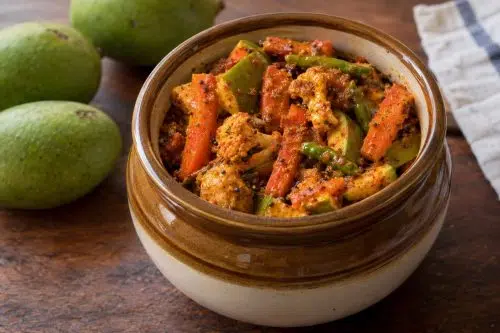
Raw mango, carrot and cauliflower all hold their shape well in a pickle. The raw mango brings sharpness, the carrot a mild sweetness, and the cauliflower soaks up the spiced mustard brine without going soft.
The process runs over two days, but the active work is minimal. Most of the time is salting and resting. Coarsely ground mustard paste gives this pickle its distinct, slightly pungent character.
If you enjoy Zucchini Pickle or the tangy notes in a Fruit and Vegetable Pachadi, this one is worth trying.
About the Recipe
Salting the vegetables on the first day draws out moisture. Cauliflower is salted and squeezed separately because it holds more water than carrot or mango. That liquid is discarded before mixing.
The mustard is ground coarse, not fine. Some of the cooled salt water is used to grind it, which keeps everything in the same brine and avoids adding plain water to the pickle.
After mixing, the pickle needs one more overnight rest before it is ready to eat.
Why You Will Love This Recipe
This pickle uses no oil and no vinegar. The raw mango provides the acidity, giving the pickle a clean, sharp tang. Because the mustard is ground coarse, the flavour comes in small bursts rather than as an overwhelming bitterness.
It is also one of the faster homemade pickles to put together. No sun-drying, no tempering, no complicated layering. If the vegetables are ready, the hands-on time across both days is under thirty minutes.
Cooking Tips
Squeeze the cauliflower well before mixing it with the other vegetables. If the salted water is left in, the pickle will be too salty and will not keep as long.
Let the boiled salt water cool completely before using it to grind the mustard. Warm water can make the mustard paste turn bitter.
Stop grinding while there are still visible flecks of mustard. A smooth paste is not what you want here.
If tender raw mangoes are not available, use firm green mangoes that have not started to ripen. Avoid any mango with a yellow tinge, as it will turn mushy in the pickle.
Chop the ginger and green chillies finely so they distribute evenly through the pickle.
Serving and Storing Suggestions
Serve this pickle as a side with plain rice and dal, or alongside flatbreads like paratha and roti. It also works well as a condiment with a simple Vegetable Sambar meal.
At room temperature the pickle keeps for 8 to 10 days. In a clean, dry, airtight jar in the refrigerator, it will keep for a couple of months. Always use a dry spoon when serving.
Similar Recipes
Nutrient Benefits
Raw mango provides vitamin C, carrots supply beta-carotene and some vitamin K, and cauliflower contributes vitamin C and folate. This pickle is eaten in small quantities, so the salt content is worth keeping in mind if you are watching sodium intake.

Mango and Vegetable Pickle
Ingredients
- 2 cup cauliflower pieces
- 250 gm carrots
- 5 -6 tender raw mangoes
- ½ cup + 7 tbsp salt
- ½ cup chilli powder
- 1/4 cup mustard
- 1 tsp asafetida
- 1 tsp turmeric powder
- 10 gm green chillies
- 15 gm ginger
Instructions
- Cut cauliflower into small pieces and mix with 3 tbsp of salt.
- Cut carrot and mangoes into small pieces and mix with 4 tbsp of salt.
- Next day, squeeze out the cauliflower pieces( discard water).
- Mix with carrot and mango pieces.
- Dissolve remaining salt in 1 cup of water. Boil and cool.
- Use some of this water to grind mustard to a coarse paste.
- Mix the ground paste with chili, turmeric and asafetida powder and remaining salt water.
- Mix it with vegetable pieces. Add chopped green chillies and ginger.
- The pickle will be ready to use the next day.
- Keeps well for about 8-10 days and a couple months in frig.
Sign up for our newsletter
Add Awesome Cuisine as a Preferred Source

Frequently Asked Questions
Can I use ripe mango instead of raw mango in this pickle?
No. Ripe mango is too soft and sweet for this recipe. It will turn mushy within a day and the pickle will not have the right sharp, tangy flavour. Use firm, fully green raw mangoes with no yellow patches.
Why does the recipe use boiled and cooled water rather than plain water?
Boiling the water with salt and then cooling it before use helps the pickle keep longer. Plain tap water can introduce bacteria that cause the pickle to spoil faster, especially when no oil or vinegar is used as a preservative.
My pickle tastes very salty after mixing. Is that normal?
It can taste quite salty on the first day. After the overnight rest, the salt distributes more evenly and the sharpness of the raw mango balances it out. Taste it the next day before deciding it needs adjustment. If it is still too salty, add a small amount of plain boiled and cooled water and mix well.
Can I reduce the amount of chilli powder if I want a milder pickle?
Yes, you can reduce the chilli powder to suit your preference. Start with two to three tablespoons and adjust after the pickle has rested overnight. You can also reduce the number of green chillies or remove the seeds before chopping them.
How do I know if the pickle has gone bad?
Discard the pickle if you notice a sour or unpleasant smell different from the normal sharp tang, any visible mould, or if the vegetables have turned slimy. Always use a clean, completely dry spoon every time you serve from the jar. Moisture from a wet spoon is one of the most common reasons homemade pickles spoil early.