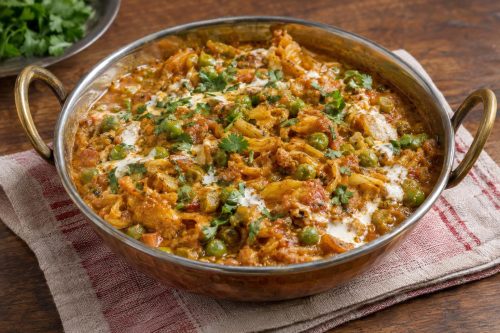
Cabbage Gravy with Cream is a two-stage dish. First, strips of cabbage are dipped in a spiced gram flour batter and deep fried until golden. Then those pakodas are simmered briefly in a tomato and onion gravy and finished with cream. It sits somewhere between a pakoda snack and a full curry, and works well as a main dish with roti or rice. The cream goes in at the very end, off the heat, so it stays smooth.
About the Recipe
The recipe has two parts. First, cabbage strips are coated in a thin gram flour batter seasoned with turmeric and chilli powder, then deep fried until golden. Second, a masala base is built from a ground paste of onion, garlic and ginger, fried with bay leaves, green chillies, tomatoes and powdered spices.
The fried cabbage and boiled peas go in only at the end for a short simmer. This keeps the pakodas from going completely soft. Beaten cream is poured over just before serving.
Why You Will Love This Recipe
The main draw here is the texture of the cabbage pakodas inside the gravy. Because the cabbage is fried before it enters the pot, it holds together rather than turning limp. The batter forms a thin crust that soaks up some gravy while still keeping its shape.
The cream poured over at the end keeps the finish mild against the chilli and coriander-cumin powder in the base. The heat is present but not sharp. It is a useful way to turn an ordinary cabbage into something that feels more considered.
Cooking Tips
The most common mistake is adding wet cabbage to the hot oil. Cabbage holds water in its leaves, and any moisture left on the strips will cause the oil to splatter and the batter to slide off. Pat the strips thoroughly on a dry cloth and shake each handful before dipping in the batter.
Keep the batter thin so it coats lightly rather than forming a heavy shell. Add the fried cabbage to the gravy only for the final one to two minutes so it does not become soggy.
Top Tips
- Dry the cabbage strips completely on a cloth before battering them. Even a small amount of water left on the surface will cause the batter to fall off during frying.
- Keep the batter at a thin, flowing consistency. A thick batter makes heavy pakodas that absorb too much gravy and turn mushy.
- Fry the ground onion, garlic and ginger paste until it is properly browned before adding the tomatoes. Undercooked paste will leave a raw onion taste in the finished gravy.
- Beat the cream smooth before pouring it over the curry. Adding unbeaten cream straight from a cold container can leave streaks rather than blending evenly.
- Add the fried cabbage pakodas only in the last one to two minutes of cooking. A longer simmer will soften the batter crust and the pakodas will fall apart.
- Use the oil left from frying the pakodas to build the masala base. Leave about two tablespoons in the kadai and proceed directly. This saves oil and carries the flavour from the frying stage into the gravy.
Serving and Storing Suggestions
Serve the curry hot, straight from the serving bowl, with the cream and coriander leaves on top. It goes well with roti, paratha or plain steamed rice.
Because the pakodas soften quickly once they are in the gravy, this dish is best eaten soon after it is made. If you need to store leftovers, refrigerate them in a covered container and reheat gently on low heat. The pakodas will be softer after storing, but the gravy flavour will still be good.
Similar Recipes
- Cabbage Thoran
- Aloo Peas Gravy
- Baked Brinjals in Spicy Gravy
- Cabbage Pan Rolls
- Stuffed Onions in Spicy Gravy
Nutrient Benefits
Cabbage is a good source of vitamin C and dietary fibre. Green peas contribute plant protein, iron and B vitamins. Gram flour adds some protein and carbohydrates. Cream adds fat, so adjust the quantity if needed.

Cabbage Gravy with Cream
Ingredients
- 1 small Cabbage
- 1 cup, boiled Shelled Peas
- 2 medium, chopped Tomatoes
- 3 , slit Green Chillies
- 2 tblsp, chopped Coriander Leaves
- 3 tblsp Cream
- 2 Bay Leaves
- Coriander - Cumin Powder - 2 tblsp
- 1 tsp Chilli Powder
- 1 tsp Turmeric Powder
- Salt to taste
- Grind to Paste:
- 1 large Onion
- 6 cloves Garlic
- 1 inch piece Ginger
- For Pakodas:
- 4 tblsp Gram Flour
- 1/2 tsp Turmeric Powder
- 1 tsp Chilli Powder
- Salt to taste
- Water to mix
- Oil for frying
Instructions
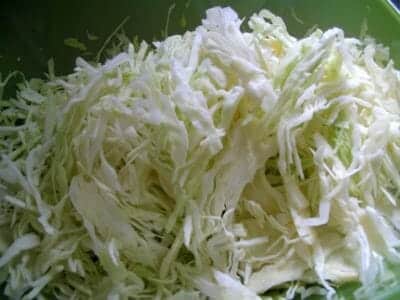
- Wash and cut cabbage into strips, pat on a dry cloth so as to remove all water.
- Mix together all ingredients for pakodas, except oil.
- The batter should be of a thin consistency.
- Heat oil, take a handful of cabbage, shake well so as to remove any water left, dip in batter.
- Deep fry to a golden brown colour.
- Leave on paper towels for oil to drain.
- When cabbage has been fried, remove the excess oil, leaving about 2 tblsp in the kadai.
- Heat this, add bay leaves, slit chillies and ground paste.
- Fry till masala is browned.
- Add tomatoes and the powdered masalas, continue to fry till oil surfaces.
- Add 1 to 1 1/2 cups water and salt.
- Cover and cook on low heat till a gravy is formed.
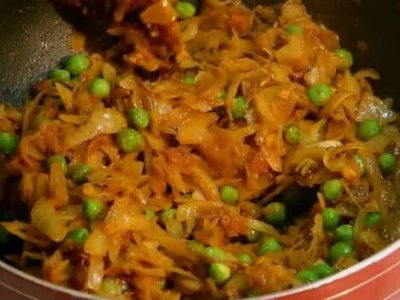
- Add fried cabbage, cooked peas, 1 tblsp coriander leaves and simmer for 1 to 2 minutes.
- Remove from fire and transfer into a serving bowl.
- Beat cream smooth, pour over curry and sprinkle the rest of the coriander leaves.
- Serve hot.
Sign up for our newsletter
Add Awesome Cuisine as a Preferred Source

Frequently Asked Questions
Can I make the cabbage pakodas in advance and add them to the gravy later?
Yes, you can fry the pakodas a few hours ahead and keep them at room temperature on paper towels. Add them to the finished gravy only when you are ready to serve, and simmer for just one to two minutes. Pre-fried pakodas that have been sitting for a while may soften a little faster, but the flavour will still be good.
My batter keeps sliding off the cabbage strips during frying. What am I doing wrong?
The most likely cause is moisture on the cabbage. Cabbage leaves trap water, and even after washing, the strips need to be patted dry on a cloth and shaken before dipping in the batter. Also check that your batter is not too thin. It should coat the cabbage lightly when you lift a strip out, not run off completely. If the oil is not hot enough when you add the cabbage, the batter can also slip before it sets.
Can I use fresh cream from a packet, or does it need to be whipped?
You do not need to whip the cream. The recipe asks you to beat it smooth, which means stirring or whisking it briefly so it is lump-free and pourable. Fresh cream from a packet works well. Pour it over the curry after you have taken the pot off the heat and transferred the curry to a serving bowl. This keeps the cream from splitting due to excess heat.
What can I use instead of cream if I do not have any?
A few tablespoons of thick yogurt, beaten smooth, can be used as a substitute. The result will be slightly tangier and less rich than cream. Coconut cream also works if you do not mind a different flavour. In either case, add the substitute off the heat to avoid it splitting in the hot curry.
The gravy tastes raw even after frying the masala for several minutes. What should I check?
The ground paste of onion, garlic and ginger needs to be fried until it is properly browned, not just softened. This usually takes more time than expected, especially if the paste has a high water content. Keep the heat at medium and stir regularly. The paste is ready when it has darkened in colour, reduced in volume and the raw smell has gone. Only then should you add the tomatoes and powdered spices. Rushing this step is the most common reason a gravy tastes undercooked.