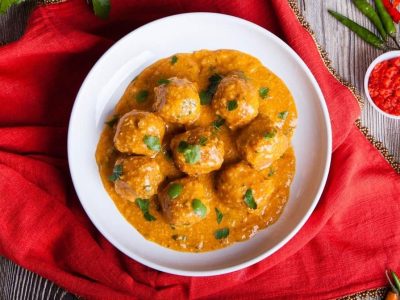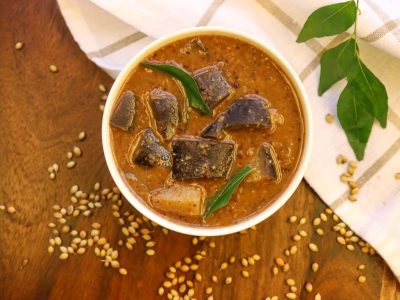
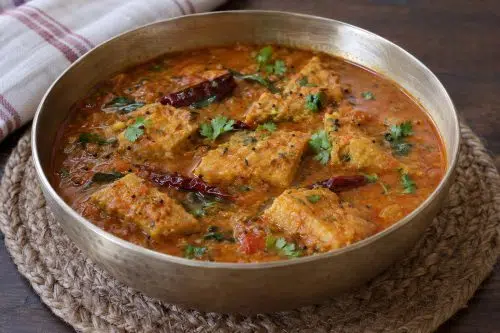
This dal curry is worth making when you want something more substantial than a plain dal but do not want to spend the entire day in the kitchen. The method is different from most dal preparations. Rather than boiling the dal until soft, you grind it raw into a paste, steam it into a firm cake, cut it into diamond shapes and fry them. Those fried pieces go into a tamarind-based gravy with tomatoes, coconut and whole spices. The fried dal holds its shape in the curry and gives you a bite that soft-boiled dal simply cannot. If you enjoy Dal Dhokadi, this recipe follows a similar idea of giving dal a second life in a gravy.
About the Recipe
The recipe has two clear stages and it helps to treat them separately.
The first is the dal paste. It must be ground coarse, not smooth, so the steamed cake has some body and does not turn rubbery when fried.
The second is the curry base, which gets its sourness from tamarind and its body from a ground coconut and coriander seed paste fried until the oil separates. The tadka added at the end with mustard seeds, cumin seeds and curry leaves is not decorative. It lifts the whole curry noticeably.
Why You Will Love This Recipe
The strongest reason to try this recipe is the texture. The fried dal pieces stay firm inside the gravy rather than dissolving into it, so every spoonful has something to bite into. Most dal preparations do not offer that.
The tamarind and tomato base is tangy without being sharp, and the ground coconut paste rounds it out so the gravy feels full-bodied. If you enjoy recipes like Gujrati Spicy Dal or Dal Tadka, this one sits in the same family but delivers a noticeably different eating experience.
Cooking Tips
The most common beginner mistake is grinding the dal too fine. A coarse paste steams into a firm cake that fries well. A smooth paste turns dense and chewy.
Make sure the steamed cake is fully firm before cutting and frying. If it feels soft in the centre, give it more time on the steam.
When frying the ground coconut paste for the curry, wait until the oil visibly separates before adding the tomatoes. Adding them too early leaves the paste undercooked and the gravy can taste raw.
Top Tips
- Soak the dal for the full two hours. Under-soaked dal will not grind evenly and the paste will be lumpy rather than coarse.
- Grease the thali well before spreading the paste. A thin layer of oil prevents the steamed cake from sticking and tearing when you cut it.
- Cut the diamond pieces only after the steamed cake has cooled slightly. Hot cake crumbles at the edges when cut.
- Fry the dal pieces in batches. Crowding the pan drops the oil temperature and the pieces absorb more oil instead of crisping up.
- Soak the tamarind in hot water, not cold. Hot water softens it in four to five minutes and makes squeezing out the pulp much easier.
- Add the fried dal pieces only after the gravy has come to a full boil, then reduce the heat. This keeps the pieces from breaking apart during the five-minute cook.
Serving and Storing Suggestions
Serve this dal curry hot with plain steamed rice or chapati. The tangy gravy works particularly well with rice.
If you are serving it later, store the dal pieces and the gravy separately and combine them only when reheating. The pieces soften considerably if left sitting in the gravy overnight, which changes the texture entirely.
The gravy keeps well in the refrigerator for a couple of days. Reheat it to a simmer before adding the pieces and serving.
Similar Recipes
Nutrient Benefits
Tuvar dal is a good source of plant protein and dietary fibre, making this a reasonably filling meal without meat. Tomatoes and fresh coriander add vitamins to the dish. Coconut contributes natural fats that help carry the flavour of the spices through the gravy.
Dal Curry
Ingredients
- For Dal
- 250 gms Tuvar or Arhar Dal
- 1 tsp Ginger, grated
- 1 tsp Garlic, grated
- 6 Green Chillies
- handful of Coriander leaves
- 2 medium Onions, minced
- Salt and Chilli powder to taste
- For Curry
- 1 lime sized ball of Tamarind
- 4 Red Chillies
- 1 tblsp Coriander seeds
- a few Curry leaves
- 2 medium Onions
- 2 big Tomatoes, grated
- 4 Garlic Flakes
- 1/4 tsp Mustard seeds
- 1/4 tsp Cumin seeds
- 1/4 Coconut
- handful of Coriander leaves
- Salt to taste
Instructions
- Soak dal in water for a couple of hours.
- Drain water and grind dal to a coarse paste with ginger, chillies, garlic and onions.
- Mix salt, lime juice and coriander leaves in the dal paste.
- Make a 1/2 an inch thick layer of the paste in a greased thali.
- Steam it till it turns firm.
- Remove from fire, cut into diamond shaped pieces.
- Deep fry the diamond pieces to a golden colour.
- Grind coconut, chillies, coriander seeds and garlic to a paste.
- Heat 2 tblsp of oil and fry the ground paste till oil comes out.
- Add tomatoes, salt and turmeric powder.
- Cook till the tomatoes turn soft.
- Meanwhile, soak tamarind in hot water for 4-5 minutes and squeeze out the pulp
- Pour tamarind water along with 2 cups of water into the tomatoes.
- Heat the mixture till it boils and then reduce heat and add the dal pieces.
- Cook for 5 minutes.
- Heat 2 tblsp of oil and put in mustard and cumin seeds, curry leaves and 2 broken red chillies.
- When the seeds stop popping, pour the oil mixture over the curry.
- Garnish with coriander leaves and serve.
Sign up for our newsletter
Add Awesome Cuisine as a Preferred Source

Frequently Asked Questions
Can I use a different dal instead of tuvar or arhar dal?
Tuvar dal, also called arhar dal or split pigeon peas, works best here because it grinds into a firm paste that holds together after steaming. Chana dal can work as a substitute since it also grinds coarsely and steams firm. Moong dal tends to produce a softer paste and the steamed cake may not hold its shape as well when you cut and fry it.
My steamed dal cake is cracking when I try to cut it. What went wrong?
This usually happens when the paste is too dry before steaming. If the dal was not soaked long enough or was ground without enough moisture, the cake turns dry and brittle. Make sure the dal soaks for the full two hours. Also, let the cake cool for a few minutes before cutting. Cutting while it is very hot causes cracking at the edges.
The fried dal pieces are breaking apart in the curry. How do I prevent this?
Two things usually cause this. First, the pieces may not have been fried long enough to form a firm crust. They need to reach a proper golden colour all over before going into the gravy. Second, adding them while the heat is too high causes them to knock against each other and break. Bring the gravy to a boil, then reduce the heat to a gentle simmer before adding the pieces, and avoid stirring too vigorously.
How sour should the tamarind water be in this recipe?
The tamarind in this recipe is a lime-sized ball dissolved in enough hot water to produce roughly two cups of liquid, which then goes in along with the additional two cups of plain water called for in the instructions. This gives a background sourness rather than a sharp tang. If your tamarind is very concentrated, use slightly less pulp and taste the gravy before adjusting. The tomatoes also add some acidity, so the combined sourness should be noticeable but balanced.
Can I skip the deep frying and add the steamed dal pieces directly to the curry?
You can, but the result will be quite different. Without frying, the steamed pieces are soft and they will break down and dissolve into the gravy during the five-minute simmer. The fried crust is what allows the pieces to hold their shape and gives the dish its distinctive texture. If you want to reduce oil, shallow frying the pieces is a reasonable alternative, though they will take a little longer to colour evenly.