
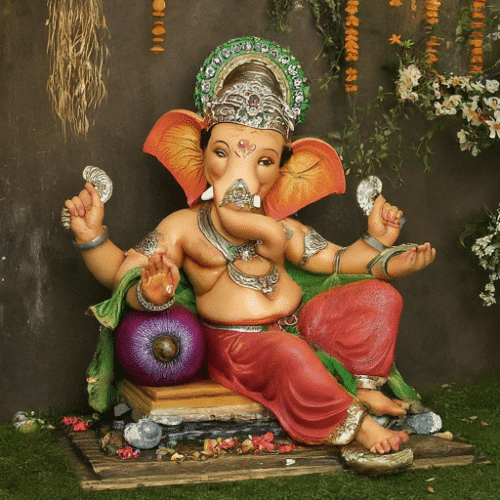
The first sign that Ganesh Chaturthi has arrived in a home isn’t always the clay idol travelling home on someone’s shoulder, balanced carefully past the potholes. More often, it’s the smell. Ghee melting in a heavy kadai. Jaggery turning glossy and faintly bitter at the edges, the way it should. Somebody’s grandmother calling out from the kitchen that the kozhukattai dough needs ten more minutes of rest, and nobody dares argue with her.
For ten days every year, ordinary homes across India turn into something between a temple and a sweet shop, and the line between worship and snacking gets pleasantly, deliciously blurred. Whether you grew up with this festival or you’re approaching it for the first time this year, there’s a way in through the kitchen, and that’s where this guide starts.
Table of Contents
Key Takeaways
- Ganesh Chaturthi 2026 falls on Monday, 14 September, with the ten-day Ganeshotsav ending on Visarjan day, 25 September.
- The festival marks the birth of Lord Ganesha and is built around bringing home a clay idol, performing daily poojas, and immersing the idol in water on the final day.
- Modak is widely held to be Lord Ganesha’s favourite food, but the rest of the spread changes by region: Maharashtra leans on modak and puran poli, Tamil Nadu on kozhukattai and sundal, Andhra Pradesh on undrallu.
- Almost everything made for the festival is vegetarian and onion-garlic-free, built from rice flour, fresh coconut, jaggery and lentils you likely already have in the pantry.
- You don’t need special equipment. A steamer (an idli pot works fine) and a heavy-bottomed kadai will carry you through the entire spread.
Here’s the thing about Ganesh Chaturthi recipes: they look intimidating in photographs and turn out to be some of the most forgiving cooking you’ll do all year. The dough is patient. The fillings don’t punish small mistakes. If you’ve been putting off making modak because of horror stories about pleating, this is the year to stop putting it off.
Ganesh Chaturthi is a ten-day Hindu festival that marks the birth of Lord Ganesha, the deity of wisdom, prosperity and new beginnings. Also called Vinayaka Chaturthi or Ganesh Chauth, it falls on the fourth day of the waxing moon in the Hindu month of Bhadrapada, usually landing somewhere between mid-August and mid-September. The festival opens with installing a clay idol at home or in a public pandal and closes ten days later with Visarjan, when the idol is carried out and immersed in a river, lake or the sea.
Why Is Ganesh Chaturthi Celebrated?
Ganesh Chaturthi is celebrated to mark the birth of Lord Ganesha and to invite his blessings for wisdom, prosperity and the clearing of obstacles before any new beginning. For most of its history, that’s all it was: a private, family-sized ritual, mostly observed in Maharashtra, with little fanfare beyond the household shrine.
That changed at the end of the nineteenth century. In 1892, a Pune resident named Krishnajipant Khasgiwale travelled to Gwalior and watched a public Ganesh celebration there for the first time. He came home and shared the idea with his friends Bhausaheb Rangari and Balasaheb Natu, and Rangari went on to install Pune’s first public Ganesha idol soon after.
Lokmanya Bal Gangadhar Tilak transformed Ganesh Chaturthi into a mass public festival in 1893, using his newspaper Kesari to turn a private household ritual into a city-wide movement, partly because religious gatherings were exempt from British colonial restrictions on public assembly (Wikipedia, Ganesh Chaturthi).
Tilak’s version of Ganesh Chaturthi did double duty. It let Hindus from every caste gather in the open without breaking colonial assembly laws, and it gave the independence movement a shared, joyful occasion to organise around. More than a century on, the festival has outlasted the politics that shaped it and kept the part that actually mattered: a household god, invited home for ten days, fed sweets, and sent off with a procession.
When Is Ganesh Chaturthi in 2026?
Ganesh Chaturthi 2026 falls on Monday, 14 September, and the ten-day Ganeshotsav that follows ends with Visarjan, the immersion ceremony, on Friday, 25 September.
Ganesh Chaturthi 2026 begins on 14 September, with the Madhyahna puja muhurat (the most auspicious midday window for installing the idol) generally falling between late morning and early afternoon depending on your city. The ten-day Ganeshotsav ends with Visarjan on 25 September (DrikPanchang, 2026).
How long anyone actually celebrates varies by region and household. Maharashtra tends to go the full ten days, with the biggest public pandals in Mumbai and Pune running elaborate programmes the whole time. In Tamil Nadu, where the festival is often called Vinayagar Chaturthi, many homes keep it to a single day of pooja and kozhukattai, with the idol immersed the same evening. Neither version is the “real” one. They’re just different inherited rhythms for the same occasion.
What Happens During the Ten Days of Ganeshotsav?
The ten days of Ganeshotsav follow a fairly consistent shape: idol installation, daily poojas with food offerings, an evening aarti, and a final procession to immerse the idol in water. Beyond that basic rhythm, the scale varies wildly, from a small clay idol on a kitchen shelf to a fifteen-foot pandal idol with its own brass band.
Preparation usually starts weeks ahead. Idol-makers, working mostly in clay or eco-friendly materials these days, begin shaping Ganesha’s form months in advance, since a good murti takes time to dry and paint properly.
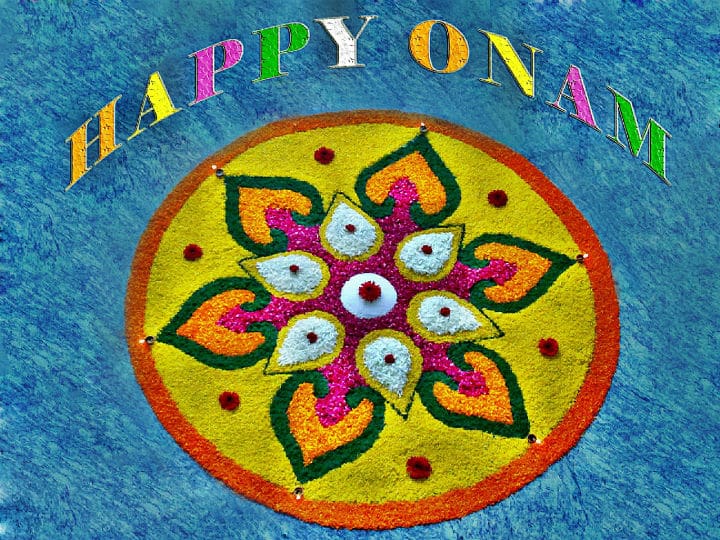
Closer to the festival, the decorating begins at home. Families clean a corner of the house, set up a small mandap, and surround it with flowers, lights and a rangoli at the doorway, usually made fresh each morning with coloured powder or rice flour. None of this needs to be elaborate. A clean shelf, a string of marigolds and some care is enough; the festival has never been about how much you spend on it.
Once the idol is installed, the household settles into a daily rhythm: morning aarti, an offering of food, and an evening lamp. On the final day, the idol leaves the way it arrived, except now it’s accompanied by drums, singing and a crowd, heading toward whichever body of water is closest.
There’s something almost theatrical about watching the same idol that was treated like visiting royalty for ten days get carried to the river and let go without ceremony or grief. It’s the festival’s whole philosophy in one afternoon: hold on completely, then let go completely.
What Foods Are Made for Ganesh Chaturthi?
Ganesh Chaturthi food centres on naivedyam, the offering placed before Lord Ganesha each day before anyone else in the house eats, and nearly all of it is built from the same short list of ingredients: rice flour, fresh coconut, jaggery and lentils. What changes is the region. In Maharashtra, modak, a steamed dumpling filled with coconut and jaggery, and puran poli, a sweet stuffed flatbread, carry most of the weight, with ukadiche modak (steamed) and fried modak both making an appearance over the ten days.
Head south and the picture shifts. Tamil Nadu and Kerala lean on kozhukattai in half a dozen forms, alongside sundal made from chickpeas or peanuts. Andhra Pradesh and Telangana favour undrallu, steamed rice-and-lentil dumplings that look almost like a savoury cousin of modak. Karnataka brings kadubu and karjikai to the table, and in Goa, the festival’s sweet of choice is patoleo, rice batter steamed inside a turmeric leaf.
| Region | Signature Dish | What Makes It Different |
| Maharashtra | Modak & Puran Poli | Steamed rice-flour dumplings with coconut-jaggery filling; puran poli is a stuffed sweet flatbread served alongside. |
| Tamil Nadu & Kerala | Kozhukattai & Sundal | Rice-flour dumplings in sweet and savoury versions; sundal adds a protein-rich, savoury counterpoint. |
| Andhra Pradesh & Telangana | Undrallu | Steamed rice-and-lentil dumplings, often unsweetened or only lightly sweet. |
| Karnataka | Kadubu & Karjikai | Kadubu mirrors modak; karjikai is a fried, coconut-stuffed pastry. |
| Goa | Patoleo | Rice batter steamed inside a turmeric leaf, which lends a distinct earthy aroma. |
Jaggery, the unrefined sugar at the heart of most Ganesh Chaturthi sweets, contains roughly 11.4mg of iron per 100g, making it considerably more nutrient-dense than refined white sugar (Indian Food Composition Tables 2017, ICMR-National Institute of Nutrition).
How Do You Make Modak at Home?
Modak is the dish Lord Ganesha is said to love most, which is probably why it’s the one Ganesh Chaturthi recipe most people attempt at least once, regardless of which region they grew up in. The classic ukadiche modak (literally ‘steamed modak’) uses a rice flour dough you shape into small cups, fill with coconut and jaggery, pleat shut, and steam. The pleating looks fiddly the first time. It gets easier by the third one.
Key Ingredients
- 1 cup rice flour
- 1 cup water
- ½ tsp ghee, plus extra for greasing
- A pinch of salt
- 1 cup fresh grated coconut
- ¾ cup grated jaggery
- ¼ tsp cardamom powder
- A few strands of saffron (optional)
Method
- Make the filling first. Heat a kadai on low flame, add the grated coconut and jaggery, and cook gently until the jaggery melts and the mixture thickens into a sticky mass that holds together, about 6 to 8 minutes. Stir in the cardamom powder and saffron, then set the filling aside to cool completely.
- Bring the water to a boil in a heavy-bottomed pan with the salt and ghee.
- Lower the heat, add the rice flour all at once, and stir briskly until it comes together into a rough mass.
- Cover the pan and let the dough rest off the heat for 5 minutes, then knead it while it’s still warm (greased hands help here) until smooth and pliable.
- Pinch off small portions and roll into balls about the size of a small lime.
- Flatten each ball into a disc, either with greased fingers or a modak mould, and shape into a small cup with thin edges.
- Fill with a spoonful of the cooled coconut-jaggery mixture.
- Pleat the edges together and pinch the top into a point, or use a mould to shape it in one motion.
- Steam the modaks on a greased plate or idli stand for 10 to 12 minutes, until the outer shell turns slightly glossy and translucent.
- Let them rest for a couple of minutes before lifting off the steamer. They’re fragile while hot and firm up as they cool.
If the rice flour dough cracks while you’re shaping it, the water probably wasn’t hot enough, or the dough sat too long and cooled down. A few drops of warm water worked in by hand will usually fix it.
What Are the Different Kozhukattai Varieties?
Kozhukattai is the Tamil Nadu and Kerala answer to modak: a rice flour dumpling, steamed rather than fried, that swings between sweet and savoury depending on the filling. Where modak tends to come in one or two standard versions, kozhukattai has spawned an entire family of variations, and most households make at least three or four kinds across the festival, whether they’re celebrating for ten days or just one. Uppu kozhukattai, the savoury version filled with spiced urad dal, is usually the one that breaks up an otherwise relentlessly sweet spread.
| Variety | Filling | Cooking Method |
| Vella Kozhukattai | Coconut and jaggery | Steamed |
| Uppu Kozhukattai | Spiced urad dal | Steamed |
| Paal Kozhukattai | Plain rice balls | Simmered in sweetened coconut milk |
| Fried Kozhukattai | Coconut and jaggery | Deep-fried |
| Ragi Kozhukattai | Coconut and jaggery, ragi-flour shell | Steamed |
Every Tamil household seems to have a strong opinion about exactly how thin the kozhukattai shell should be, and every single opinion turns out to be correct in that particular kitchen.
What Else Is Made for Ganesh Chaturthi Beyond Modak and Kozhukattai?
Modak and kozhukattai get most of the attention, but the rest of the Ganesh Chaturthi spread carries its own weight. Besan ladoo, made from roasted gram flour, ghee and sugar, shows up in many North and West Indian homes as an easier, no-steaming alternative, especially for cooks short on time. Puran poli, a sweet stuffed flatbread filled with cooked chana dal and jaggery, is a Maharashtrian staple that often gets served alongside modak rather than instead of it.
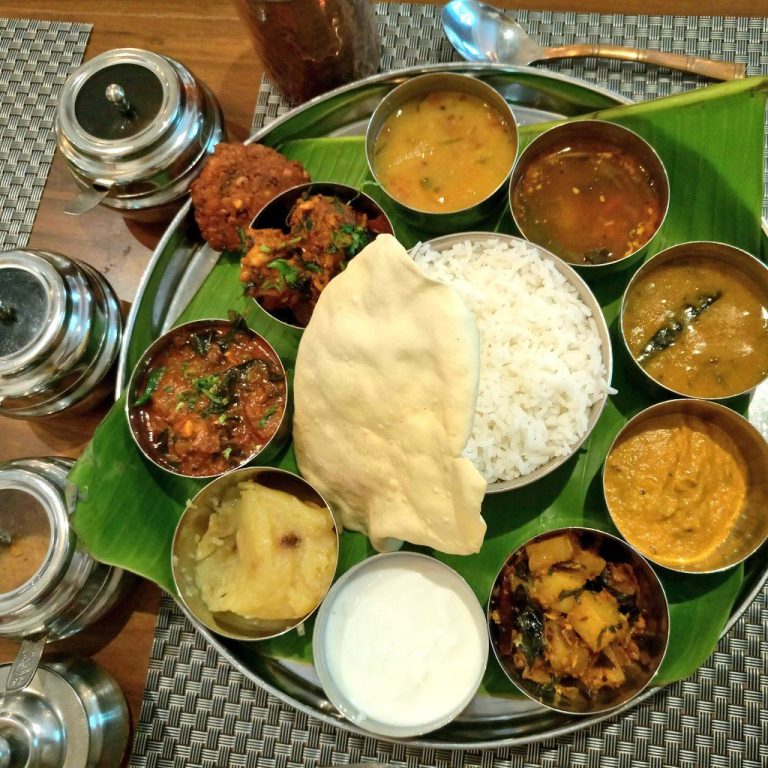
Sundal, a humble dish of boiled chickpeas or peanuts tossed with mustard seeds, curry leaves and coconut, rounds things out as the festival’s savoury, protein-heavy counterpoint to all that sugar. And payasam, the South Indian milk-and-lentil pudding, tends to close the meal the way it closes most South Indian festival spreads: sweet, warm, and eaten slightly too fast.
What Mistakes Do First-Timers Make With Modak and Kozhukattai?
Most first attempts at modak or kozhukattai go wrong in one of a handful of predictable ways, and all of them are fixable.
- The dough cracks while shaping. This usually means the water wasn’t hot enough when the rice flour went in, or the dough sat too long before kneading and cooled down. Knead it while it’s still warm, and work in a few drops of hot water if it feels dry.
- The filling is too wet and the dumplings burst while steaming. Cook the coconut-jaggery filling a little longer next time, until it holds together in a clump rather than running. Let it cool fully before filling; warm filling softens the dough and makes it more likely to split.
- The shells come out hard or rubbery. This is almost always a steaming time problem; oversteaming dries the dough out and toughens it. Most modak and kozhukattai need no more than 10 to 12 minutes over actively simmering water, not a slow trickle of steam.
- The pleats won’t hold. Greased fingers matter more than technique here. A light coating of ghee or oil on your palms keeps the dough from sticking to itself at the wrong moment.
Modak forgives more than people give it credit for. A cracked pleat is still a perfectly good modak. Nobody at the altar is grading your pinch-work.
There’s a particular kind of satisfaction in making something with your hands that gets offered before it’s eaten, even if the only audience is a small clay Ganesha on a kitchen shelf. If this is your first Ganesh Chaturthi in the kitchen, start with one dish rather than the whole spread. Make the modak. See how the dough behaves. Next year, or even next week, you’ll find yourself reaching for the kozhukattai too, and then for the sundal, and somewhere in there you’ll have built your own small version of the ten-day ritual that’s kept this festival going for well over a century.
Frequently Asked Questions
When is Ganesh Chaturthi in 2026?
Ganesh Chaturthi 2026 falls on Monday, 14 September, with Ganesh Visarjan, the immersion that closes the festival, on Friday, 25 September. The exact muhurat for installing the idol varies slightly by city, since it’s calculated from local sunrise and sunset times rather than a fixed clock time.
Why is Ganesh Chaturthi celebrated?
Ganesh Chaturthi celebrates the birth of Lord Ganesha, the Hindu deity associated with wisdom, prosperity and the removal of obstacles. Devotees invite him into their homes for ten days through a clay idol, treat him as an honoured guest with daily poojas and food offerings, and send him off with a public immersion ceremony on the final day.
What is the most popular food for Ganesh Chaturthi?
Modak, a steamed rice-flour dumpling filled with coconut and jaggery, is the single most iconic Ganesh Chaturthi food and is widely considered Lord Ganesha’s favourite. Regional variants exist under different names, including kozhukattai in Tamil Nadu and undrallu in Andhra Pradesh, but the coconut-and-jaggery filling stays more or less consistent across all of them.
Can you eat non-vegetarian food during Ganesh Chaturthi?
Most households that observe Ganesh Chaturthi closely avoid non-vegetarian food, onion and garlic for the duration of the festival, treating it as a period of simpler, satvik eating. That said, this isn’t a universal scriptural rule; it varies by region, family tradition and how strictly an individual household observes the fast, so it’s worth checking with whoever’s hosting rather than assuming.
What is Ganesh Visarjan?
Ganesh Visarjan is the ritual immersion of the Ganesha idol in a river, lake or the sea, marking the formal end of the festival. It usually happens on the tenth day, known as Anant Chaturdashi, and is accompanied by a procession with music and dancing; the immersion itself is meant to symbolise Ganesha’s return to his celestial home until the following year.
1 comment
This is very exciting I am enjoying the wonderfull feeling of sharing this interaction and Ilike the history behind the Ganesha s birth. thank-you very much. barry singh.