Thai Duck Curry with Tamarind came into my life at a small Thai restaurant in Bengaluru that has since shut down, which makes me glad I asked the owner how it was done before it disappeared. She told me the trick was roasting the duck first, not just braising it straight into the sauce.
I have never forgotten that detail, and every time I make this at home, I think of her tiny open kitchen and the smell of lemongrass hitting hot oil. The tamarind paste in this version is the part I look forward to most. Grinding it fresh from toasted cumin, coriander seeds, garlic, and a whole red chilli gives the curry a backbone that store-bought paste just does not have. I make this when I want a proper weekend project, not something thrown together on a Tuesday.
About the Recipe
Making this curry does take two stages; roasting and then simmering, so plan for about an hour and fifteen minutes from start to finish. Most of the ingredients are available at any well-stocked Indian supermarket or online, though tamarind concentrate may need a dedicated trip to a Southeast Asian grocery. I make this on Sunday afternoons when I have time to be at the stove without rushing. The fresh tamarind paste takes about ten minutes to put together, and the duck roasts mostly unattended, which means you are not actually standing over a flame the whole time.
Why you will love this recipe
The combination of tamarind and coconut milk is the real reason this curry earns repeat appearances in my kitchen. Tamarind brings a clean sourness that lime juice alone cannot replicate, and when it meets the fat of coconut milk and duck in the same pan, the sauce becomes something rich without feeling heavy.
The roasted duck also holds its texture well through the final simmer, so you get pieces that are properly cooked through but not falling apart. If you enjoy Thai food and want to cook it at home without a long list of impossible-to-find ingredients, this recipe sits squarely within reach.
Cooking Tips
The most common beginner mistake here is skipping the roasting step or cutting it short. If the duck goes into the sauce without proper roasting time, the fat under the skin does not render out fully, and the curry ends up greasy rather than rich. Roast skin-side down first, then flip. Also, watch the heat when you fry the curry paste in oil before adding the liquids. It should sizzle and smell aromatic within a minute; if it sits there quietly, your pan is not hot enough, and the paste will not cook through.
Top Tips
- Toast the cumin and coriander seeds on a dry pan until you can smell them clearly, about 30 seconds, before grinding. Under-toasted seeds give the paste a raw, slightly bitter note.
- Pat the duck pieces completely dry before rubbing the paste on. Moisture on the skin prevents it from crisping in the oven.
- I always use only a quarter of the paste as a marinade and save the rest for the sauce. Do not mix up the portions.
- Tamarind concentrate varies in intensity by brand. If the paste tastes very sharp after grinding, pull back on the lime juice at the end so the sourness does not overpower the coconut milk.
- The curry sauce reduces quickly once the duck is added, so stay close to the pan during those final 5 minutes and stir occasionally to prevent catching at the bottom.
- Leftover curry thickens considerably in the fridge overnight. Add a small splash of chicken stock when reheating to bring it back to the right consistency.
Serving and Storing Suggestions
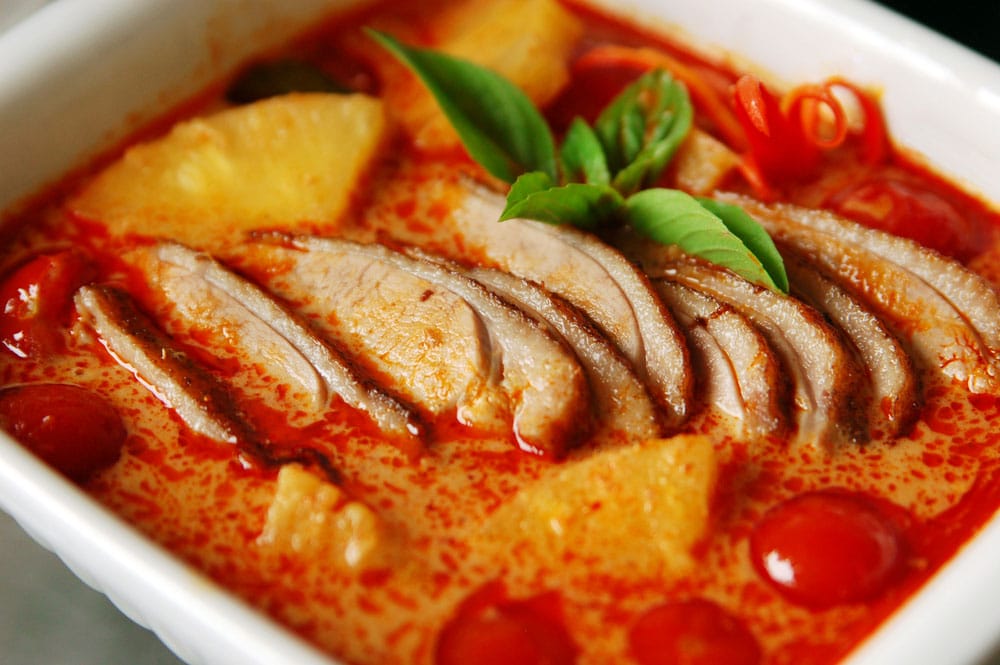
This recipe serves 3 to 4 people comfortably, with steamed jasmine rice on the side. Total time, including roasting and simmering, is roughly 1 hour 20 minutes, with about 15 minutes of active prep. Leftovers keep well in an airtight container in the fridge for up to 2 days. I would not recommend freezing the curry once the coconut milk is in, as the sauce tends to split on reheating. Serve in deep bowls so the sauce has room, and scatter the chilli and coriander over just before bringing it to the table.
Similar Recipes
- Thai Green Chicken Curry
- Red Curry with Prawns and Bamboo Shoots
- Massaman Lamb Curry
- Roasted Chicken with Lemongrass and Coconut
Nutrient Benefits
Duck is higher in iron and zinc than most poultry, which makes it genuinely more nutritious than it sometimes gets credit for. The tamarind in the paste is a natural source of tartaric acid and has been used in traditional cooking across South and Southeast Asia partly for its digestive properties.
Coconut milk adds fat-soluble nutrition, and the whole spices, cumin and coriander, carry their own modest antioxidant load. This is not a light dish, but it is not empty either.

Thai Duck Curry with Tamarind
Ingredients
- 750 gms Duck Thighs and Legs
- 200 ml Coconut Milk
- 1 1/4 cup Chicken Stock
- 1 tbsp Fish Sauce
- 1 tbsp Lime Juice
- Oil for frying
- 1 Red Chilli (small, chopped, seeds removed, to garnish)
- Coriander Leaves (to garnish)
For the Tamarind Paste:
- 2 1/2 tbsp Tamarind Concentrate
- 1/2 tbsp Sesame Oil
- 2 tbsp Dark Brown Sugar
- 1 Lemongrass (small stalk, chopped)
- Coriander Leaves - handful, chopped
- 1 clove Garlic (peeled)
- 1 Spring Onion (chopped)
- 1 Red Chilli
- 1 tsp Cumin Seeds
- 1 tbsp Coriander Seeds
Instructions
- Heat a pan over medium flame.
- Stir-fry the cumin seeds and coriander seeds for 30 seconds.
- Remove and grind together with chillies, spring onions, garlic, coriander leaves, ginger, lemongrass, sugar, sesame oil and tamarind concentrate to a smooth paste.
- Rub 1/4th of this paste on the duck and place skin-side on a baking tray.
- Keep the tray in preheated oven at 200C/400F for 30 minutes.
- Remove and turn. Roast for another 20 minutes.
- Remove and keep aside.
- Heat little oil in a pan.
- Add the remaining curry paste and fry for a minute.
- Add the coconut milk, chicken stock and fish sauce.
- Bring to a boil.
- Add the duck and simmer for about 5 minutes or until the sauce has slightly thickened and reduced.
- Add lime juice and transfer to a serving bowl.
- Garnish with red chillies and coriander leaves.
- Serve hot with rice.
Sign up for our newsletter
Add Awesome Cuisine as a Preferred Source

Frequently Asked Questions
Can I use boneless duck breast instead of thighs and legs?
Duck breast is leaner and cooks faster, so it will dry out if you roast it for 50 minutes as the recipe instructs. If that is all you have, reduce the roasting time to about 15 to 20 minutes and check for doneness before adding it to the sauce.
My tamarind paste turned out very thick and stiff after grinding. Is that normal?
Yes, that is normal depending on your tamarind concentrate brand. Add a tablespoon of water while grinding if it is not coming together smoothly. The paste should be spreadable, not crumbly, so it coats the duck properly.
The sauce looks quite thin after adding the coconut milk and stock. What should I do?
Let it boil uncovered for a couple of minutes before adding the duck. The sauce is meant to reduce and thicken during that final 5-minute simmer with the duck in it. If it still looks too thin, give it another 2 to 3 minutes on low heat before serving.
Can I make the tamarind paste a day ahead?
Yes, and I often do. Store it in a small airtight jar in the fridge for up to 3 days. Bring it to room temperature before frying it in oil, because cold paste hits a hot pan unevenly and tends to splatter.
I do not have sesame oil. Can I leave it out of the paste?
You can substitute it with a mild-flavoured oil like groundnut oil, but skip substituting with olive oil as it changes the flavour noticeably. Sesame oil adds a quiet nuttiness to the paste, so leaving it out entirely will make the paste taste slightly flatter, though the curry will still work.