
Mixed Vegetable Kootu is a South Indian preparation that makes good use of whatever vegetables are on hand. A kootu sits somewhere between a thin curry and a dry stir-fry, thick, substantial and full of texture from both the vegetables and the cooked dal.
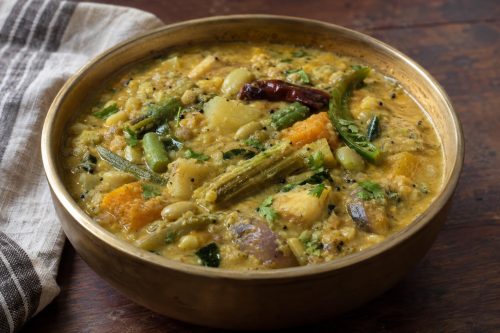
This version uses a wide range of vegetables including ash gourd, pumpkin, snake gourd, drumsticks, brinjals, several types of beans and raw banana, all simmered together with tamarind. It is finished with a freshly ground paste of roasted coriander seeds, bengal gram dal, red chillies and coconut. The result is filling enough to anchor a full meal.
About the Recipe
The ground masala is what sets this kootu apart. Coriander seeds, bengal gram dal, red chillies and coconut are all fried to a dark brown before grinding, which gives the dish a toasty, slightly nutty depth rather than a raw spice flavour. The tamarind extract adds a gentle sourness that balances the coconut.
Cooking the vegetables in stages matters here. Different vegetables take different amounts of time to become tender, and adding them all at once means some turn mushy before others are done. The gingely oil seasoning at the end lifts the whole dish.
Why You Will Love This Recipe
The freshly ground masala is the strongest reason to make this recipe. The coriander seeds, bengal gram dal and red chillies are all fried to a dark brown before grinding, and that extra step changes the flavour noticeably. The masala tastes roasted and full rather than raw or flat.
The range of vegetables is the other draw. Using gourds, beans and root vegetables together means every spoonful has a different texture, which keeps the dish interesting across a whole meal. It is also a practical recipe when you have small quantities of several vegetables that need to be used up.
Cooking Tips
The most common beginner mistake is adding all the vegetables to the pot at the same time. Potatoes, sweet potatoes and drumsticks go in first because they take longer. The gourds follow when those are half done, and the banana and brinjals go in last because they soften very quickly. Overcooked brinjals fall apart and turn bitter.
Do not skip frying the masala ingredients to a genuine dark brown. A light fry will leave the paste tasting raw even after simmering.
Top Tips
- Fry the coriander seeds, bengal gram dal and red chillies to a genuine dark brown before grinding. A pale fry does not develop the same depth of flavour.
- Add vegetables in stages as the recipe instructs. Potatoes and drumsticks first, gourds next, banana and brinjals last.
- Mix the ground masala with a little water before adding it to the pot so it blends in evenly without lumping.
- Mash the cooked dal lightly before adding it. This thickens the kootu without making it starchy.
- Use gingely oil for the seasoning if possible. It suits this style of South Indian kootu better than refined oil.
- Taste for salt after adding the tamarind extract, as tamarind can shift the overall seasoning balance.
Serving and Storing Suggestions
Serve Mixed Vegetable Kootu hot with plain steamed rice. A simple rasam or a Vegetable Sambar alongside makes a complete South Indian meal. A small amount of papad or pickle on the side works well too.
Leftover kootu keeps in the refrigerator for a couple of days. Reheat gently on the stove with a splash of water to loosen it, as it thickens considerably once cold. The flavour often improves the next day after the masala has had time to settle.
Similar Recipes
- Pulippu (Tamarind) Kootu
- Vazhaithandu Mor Kootu
- Thengaipal Poritha Kootu
- Mixed Vegetable Kurma
- Mixed Vegetables in Coconut Sauce
Nutrient Benefits
Red gram dal provides a good amount of plant protein and pairs well with the range of vegetables here, which together contribute fibre, potassium and several vitamins. Drumsticks, pumpkin and raw banana each add different minerals. Coconut adds fat that helps carry the fat-soluble compounds in the spices.
Mixed Vegetable Kootu
Ingredients
- 1 cup red gram dal
- a very small piece each of ash gourd, pumpkin, snake gourd and vegetable marrow
- 6-8 each of french beans, cluster beans and broad beans
- 2 each small brinjals and drumsticks
- 1/2 each (small) potato, sweet potato and raw banana
- 1/2 cup shelled mochakottai (field beans) or peas
- 4 sprigs curry leaves
- 1 tsp turmeric powder
- a small ball of tamarind
- salt to taste
- Fry to a dark brown colour and grind to paste
- 3 tbsp coriander seeds
- 2 tbsp bengal gram dal
- 5-6 red chillies
- 4-6 tbsp grated coconut
- few pepper corns (optional)
- Seasoning
- 1 tbsp gingely oil
- 1 tsp mustard seeds
- 1/2 tsp fenugreek seeds
- 2 red chillies, broken into 2-3 pieces
- 2 green chillies, slit
- 2 sprigs curry leaves
- 1-2 tbsp chopped coriander
Instructions
- Boil dal with 1/2 tsp turmeric powder, set aside.
- Take out thick extract of tamarind, set aside.
- Wash, peel and cut vegetables into small pieces. Boil some water in a large vessel, add curry leaves, salt and turmeric powder.
- Add vegetables one at a time as different vegetables get tender at different levels of cooking time.
- First add the potatoes, sweet potatoes and drumsticks, when half done, add the different gourds one at a time, then the beans and lastly the banana and brinjals.
- When all the vegetables have become tender, add tamarind extract, boil for 3-5 minutes.
- Now add cooked dal (mash it a bit), the ground masala (mixed with some water) and simmer all of it for a while, remove from fire.
- Season in oil the ingredients given in that order except coriander leaves. When green chillies have become soft, add the seasonings to kootu, add chopped coriander, mix all of it.
Sign up for our newsletter
Add Awesome Cuisine as a Preferred Source

Frequently Asked Questions
Can I use fewer types of vegetables if I do not have all of them?
Yes. The recipe works well with only four or five of the listed vegetables. Try to keep at least one gourd, one bean variety and one root vegetable so the textures stay varied. Avoid using only soft vegetables like brinjal and banana, as the kootu will turn mushy.
What can I use instead of mochakottai if I cannot find it?
The recipe already lists peas as a substitute for mochakottai, which are field beans. Shelled green peas or frozen peas both work fine. If you have dried field beans, soak them overnight and boil them separately before adding to the pot, as they take much longer to cook than the other vegetables.
How do I know when the masala ingredients are fried enough before grinding?
The coriander seeds should darken noticeably and smell toasty rather than raw. The bengal gram dal should turn a deep golden brown, similar to roasted peanuts. If either still looks pale or smells of raw dal, keep frying on a low flame. Burning is also a risk, so keep stirring and watch closely once they start to colour.
My kootu turned out too thin. How do I fix it?
A thin kootu usually means the dal was not mashed enough or the masala was too diluted when added. If it is already cooked and still thin, simmer it uncovered on a low flame for a few extra minutes. You can also mash a small portion of the cooked vegetables against the side of the pot to help thicken it naturally.
Is this the same as a vegetable kootu curry, or is there a difference?
The term vegetable kootu curry is sometimes used loosely for any thick vegetable and dal preparation from South India. This recipe is a traditional kootu in the Tamil style, which is thicker than a curry and uses a roasted coconut and spice paste rather than a quick tempering. It is not as liquid as a sambar and not as dry as a poriyal, sitting comfortably between the two.
Yummy. Tried this at home and came out very good. My husband and kids loved it.