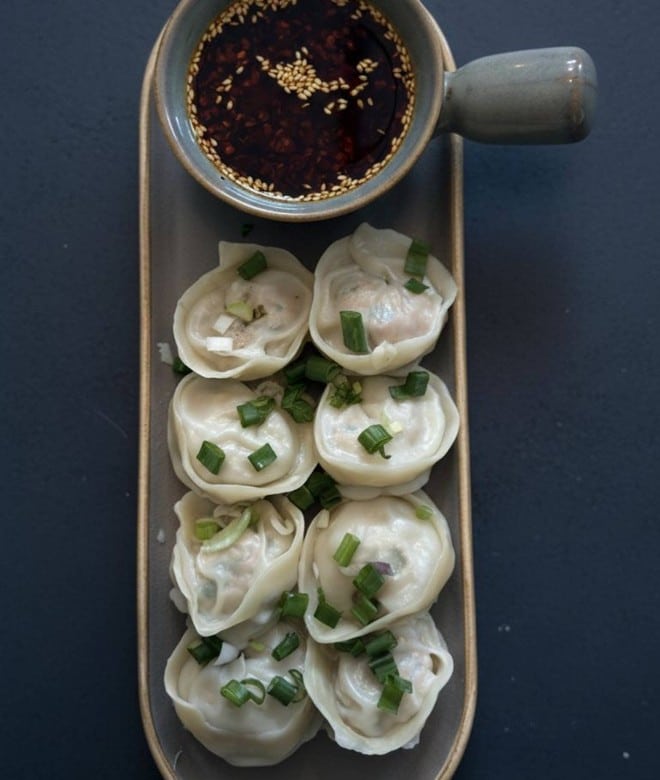
Thai Sweet Dumplings first caught my attention at a street market in Chennai, oddly enough, where a vendor was selling Southeast Asian sweets alongside traditional Indian snacks. I bought one wrapped in banana leaf, and the combination of chewy rice dough and that molten coconut-jaggery center hooked me immediately. The topping sauce, slightly salty and sweet, balanced everything.
I started making them at home after I realized sticky rice flour, the same kind used for puttu in Kerala, was easy to find. The wrapping step feels fussy the first time, but once you get the rhythm, it becomes quick work. I like making a large batch because they keep well and taste good cold straight from the fridge.
About the Recipe
This recipe uses sticky rice flour, which you can find as white puttu rice in most Indian supermarkets. The filling takes about ten minutes to cook and cool, and the dough comes together in less than five. Steaming is the only cooking method, so there is no risk of burning or uneven browning. I make these when I want a dessert that can sit out at room temperature for a few hours without losing texture. They are also good for potlucks because they travel well in their parcels.
Why you will love this recipe
The sticky rice dough has a chewy bite that holds up to steaming without turning mushy. The filling, made with grated coconut and palm sugar, stays soft but not runny, so it does not leak during wrapping. The coconut topping thickens just enough to coat the dumpling without sliding off, and the hint of salt in it keeps the sweetness in check.
You can prep the filling and dough ahead, then assemble and steam right before serving. The banana leaf adds a subtle fragrance, though foil works fine if you cannot find leaves. These dumplings taste good warm or cold, which gives you flexibility with timing.
Cooking Tips
The dough can feel sticky at first. If it clings to your hands, lightly oil your palms before shaping. Do not add too much water while kneading, or the dough will not seal properly around the filling. The filling must cool completely before you shape it into balls, otherwise it will be too soft to handle and will seep through the dough.
When you simmer the topping, stir constantly to prevent lumps from the rice flour and arrowroot. If lumps form, strain the mixture through a fine sieve before using. The parcels need a tight seal, so press the edges firmly. If they open during steaming, the topping will leak out.
Top Tips
- Oil your hands lightly when working with the dough to prevent sticking.
- Cool the coconut filling completely before shaping, or it will be too soft to handle.
- If you cannot find banana leaves, use small squares of parchment paper or aluminum foil.
- Steam the parcels in a single layer with space between them so they cook evenly.
- The topping thickens as it cools, so use it while it is still warm and pourable.
- These dumplings can be assembled a few hours ahead and steamed just before serving.
Serving and Storing Suggestions
This recipe makes about 12 to 14 dumplings, enough for six to eight servings. Prep time is around 20 minutes, and steaming takes another 10 minutes. Serve them warm or at room temperature, still wrapped in their parcels. They keep well in the fridge for up to three days.
Reheat by steaming for a few minutes, or eat them cold, which I actually prefer in warmer weather. The texture stays chewy even after refrigeration. Do not freeze them, as the coconut topping separates and becomes grainy when thawed.
Similar Recipes
- Modak
- Kozhukattai
- Pitha
- Coconut Ladoo
- Steamed Rice Cakes
Nutrient Benefits
Sticky rice flour provides carbohydrates for energy without adding fat. Coconut offers healthy fats and a small amount of fiber. Palm sugar or jaggery contains trace minerals like iron and potassium, though the quantities are modest. Coconut milk adds richness along with medium-chain triglycerides, which digest differently than other fats.
These dumplings are filling because of the combination of rice and coconut, so a small serving satisfies. They are naturally gluten-free, which makes them suitable for people avoiding wheat.
Thai Sweet Dumplings
Ingredients
For Dough:
- 1 cup sticky rice flour
- water to mix
For Filling:
- 1 ½ cup grated coconut
- 1 ¾ cup palm sugar or jaggery powder or brown sugar
- 1 ¼ cup water
- 1 pinch nutmeg
For Topping:
- 2 ½ cup thick coconut milk
- 1 ¼ cup rice flour
- 2 tbsp arrow root flour
- 1 tbsp sugar
- 1 tsp salt
Instructions
- Make pliable dough and knead till smooth.
- Dissolve sugar in water.
- Add coconut and cook till the mixture binds together.
- Cool and shape into small balls (1.5 cm).
- Mix all the ingredients.
- Bring to a boil and simmer for 2 minutes.
- Blanch some pieces (15 cm) and blanch them in boiling water for 2 minutes. Drain.
- Alternately, use pieces of aluminum foil.
- Take lime size portions of dough and flatten to a sheet, 3 mm thick.
- Place a ball of filling on it and fold the edges over the filling. Press to seal.
- Take a piece of banana leaf or foil and spread a table spoon of topping on it.
- Place the filled dumpling over it and cover with some more topping.
- Fold the leaf or foil over it and make a neat parcel.
- Use all the dough thus.
- Steam the parcels for 8-10 minutes or till cooked.
- Serve warm or cold, in the parcel.
Note: The sticky rice used in some of these recipes is known as white Puttu rice in south India and is available in super markets and provision stores.
Sign up for our newsletter
Add Awesome Cuisine as a Preferred Source

Frequently Asked Questions
Can I use regular rice flour instead of sticky rice flour?
No, regular rice flour will not give you the chewy texture. Sticky rice flour has more amylopectin, which creates that elastic bite. Look for glutinous rice flour or white puttu rice flour in Indian stores.
My filling turned out too dry and crumbly. What went wrong?
You either cooked it too long or did not add enough water. The mixture should be moist enough to hold together when pressed. If it happens, add a tablespoon of water and cook briefly to rehydrate.
The topping separated into liquid and solids after cooling. How do I fix it?
Whisk it vigorously over low heat until it comes back together. The arrowroot and rice flour can separate if the mixture sits too long. Use it while it is still warm for the best consistency.
Can I make these without banana leaves?
Yes, use parchment paper or aluminum foil. You will miss the subtle fragrance from the leaves, but the dumplings will still taste good and steam properly.
How do I know when the dumplings are fully cooked?
The dough will turn slightly translucent and feel firm but springy when pressed gently. If it still looks chalky white or feels raw, steam for another two to three minutes.