
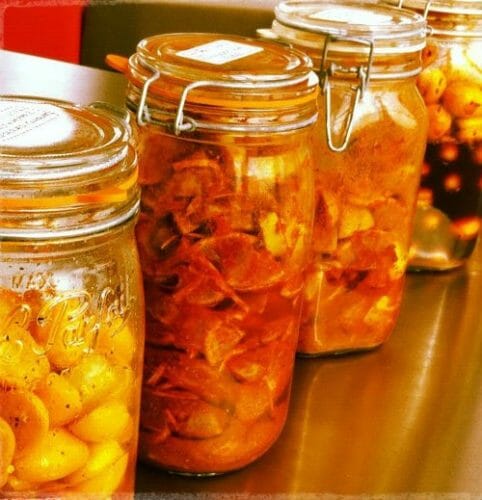
Every June, my grandmother’s terrace in Chennai turned into a pickling ground. Mangoes lay in neat rows on old cotton sarees, drying in the sun until their skins wrinkled just enough. By the time the jars went into the sun for their final cure, the whole house smelled of mustard oil, dried chillies, and something faintly sweet underneath it all. That smell is what most of us mean when we say the word achar. It is not a condiment you buy because you forgot to shop. It is the taste of a particular grandmother, a particular kitchen, a particular summer.
Ask five Indian families for their pickle recipe and you will get five different answers, sometimes from the same state. That is the whole point. A jar of pickle carries a region’s climate, its oilseed, its patience for sun-curing, inside it. Here are ten pickles that, between them, sketch out how wide that map really is.
Table of Contents
Key Takeaways
- India has three main pickling bases, oil, brine, and citrus juice or vinegar, and the base changes both the shelf life and the taste of the pickle.
- Mustard oil dominates pickling in the north and east, while sesame oil is the traditional base across most of the south.
- Mango pickle has the widest regional spread, but each state’s version, Avakkai, Maavadu, Chunda, uses a completely different technique.
- Salt is doing real preservation work in a pickle, not just seasoning it, which is why cutting salt in a homemade batch can shorten its shelf life.
- Commercially sold Indian pickles must meet specific government food safety standards for salt content, oil coverage, and freedom from adulterants.
Most pickle listicles online are written from outside India, or they flatten the whole country into one generic “Indian pickle” recipe using mustard seeds and not much else. That misses the actual story. The pickle on a Gujarati thali is sweet enough to eat like a preserve. The pickle on a Chettinad table can strip the roof off your mouth. Knowing the difference means you can walk into any Indian kitchen, or any Indian pickles aisle, and actually know what you are choosing.
Achar, the Hindi and Urdu word for Indian pickle, refers to fruit, vegetable, or other plant matter preserved in salt with oil, brine, or citrus juice and a blend of spices.
The word covers everything from a jar of mango pickle cured for a full year to a quick lemon-and-chilli mix made fresh that morning. What ties them together is salt doing the preserving, not vinegar, which is the more common base in Western-style pickles.
What Makes a Pickle Indian Rather Than Western?
The short answer is the preserving agent. A jar of American dill pickles is built on vinegar brine; an Indian achar is built on salt, oil, or citrus acidity, usually with all three working together. That single difference changes everything else about how the pickle behaves.
Pickles made in the United States and much of Europe are typically cured in a vinegar solution, which gives them their sharp, sour bite and a fairly short shelf life once opened. Indian pickles instead lean on salt and, very often, a thick layer of oil sitting on top of the jar, which keeps air, and therefore spoilage, away from the fruit or vegetable underneath. Turmeric and fenugreek do extra work here too, both have natural preservative properties that stretch a pickle’s shelf life well past what plain salt could manage on its own. That is also why a well-made jar of vadu mangai can sit safely on a shelf, unrefrigerated, for a year or more.
“You can always tell a good pickle by whether the oil has separated and floated to the top. That layer isn’t a flaw, it’s the pickle doing its job.”
How Do the Three Main Pickling Bases Compare?
Indian pickles fall into three broad categories depending on what preserves them. The base you choose decides how long the pickle keeps, how it tastes, and even how it should be stored.
| Base | How It Preserves | Typical Shelf Life | Common Examples |
| Oil-cured | Salt draws out moisture; oil seals out air | 6-12 months, unrefrigerated | Avakkai, garlic pickle, mixed vegetable achar |
| Brine-cured | High salt concentration inhibits bacteria | 3-6 months, cool storage | Maavadu, some lemon pickles |
| Citrus or vinegar-cured | Acidity lowers pH to unsafe levels for spoilage organisms | 1-3 months, refrigerated after opening | Fresh lemon-chilli pickle, tomato pickle |
Every batch of pickle sold commercially in India has to meet government standards for how it is preserved.
The Food Safety and Standards Authority of India classifies pickles into brine, oil, and vinegar categories, each with its own minimum requirements, brine pickles must contain at least 12 percent salt, oil pickles must keep the fruit or vegetable pieces submerged in oil, and every pickle must be free from copper, mineral acid, alum, and synthetic colours (FSSAI Food Product Standards, 2011).
Which Ten Pickles Best Represent India’s Pickling Traditions?
No list of ten can cover a country with, by most estimates, well over a thousand regional pickle recipes. What follows is a cross-section, one or two from nearly every major region, chosen because each teaches you something different about how Indians pickle.
1. Avakkai, the Andhra Mango Pickle That Started It All
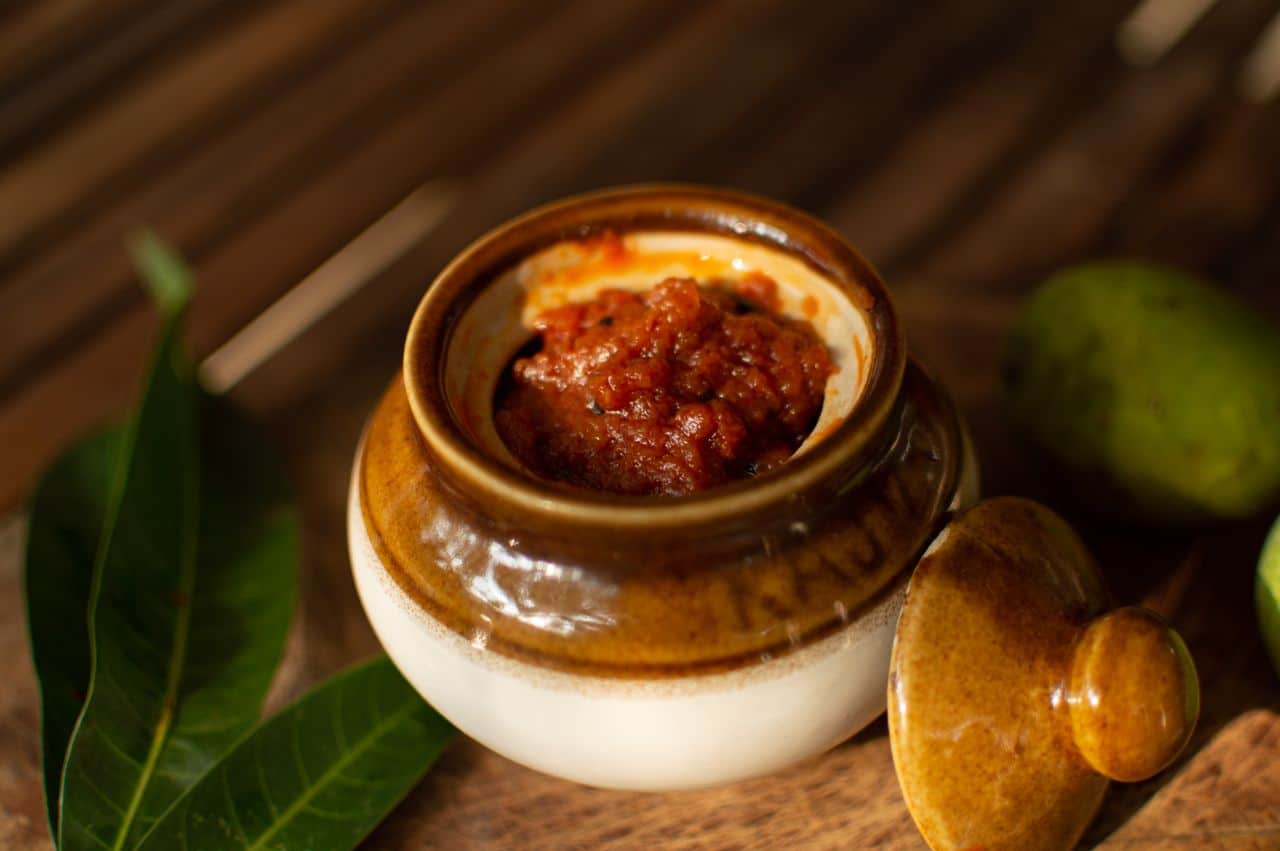
Avakkai, an Andhra Pradesh mango pickle made with raw green mango, mustard powder, and red chilli, is arguably the most recognisable pickle in the country. The mango is never simply sliced. Traditional recipes call for pieces cut with the hard seed casing still attached, using a special curved knife, because that bit of seed and pith is where the pickle gets its distinctive bite. Sesame oil, generous amounts of red chilli powder, and coarse mustard give avakkai its signature colour and heat. If you have ever wondered why a spoon of Andhra pickle can make your eyes water before it even reaches your mouth, that is the mustard talking. Read more about the wider Andhra Pradesh food tradition that avakkai comes from.
2. Maavadu, Tamil Nadu’s Fleeting Baby Mango Pickle
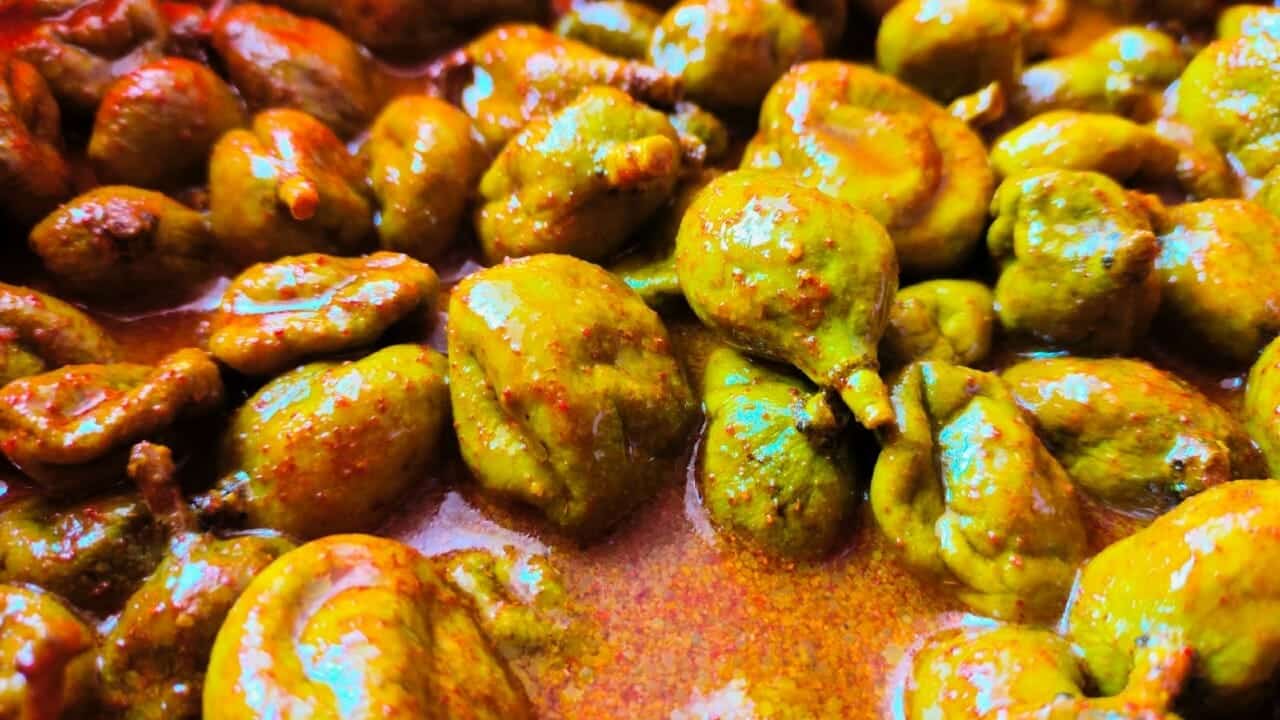
Maavadu, also called vadu mangai, uses whole baby mangoes rather than sliced fruit, and it is only available for a few weeks each year when the fruit is at exactly the right stage, tender enough to bite through, seed not yet hardened. That narrow window is part of the appeal. Families in Tamil Nadu wait for it the way others wait for a specific fruit to come into season, and once it does, jars appear on every table for curd rice. The result is wetter and more sour than most oil-cured pickles, almost a pickled fruit rather than a preserve. Pair it the traditional way, with plain curd rice, and you will understand immediately why the combination has survived generations.
3. Nellikkai, the Amla Pickle Built for the Body as Much as the Palate
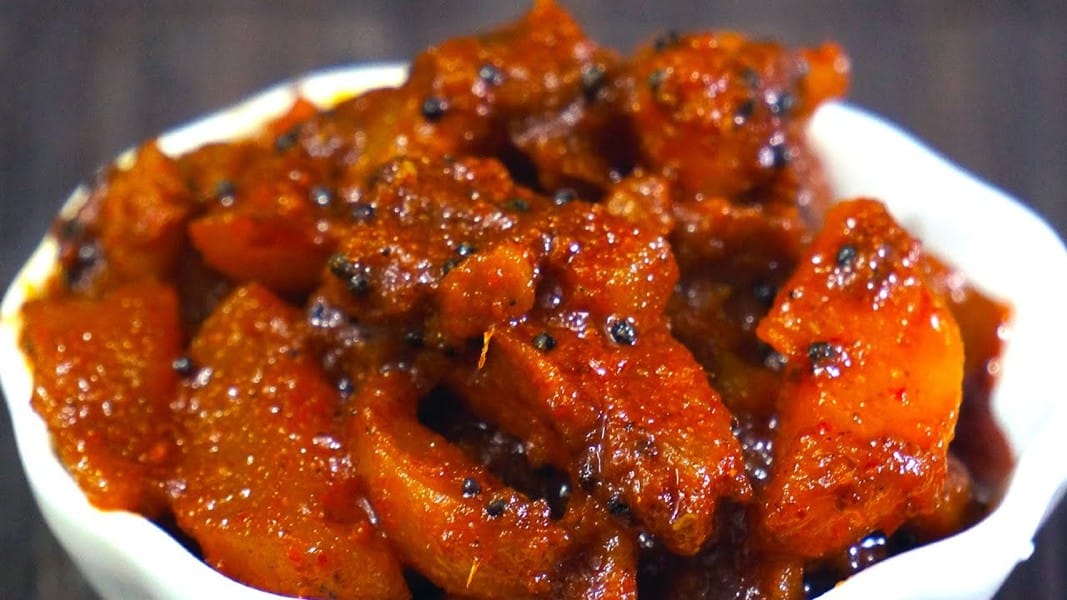
Amla pickle, made from Indian gooseberry, is unusual in that people reach for it as much for its health reputation as its taste. Amla is intensely sour on its own, and pickling mellows that edge while keeping the fruit’s nutritional punch mostly intact. In one study out of Punjab Agricultural University, raw amla measured 430 milligrams of vitamin C per 100 grams, roughly eight times what the same weight of orange provides (Journal of Food Science and Technology, 2015). That is a big part of why amla pickle, and amla murabba alongside it, shows up so often in households that are otherwise not particularly pickle-forward.
4. Nimbu ka Achar, Lemon Pickle for Every Kitchen

Lemon pickle might be the most forgiving entry point into pickling for a first-timer, and it is common in some form across nearly every Indian state. Unlike mango, which has a short season, lemons are available year-round, so you find lemon pickle variations everywhere, from a fiery Rajasthani version loaded with red chilli to a Maharashtrian one softened with jaggery. The pickle deepens as it sits, so a jar made in June tastes noticeably different by December. That slow transformation, sour becoming rounder and more complex, is exactly why families keep old jars going rather than starting fresh every season.
5. Punjabi Mixed Vegetable Achar, Winter’s Crunchy Answer
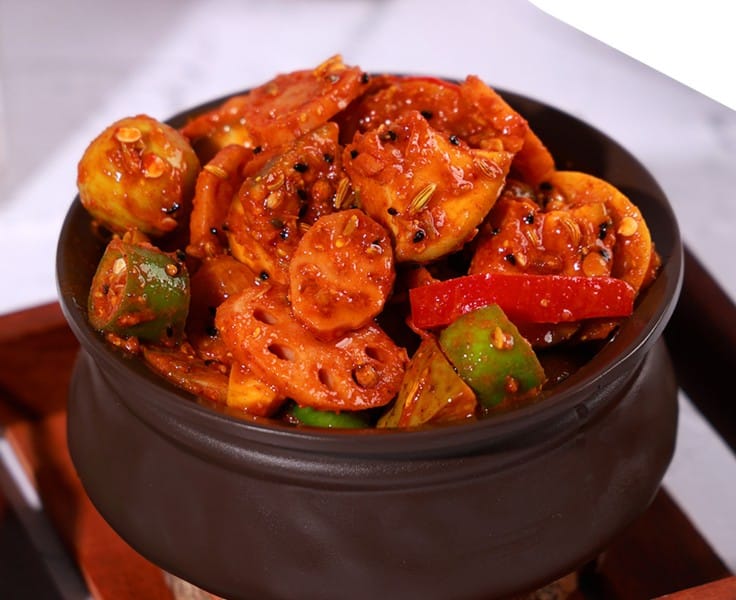
Punjab and much of North India lean on a mixed vegetable pickle built around cauliflower, carrot, radish, and turnip, cured in mustard oil with ginger and garlic. It arrives at the exact moment winter vegetables flood the market, and the crunch is the point, this pickle should still have bite months after it is made. Serve it the way it is meant to be served, alongside a stack of parathas and a bowl of curd, and you have a full Punjabi winter breakfast on the table.
6. Pyaaz ka Achar, Onion Pickle for the Everyday Table
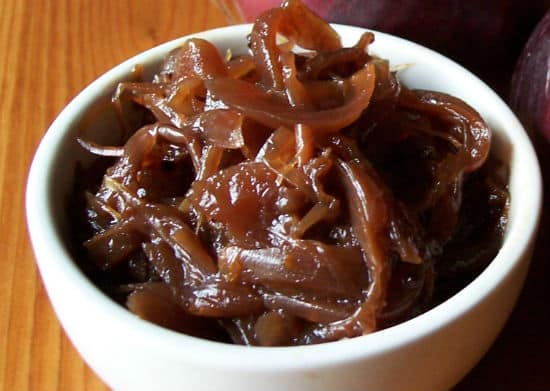
Onion pickle, or pyaaz ka achar, gets made whenever onions are cheap and plentiful, which in most of India is most of the year. Small onions are salted, left to sweat out their moisture, then folded into a spice paste. It is less showy than mango or lemon pickle, but ask around and you will find it is the pickle most people actually reach for daily, alongside rice, chapati, or a plate of idli. Its quiet, everyday role in the kitchen is exactly why it rarely gets written about, despite being one of the most consumed pickles in the country.
7. Vellulli Avakaya, Andhra’s Garlic Pickle
Andhra’s garlic pickle mixes whole garlic cloves with mustard seeds and jaggery, and the sweetness from the jaggery is what sets it apart from other regional garlic pickles. Garlic’s natural pungency softens as it cures, leaving something closer to a savoury-sweet condiment than a raw, sharp one. It is a good pickle to keep on hand if chilli-forward pickles are too much for your palate but you still want something with real character alongside your rice.
8. Hari Mirch ka Achar, the One That Doesn’t Play Nice
Green chilli pickle earns its reputation. Unlike onion or garlic pickle, which mellow with age, chilli pickle stays fierce, and often gets hotter the longer it sits. It is made with whole or slit green chillies, mustard oil, and a light dusting of spices, nothing to dilute the heat. This is the pickle you offer someone as a dare more than as a side dish, and the one that separates people who genuinely love heat from people who only think they do.
9. Thakkali Urugai, South India’s Tomato Pickle
Tomato pickle has a sweet-and-sour profile that sets it apart from the more purely tangy pickles on this list, since ripe tomatoes bring natural sugars into the mix. It is one of the gentler entries here, not as hot as green chilli pickle, and works beautifully with both rice and tiffin items like idli or dosa. If you want the full recipe, our tomato pickle guide walks through the method step by step.
10. Narthangai, the Citron Pickle of Tamil Brahmin Kitchens
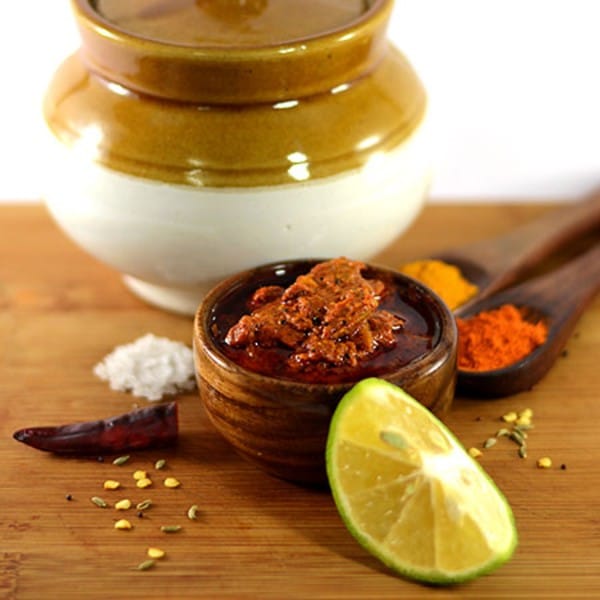
Image via mylaporeganapathys
Narthangai, made from citron, a large, thick-skinned citrus fruit, is a dry pickle rather than an oil-heavy one, and it holds a particular place in Tamil Brahmin households, where it is treated as both a tangy condiment and a mild home remedy for digestive troubles. The citron is salted and sun-dried over days, sometimes weeks, until the peel turns dark and leathery. Because it is so concentrated, a small piece goes a long way, this is a pickle eaten in slivers, not spoonfuls.
Two mangoes, ten pickles, ten completely different techniques, and that is really the pattern across the whole country. Mango pickle tastes different from state to state mainly because South India favours sesame oil while the northern states reach for mustard oil, and each oil carries its own flavour into the final jar. Curious about the sweeter end of the mango spectrum? Our guide to mango recipes covers what to do with the fruit once pickling season is over.
How Do You Make Pickle at Home Without It Spoiling?
Making pickle at home is simpler than most people expect, but a handful of small missteps are responsible for almost every spoiled batch. Getting the basics right matters more than any specific spice blend.
Common Mistakes to Avoid
- Using a wet spoon or a damp jar. Any trace of moisture invites mould, which is the single most common reason a homemade pickle fails.
- Skimping on salt or oil to make the pickle “healthier.” Both are doing real preservation work, not just adding flavour, and cutting them shortens shelf life fast.
- Not letting fruit dry fully before pickling. Any residual water content, especially in mango or lime, dilutes the salt’s effectiveness.
- Storing in plastic. Glass or ceramic jars do not react with the acid and salt the way some plastics can over long storage periods.
- Forgetting to sun-cure when the recipe calls for it. Sun exposure in the early days helps the oil and spices penetrate the fruit and kills off surface moisture.
“The sun does half the work a stove can’t. If a recipe tells you to put the jar out for three days, that isn’t tradition for tradition’s sake, it’s actually curing the pickle.”
The Ten Pickles at a Glance
| Pickle | Region | Base Ingredient | Oil Used | Heat Level |
| Avakkai | Andhra Pradesh | Raw mango | Sesame or mustard oil | High |
| Maavadu | Tamil Nadu | Baby mango | Sesame oil | Medium |
| Nellikkai (Amla) | Pan-India | Indian gooseberry | Mustard or sesame oil | Low |
| Nimbu ka Achar | Pan-India | Lemon | Mustard oil (varies) | Medium to high |
| Mixed Vegetable Achar | Punjab / North India | Cauliflower, carrot, turnip | Mustard oil | Medium |
| Pyaaz ka Achar | Pan-India | Small onions | Mustard oil | Low to medium |
| Vellulli Avakaya | Andhra Pradesh | Garlic | Sesame oil | Medium |
| Hari Mirch ka Achar | Pan-India, esp. Rajasthan | Green chillies | Mustard oil | Very high |
| Thakkali Urugai | South India | Ripe tomato | Sesame oil | Low to medium |
| Narthangai | Tamil Nadu | Citron | Minimal, dry-cured | Medium |
One Jar at a Time
You do not need all ten pickles in your kitchen at once. Pick one that matches how you already cook, a jar of lemon pickle if you like things simple, avakkai if you want a genuine challenge, tomato pickle if you are easing a family into the whole idea. Once you have made one from scratch, watched the oil rise and the colour deepen over a few weeks, the store-bought version starts to taste like a rough sketch of the real thing. Start small, keep your jars dry, and let the sun do what it has always done best.
Frequently Asked Questions
What is the difference between Indian pickle and Western pickle?
Indian pickle relies on salt, oil, or citrus acidity as its main preserving agent, while Western-style pickles are typically cured in a vinegar brine. This difference changes the flavour profile, texture, and shelf life considerably, Indian pickles tend to be spicier and richer, and oil-based versions can last far longer without refrigeration than a vinegar pickle can once opened.
Which oil is best for making Indian pickles?
Mustard oil is the traditional choice across North and East India, prized for its sharp, pungent flavour and natural preservative qualities. South India leans toward sesame oil instead, which has a milder, nuttier taste that suits the region’s spice blends. Neither is objectively better, the right oil depends on which regional flavour you are trying to recreate.
Do Indian pickles have probiotics?
Some do, but not all. Naturally fermented pickles that develop over days of curing can host lactic acid bacteria similar to those found in curd or idli batter, and Indian food science research has found measurable lactic acid bacteria activity in some traditionally fermented pickles sold in Indian markets. However, most commercially packaged Indian pickles are formulated specifically to show no ongoing fermentation, since fermentation in a sealed, shelf-stable product is treated as a quality and safety concern rather than a benefit. If probiotic content matters to you, a freshly made, unpasteurised homemade pickle is a better bet than a bottled one.
Can you eat pickle during pregnancy?
Most traditional Indian pickles are safe to eat in moderation during pregnancy, and the intense cravings many pregnant women report for tangy, salty pickle are well documented anecdotally across Indian households. That said, the high salt content in most pickles means portion size matters more than usual, and anyone managing blood pressure or swelling during pregnancy should check with their doctor about how much salt is appropriate. When in doubt, a smaller spoonful alongside a meal is the safer approach than eating pickle on its own.
How long do homemade Indian pickles last without refrigeration?
Oil-cured pickles like avakkai or mixed vegetable achar, made with adequate salt and kept fully submerged in oil, commonly last six to twelve months at room temperature if stored in a clean, dry, airtight jar away from direct sunlight after the initial sun-curing period. Brine and citrus-based pickles are less stable and generally need refrigeration after the first month or two, especially once opened. Always use a completely dry spoon to serve, since even a small amount of moisture introduced into the jar can spoil the whole batch.

3 comments
A lovely list of the most popular pickles in India. The quality of homemade pickles is of a different kind; matchless in taste and quality.
The garlic pickle that I had made got over and I was thinking of making afresh batch. But now I am gonna try your version.
VERY GOOD