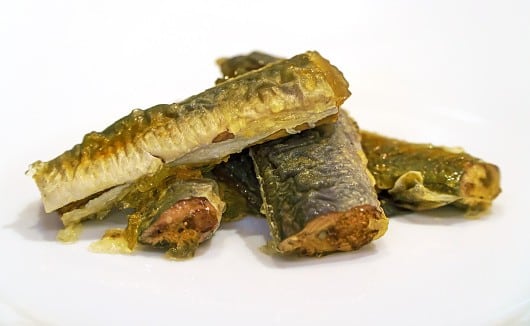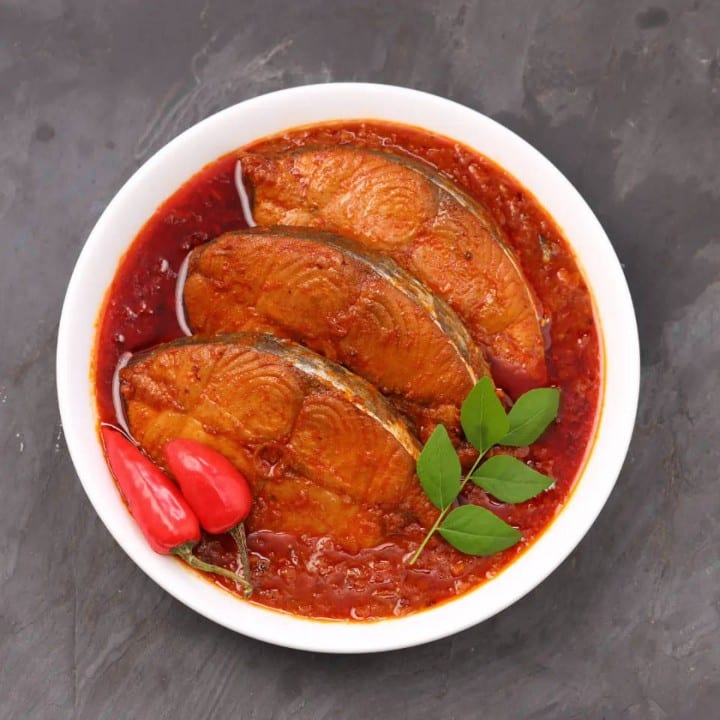

Dry Fish Pickle came into my regular rotation because of a specific and persistent request from my husband, who grew up eating something similar at his aunt’s table in Kerala. He described it vaguely, the way people always describe food they ate as children — sharp, oily, deeply spiced, and nothing like what you get in shops.
I spent a few attempts getting the ratios wrong before I landed on this version, and the detail that finally made it click was the sesame oil. Using a full cup of it is not a mistake in the recipe. That quantity is intentional, and it is what gives the pickle both its flavour and its shelf life. Now I always keep a jar going. It sits quietly on the shelf for weeks and turns into something better than what I started with.
About the Recipe
Making a good jar of fish pickle at home takes some planning, mostly because you need to account for the 30 to 40 day resting period before you open it. The actual cooking, however, takes under an hour. Dried seer fish is the base here, but any firm dried fish works well.
The ingredients are all straightforward pantry items — vinegar, whole spices, ginger-garlic paste — nothing that requires a trip to a speciality store if you cook South Indian food regularly. I make this whenever I know a busy month is coming, so there is always something reliable to eat with rice.
Why you will love this recipe
A jar of this pickle sitting on your shelf means you always have something to serve with plain rice, curd rice, or even a simple roti without any additional cooking. The garlic paste goes in at nearly 5 tablespoons, which sounds like a lot until you taste the finished pickle and realise it needed every bit of it.
The vinegar and mustard powder work together as natural preservatives, so the pickle holds well at room temperature for weeks without any fuss. What I find most useful about this recipe is that the work is front-loaded — one hour of cooking, then patience — and the payoff stretches across many meals.
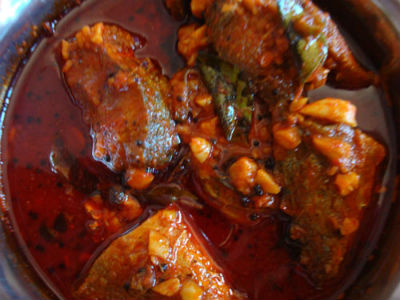
Cooking Tips
The most common beginner mistake here is rushing the step where you fry the ginger-garlic-green chilli paste. You need to cook it until the oil visibly separates and rises to the surface of the pan. If you stop before that point, the paste will not cook through properly, and the pickle will taste raw and sharp in an unpleasant way rather than the clean, sharp heat you want. Keep the flame at medium and give it time.
Also, make sure your storage jar is completely dry before you fill it. Even a small amount of moisture will ruin the pickle well before the 30 days are up.
Top Tips
- Pat the fish pieces completely dry after washing them, and let the turmeric marinade sit the full 30 minutes — this helps the fish hold together when you fry it rather than breaking apart in the oil.
- Use a heavy-bottomed pan for the paste-frying step. A thin pan will cause the paste to catch and burn at the bottom before the oil has a chance to separate.
- Do not substitute regular cooking oil for the sesame oil. The sesame oil is doing double work here — flavour and preservation — and another oil will not replicate either function.
- Sterilise your jar by washing it in hot soapy water, drying it in a warm oven for 10 minutes, and letting it cool completely before filling it.
- Use a clean, dry spoon every single time you take pickle from the jar. Any moisture introduced from a wet spoon will shorten its shelf life greatly.
- If you cannot find dried seer fish, dried kingfish or dried snapper cut into small pieces both work well in this recipe.
Serving and Storing Suggestions
This recipe makes enough pickle to fill one medium jar, roughly 6 to 8 servings depending on how generously you spoon it out. Prep and cooking time together is about 45 to 50 minutes, not counting the marinating time. Serve it alongside plain steamed rice, curd rice, or any simple dal meal where you want something punchy on the side.
Once the jar is opened after the 30 to 40 day resting period, store it at room temperature and do not refrigerate it. A dry spoon every time is non-negotiable for keeping it fresh.
Similar Recipes
- Prawn Pickle
- Mango Fish Curry
- Kerala Style Fish Fry
- Anchovy Chutney
- Lime Pickle
Nutrient Benefits
Dried fish is a concentrated source of protein and omega-3 fatty acids, which support heart and brain health. Sesame oil contains natural antioxidants that contribute to the pickle’s long shelf life and also provide some vitamin E. Fenugreek and cumin, both used here in meaningful quantities rather than as background spices, are traditionally associated with digestive support in Indian cooking. Because this pickle is eaten in small amounts alongside larger meals, the sodium and oil content stays proportionate.
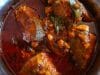
Dry Fish Pickle
Ingredients
- 500 gms Seer Fish - dried, (or any other fish), cut into small pieces
- 1/2 tbsp Turmeric Powder
- Curry Leaves (handful)
- 1 1/2 tbsp Red Chilli Powder
- 1/2 cup White Vinegar
- 1 tsp Salt
- 1/2 tsp Fenugreek Powder
- 2 tbsp Cumin Powder
- 2 tsp Ginger Paste
- 4 to 5 tbsp Garlic Paste
- 3 to 4 tbsp Green Chilli Paste
- 1 tbsp Mustard Seeds (powdered + some for seasoning)
- 1 cup Sesame Oil (+ 4 tblsp)
Instructions
- Wash the fish pieces 3 to 4 times and drain excess water.
- Add turmeric powder and keep aside for 20 to 30 minutes.
- Mix together the ginger, garlic and green chilli pastes.
- Heat 4 tblsp oil in a pan.
- Add the fish and deep fry for a minute or two.
- Remove and keep aside.
- In a separate pan, heat 1 cup of oil and fry the mustard seeds till it starts to splutter.
- Add the ginger-garlic-green chilli paste and fry till the oil floats to the top.
- Add the curry leaves, red chilli powder and stir-fry for 30 to 60 seconds.
- Add the fried fish, vinegar and salt.
- Add the mustard seeds, cumin powder and fenugreek powder.
- Bring to a boil and remove from heat.
- Transfer the pickle to a clean, sterilized jar and cover with a lid.
- Keep aside for 30 to 40 days before using.
- Do not refrigerate once opened.
Sign up for our newsletter
Add Awesome Cuisine as a Preferred Source

Frequently Asked Questions
My pickle smells very sharp and almost sour after I make it. Is that normal?
Yes, that sharpness is mostly from the vinegar and the raw paste at this stage. The smell and flavour will mellow and settle during the 30 to 40 day resting period. Opening the jar before that time is up will give you a much harsher tasting pickle than the finished version.
Can I reduce the amount of oil? One cup feels like a lot.
I would not reduce it. The sesame oil is what preserves the pickle and keeps the fish from drying out over the weeks it sits in the jar. If you cut the oil considerably, the pickle will not keep as long and the texture will suffer. Think of it as part of the preservation method, not just a cooking fat.
How do I know if the pickle has gone bad?
The most reliable sign is visible mould on the surface or a sour, fermented smell that is different from the sharp vinegar smell it has when freshly made. If either appears, discard it. Using a wet spoon even once is usually what causes early spoilage, so keep that in mind from the first day you open the jar.
Can I use fresh fish instead of dried fish?
This recipe is specifically built around dried fish. Fresh fish has a much higher moisture content, which will interfere with the preservation and change the texture greatly. The pickle will not keep at room temperature with fresh fish. If you only have fresh fish, you would need a different recipe designed for that.
The oil did not separate when I was frying the paste. What went wrong?
This usually means the heat was too low or you did not cook it long enough. Keep the flame at medium, not low, and be patient — it can take 10 to 15 minutes of steady stirring for the oil to visibly float to the top. If you rush this step, the garlic and ginger will taste undercooked in the finished pickle no matter how long it rests in the jar.
image credit: saltandspice.org
Note: image is for illustration purposes only and not that of the actual recipe.