Qorma Shahi entered my regular cooking rotation because my brother-in-law asked for it before a family dinner and I had never actually made it before. I said yes, obviously, and then spent two days reading about what made it different from the kormas I already knew. What I kept coming back to was the onion-almond paste.
You fry the onions slowly until they are genuinely dark brown, not golden, not pale, and then grind them with the almonds into something rich and slightly sweet. That paste is what gives this korma its particular colour and body. I have since made it at least a dozen times, and every time I reach the step where the saffron and rose water go in, I still pause for a second because the fragrance that comes off the pan is unlike anything else in my kitchen.
About the Recipe
Every ingredient in this recipe is available at a standard Indian grocery store. The saffron is the only thing that might need a trip to a slightly larger shop, but you only need a few strands. From start to finish, the cooking takes roughly an hour, with most of that time being the lamb simmering until tender.
I reach for this recipe when I need something that looks and tastes special without requiring me to spend the whole day in the kitchen. A family lunch on a Sunday or a small dinner with guests who appreciate good food are both situations where this korma earns its place.
Why you will love this recipe
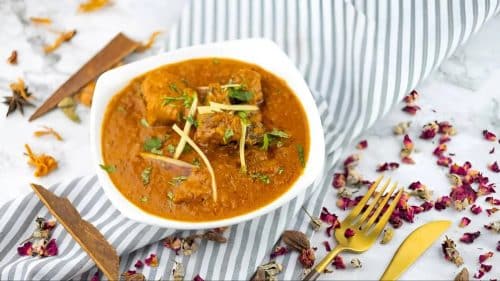
The onion-almond paste is the reason I keep making this. Most home kormas rely on yogurt and spices alone for their gravy, and they are fine, but this paste adds a texture and depth that feels noticeably different. The almonds mellow the sharpness of the fried onion and thicken the sauce naturally, so you do not need to add flour or extra thickener. The saffron and rose water are not just decorative either.
They bring a floral, slightly musky note that balances the heat from the red chilli and the earthiness of the coriander. For a dish that uses everyday spices, the final result has a layered quality that keeps it interesting from the first spoonful to the last.
Cooking Tips
The most common mistake beginners make here is under-frying the onions. Golden is not enough. You need them dark brown before you add the almonds, or the paste will taste raw and the gravy will look dull. Watch the flame because the almonds can catch quickly once they go in.
The other thing that trips people up is adding water too early. Simmer out all the moisture from the yogurt and onion paste first, and let the oil rise to the surface before you add the two cups of water. That is when you know the masala is properly cooked.
Top Tips
- Use a heavy-bottomed pan for frying the onions. A thin pan will cause uneven browning and the onions at the edges will burn before the centre cooks through.
- Let the fried onions cool completely before grinding. Hot onions in a grinder release steam and the paste turns watery rather than smooth.
- Do not rush the step where you cook off the yogurt. Keep the flame low and stir often until the oil visibly separates, which tells you the raw yogurt smell is gone.
- Soak the saffron strands in rose water for at least five minutes before adding. This gives you a more even colour and a cleaner fragrance.
- If the lamb is not tender after the water has reduced, add a small splash more water and continue cooking. Lamb cooking time varies depending on the cut and the age of the animal.
Serving and Storing Suggestions
This recipe serves four people comfortably and takes roughly one hour from start to finish, with about fifteen minutes of active prep. Serve it hot with naan, roomali roti, or steamed basmati rice alongside a simple raita to balance the richness. I usually store leftovers in an airtight container in the refrigerator for up to two days. Reheat gently on low flame with a splash of water to loosen the gravy, because the almond paste thickens considerably once it cools.
Similar Recipes
- Mutton Rogan Josh
- Lamb Nihari
- Chicken Korma
- Shahi Paneer (for a vegetarian option with a similarly rich, nut-based gravy)
- Mutton Pasanda
Nutrient Benefits
Lamb is a meaningful source of protein and iron, both of which matter especially in a meal that is being served without a heavy lentil or legume side. Almonds add a small amount of healthy fat and keep the gravy feeling substantial. Saffron, even in the few strands this recipe uses, contains antioxidants. Yogurt contributes to the protein content and brings in some calcium. None of this turns the dish into health food, but for a meat-based meal, the ingredient list does carry some genuine nutritional weight.

Qorma Shahi
Ingredients
- 500 gms Lamb Chops (chopped)
- 1/2 cup Oil
- 250 gms Onions (finely sliced)
- 1 1/2 tbsp Almonds
- 2 Green Chillies (chopped)
- 1 Bay Leaf
- 1 tbsp Ginger Garlic Paste
- 1 tsp Coriander Powder
- 1/2 tsp Garam Masala Powder
- 1 tsp Red Chilli Powder
- 2 tbsp Yogurt
- Mace Powder (a small pinch)
- 1/8 tsp Green Cardamom Powder
- Saffron Strands (few)
- 1/2 tsp Rose Water
- Salt as per taste
Instructions
- Heat 1/4 cup of oil in a pan over moderate flame.
- Saute the onions till light brown.
- Add the almonds and fry till onions turn dark brown.
- Remove and keep aside to cool.
- Once cool, grind to a fine paste.
- To the same pan, add the remaining oil and stir-fry the green chillies, bay leaf, ginger garlic paste, coriander powder and 1/4 garam masala powder.
- Add the lamb pieces and salt.
- Cook for 10 minutes, stirring all the time.
- Reduce flame to low.
- Add red chilli powder and yogurt.
- Stir and mix well.
- Cook for another 2 minutes and simmer till all moisture have evaporated.
- Add the onion paste and mix.
- Now add the mace powder, cardamom powder and garam masala powder.
- Fry for a few minutes and pour 2 cups of water.
- Cook till lamb is tender.
- Mix the saffron strands with rose water and add it to the pan.
- Remove and serve hot.
Sign up for our newsletter
Add Awesome Cuisine as a Preferred Source

Frequently Asked Questions
My gravy turned out very thick and almost dry. Where did I go wrong?
This usually happens if the almond-onion paste was very dense or if the water reduced too fast on a high flame. Add a little warm water, about a quarter cup at a time, and stir on low heat until the gravy loosens to the consistency you want. Going forward, keep the flame at medium-low once the water goes in.
Can I use chicken instead of lamb?
Yes, but reduce the cooking time greatly. Chicken cooks much faster than lamb, so after you add the two cups of water, check for doneness after about fifteen to twenty minutes rather than cooking until the water fully reduces. Overcooking chicken in a thick gravy makes it stringy.
My onions burned before they turned dark brown. Can I still use them?
Slightly darkened onions at the edges are fine, but if they smell acrid or taste bitter, discard them and start again. Burnt onions will make the entire gravy taste sharp and unpleasant, and there is no way to fix that once the paste is in the curry.
I do not have rose water. Can I leave it out?
You can leave it out without affecting the structure of the dish. The saffron will still add colour. However, the faint floral note that rose water brings is part of what makes this korma distinct from a regular lamb curry, so if you can get a small bottle, it is worth using. Kewra water is a reasonable substitute if rose water is not available.
How do I know when the lamb is actually done?
Press a piece of lamb with the back of a spoon. If it gives easily without resistance, it is ready. Alternatively, pierce it with a fork. Tender lamb will slide off the fork cleanly. If it feels rubbery or the fork drags, give it more time with a small addition of water and keep the lid on to build a little steam.