
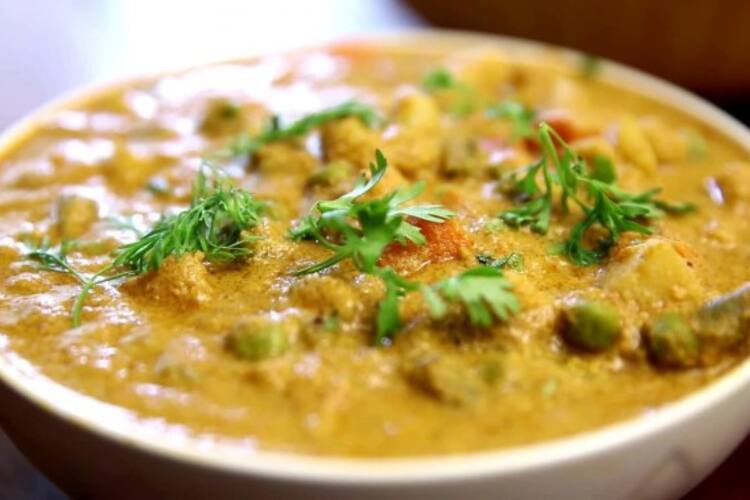
Mixed Vegetable Kurma is something my aunt used to make on Sunday mornings when the whole family gathered. She would start early, grinding the coconut paste while the rice was still soaking. I remember the smell of roasted spices filling the kitchen, and how the kurma would be thick enough to coat the back of a spoon.
I started making this at home when I wanted something more substantial than sambar but did not want to rely on store-bought masalas. The knol khol was her addition, and I keep it in because it soaks up the gravy better than cauliflower does. It takes about an hour from start to finish, but most of that is hands-off cooking time.
About the Recipe
This recipe uses vegetables you can find in most Indian markets or larger grocery stores. Knol khol is the only one that might need a substitute, and cabbage works fine. The grinding happens in three stages, which sounds fussy but keeps the flavors distinct. I make this when I have time on a weekend or when I need one dish that works with rice, chapati, or even dosa. The pressure cooker cuts down the vegetable cooking time to about ten minutes once the gravy base is ready.
Why you will love this recipe
The coconut and cashew paste gives the gravy body without making it heavy. The roasted spice powder adds warmth that you do not get from raw garam masala. Because you sauté the onions until they turn golden, the base has a slight sweetness that balances the green chillies. The vegetables stay intact but soft, and the gravy clings to them instead of sitting separately.
I like how the kurma tastes even better the next day, once the spices have settled into the vegetables. It works as a main dish, not just a side.
Cooking Tips
Do not skip frying the whole spices before grinding them. If you grind them raw, the powder tastes sharp and dusty. The coconut paste can seize up if you add it to a pan that is too hot, so lower the heat before stirring it in. If your gravy splits or looks oily, it usually means the coconut paste was not ground smooth enough or you did not stir it well when adding water.
Add water slowly and keep stirring. The vegetables should be just tender, not mushy, so check them after eight minutes in the pressure cooker.
Top Tips
- Grind the coconut paste with a little water to help it blend smoothly. A coarse paste will make the gravy grainy.
- Use a heavy-bottomed pan or pressure cooker base to prevent the onions from burning when you sauté them.
- If you cannot find knol khol, substitute with turnip or extra potato. Cabbage works but releases water.
- Add the turmeric powder with the coconut paste, not earlier, so it does not stick to the pan.
- Let the kurma sit for ten minutes after cooking. The gravy thickens as it cools slightly.
- You can make the three pastes a day ahead and refrigerate them in separate containers.
Serving and Storing Suggestions
This recipe serves four to five people. Prep time is about twenty minutes for chopping and grinding, and cooking takes another thirty to forty minutes. Serve the kurma hot with steamed rice, chapati, or idli. It also pairs well with appam or plain dosa.
Store leftovers in an airtight container in the refrigerator for up to three days. The gravy thickens when cold, so add a splash of water and reheat gently on the stove. Do not microwave on high heat or the coconut will separate. Freezing works for up to a month, but thaw in the fridge overnight before reheating.
Similar Recipes
- Navratan Korma
- Vegetable Stew with Coconut Milk
- Avial
- Capsicum Masala Curry
- Mixed Vegetable Sambar

Mixed Vegetable Kurma
Ingredients
- 2 Carrot (chopped)
- 1 Potato (chopped)
- 1 Knol Khol (chopped)
- 1 Tomatoes
- 2 Onions - big, sliced lengthwise
- 10 Beans (chopped)
- 250 gms Green Peas
- 3 to 4 Geen Chillies
- 1/2 inch Ginger
- 5 cloves Garlic
- 3 Cardamom
- 1 Cinnamon
- 1 Bay Leaf
- 5 Cloves
- 1/2 Coconut
- 10 Cashewnuts
- 1 tbsp Coriander Seeds
- 2 tsp Gasa Gasa
- 2 tsp Roasted Gram
- 1/4 tsp Turmeric Powder
- 1 tsp Saunf
- Curry Leaves - few, chopped
- Coriander Leaves - handful, chopped
- 1 tbsp Oil
- Salt as per taste
Instructions
- Combine and grind together the garlic, ginger and green chillies to a smooth paste.
- Lightly fry the cardamom, cinnamon, bay leaf and cloves. Remove and grind to a fine powder.
- Combine coconut, cashewnuts, coriander seeds, gasa gasa and roasted gram to a smooth paste.
- Heat oil in a pressure pan.
- Fry the saunf and add the onions.
- Saute the onions till golden.
- Add green chilli, ginger and garlic paste.
- Fry till the raw smell disappears.
- Add the chopped tomatoes, curry leaves, ground powder and salt.
- Stir-fry for a minute and add the chopped vegetables, green peas and cook.
- Add the ground coconut paste, turmeric powder and stir-fry for a minute or two.
- Pour enough water and bring to a boil.
- Cover the pan with a lid and cook till the vegetables are tender and cooked.
- Serve hot with rice or idli or chapati.
Sign up for our newsletter
Add Awesome Cuisine as a Preferred Source

Frequently Asked Questions
My coconut paste turned grainy instead of smooth. How do I fix it?
Grind it longer with a bit more water, or strain it through a fine mesh if the grinder is not powerful enough. A grainy paste will not ruin the dish, but the gravy will not feel creamy. You can also blend it again after cooking if needed.
Can I make this without a pressure cooker?
Yes. After adding the vegetables and water, cover the pan with a tight lid and cook on medium-low heat for twenty to twenty-five minutes. Stir occasionally and check if the vegetables are tender with a fork.
The kurma tastes bland even though I followed the recipe. What went wrong?
You likely under-roasted the whole spices or did not sauté the onions long enough. The onions need to turn golden brown, not just soft. Also check if you added enough salt, as vegetables absorb a lot during cooking.
Can I use frozen peas and beans instead of fresh?
Yes. Frozen vegetables work fine. Add them directly without thawing, but reduce the cooking time by two to three minutes since they cook faster than fresh ones.
How do I stop the gravy from splitting when I reheat leftovers?
Add a few tablespoons of water before reheating and warm it on low heat, stirring often. High heat will cause the coconut to separate and turn oily.


awesome!!!!!!!!!!!!!!!!!!!!……………….