
In this dish, the sauce does most of the work. Cumin seeds, coriander seeds, turmeric, ginger, and garlic are blended with coconut milk to form a spiced paste, then cooked down with browned onions until the oil separates and the raw smell of the spices is gone. A second addition of liquid loosens the paste into a creamy sauce. The prawns go in last and need only a few minutes to cook through. Serve over steamed rice and the meal is done. Follow the order of steps carefully and very little can go wrong.
About the Recipe
The recipe builds the sauce in two stages. First, thick coconut milk is blended with the ground spices and cooked down with the onions until the oil visibly separates from the paste. This takes patience but it gives the sauce its body and removes any raw spice flavour. Thin coconut milk, or plain water if you are using canned coconut milk, is then added to bring the paste to a saucy consistency.
The coconut and prawn combination works well here. The richness of the coconut balances the heat from the chillies without muting the spices.
Why You Will Love This Recipe
The sauce is the main reason to make this recipe. Because the spice paste is cooked until the oil separates before any extra liquid is added, the final sauce is deeply flavoured and coats the prawns well. The prawns absorb it without becoming rubbery, as long as they are not overcooked.
If you have made fish curry in coconut milk before, the technique here will feel familiar. Using canned coconut milk saves considerable time and gives a consistently good result.
Cooking Tips
The most common mistake is adding the prawns too early or leaving them in the pan too long. Prawns cook in two to three minutes and turn rubbery quickly, so keep a close eye on them.
The other failure point is not cooking the onions long enough. The edges need to reach a reddish-brown colour before you add the coconut-spice mixture. Undercooked onions at this stage will leave the sauce tasting flat. Keep the heat moderate and stir frequently during the paste-cooking stage to prevent scorching.
Top Tips
- Use canned coconut milk as the recipe recommends. It saves time and gives a consistent result.
- Cook the onions until the edges are reddish-brown, not just soft. This takes about 15 minutes and builds the base of the sauce.
- Grind the cumin and coriander seeds fresh if possible. Pre-ground spices will work but the flavour will be less sharp.
- Watch for the oil to separate from the paste before adding the thin coconut milk or water. This is the clearest sign the paste is cooked through.
- Add the prawns last and remove the pan from the heat as soon as they turn pink and opaque. A few extra minutes will make them tough.
- If the sauce reduces too much before the prawns go in, add a small splash of water to loosen it.
Serving and Storing Suggestions
Serve the prawns and sauce over plain steamed rice. The sauce is thick enough to coat the rice without becoming watery.
Leftovers can be refrigerated in a covered container for up to one day. Reheat gently on a low flame with a splash of water to loosen the sauce, and do not reheat more than once as prawns deteriorate quickly. This dish does not freeze well because the prawns become tough after thawing.
Similar Recipes
- Coconut Prawns with Cucumber Salad
- Fish Curry in Coconut Milk
- Spicy Crab with Coconut
- Konkani Masala Prawns
- Mixed Vegetables in Coconut Sauce
Nutrient Benefits
Prawns are a good source of protein and are relatively low in fat. Coconut milk contributes calories primarily from fat, so portion size is worth keeping in mind. Ginger, garlic, cumin and coriander seeds add flavour and contain small amounts of iron and other minerals commonly found in Indian spice blends.

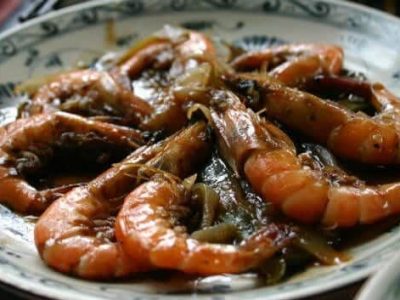
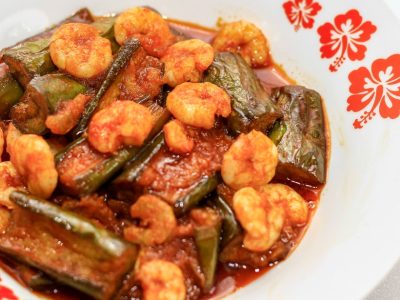
Prawns in Spicy Coconut Sauce
Ingredients
- 14 oz Canned coconut milk
- 8 Dried red chile peppers *
- 2 ts Cumin seeds
- 2 ts Coriander seeds
- 1 ts Turmeric
- 1 tb Grated fresh ginger 6 Garlic cloves minced
- 5 tb Peanut oil
- 1 lg Onion thinly sliced
- Salt
- 1 lb Prawns shelled, deveined
Instructions
- Do yourself a favor and use canned coconut milk in this recipe. It's a lot easier and probably better than what you would produce using a fresh coconut.
- Process the grated fresh coconut or the desiccated coconut with 3 1/2 cups hot water in a food processor.
- Drape a piece of folded cheesecloth over a bowl and pour the coconut mixture into the cheesecloth. Strain the liquid, squeezing the pulp to extract as much milk as possible.
- This is thick coconut milk; set aside.
- Pour 2 1/2 cups hot water over the coconut in the cheesecloth and squeeze to extract more milk into another bowl. This second extract is thin coconut milk. Set aside.
- If you are using canned coconut milk, skip this step and proceed with the recipe. Grind the chile peppers, cumin and coriander seeds in a spice grinder and set aside.
- Process the thick coconut milk (or canned coconut milk) with the ground spices, turmeric, ginger and garlic; set aside. Heat the oil in a heavy, shallow pan.
- Add the onions and cook until the edges begin to turn almost reddish brown (about 15 minutes), stirring frequently.
- Add the coconut-spice mixture and cook until the liquid evaporates and oil separates from the paste. Cook this paste for 10 more minutes, stirring constantly.
- Stir in the reserved thin coconut milk (or 2 cups water, if you have used canned coconut milk) and let simmer until reduced to a creamy sauce. Add salt to taste.
- Stir the prawns into the sauce and cook a few minutes until the prawns are just cooked. (Be careful not to overcook). Serve with steamed rice.
Sign up for our newsletter
Add Awesome Cuisine as a Preferred Source

Frequently Asked Questions
Yes. The recipe explains how to make both thick and thin coconut milk from fresh or desiccated coconut using a food processor and cheesecloth. That said, canned coconut milk is specifically recommended in the recipe because it is more convenient and gives a reliable result. If you do use fresh coconut milk, follow the extraction steps in the recipe carefully. Use the thick milk for blending with the spices and the thin milk for the second addition of liquid.
The clearest sign is that the oil visibly separates and pools around the edges of the paste in the pan. At this point the paste will also have reduced significantly and will no longer smell raw. The recipe asks you to cook the paste for a further 10 minutes after the liquid evaporates, stirring constantly. Do not skip this step. Undercooked paste will leave the sauce tasting sharp and unfinished.
Thick coconut milk is the first extract from the coconut and is richer and creamier. It is blended with the spices to form the paste. Thin coconut milk is the second extract, made by adding more water to the already-squeezed coconut pulp, and is added later to bring the cooked paste to a saucy consistency. If you are using canned coconut milk, the recipe instructs you to use the canned milk in place of thick coconut milk and plain water in place of thin coconut milk.
Only a few minutes. Prawns are ready when they turn pink and opaque throughout. If you cut one open, the flesh should be white with no translucent grey area in the centre. It is better to take the pan off the heat slightly early than to leave the prawns in too long, as residual heat in the sauce will continue to cook them briefly after the flame is off.
Yes. The heat comes from the dried chilli peppers that are ground with the cumin and coriander seeds. Use fewer chillies for a milder sauce or increase the quantity for more heat. Turmeric, ginger, and garlic add flavour without significant heat, so adjusting the chilli quantity will not affect the overall character of the sauce.



I think the prawns need to be sautéed a bit before cooking them with the sauce. Thanks for supplying the recipe for making coconut milk from scratch. Overall a very good and helpful recipe