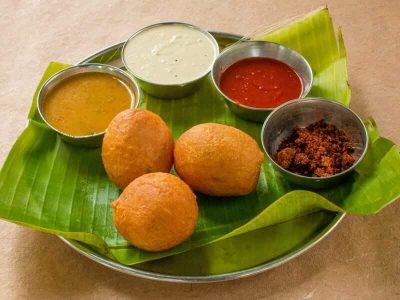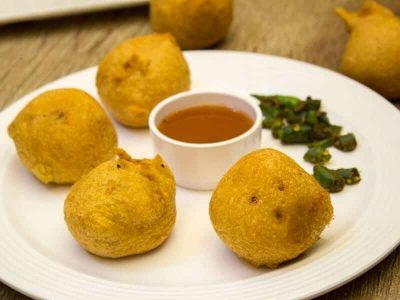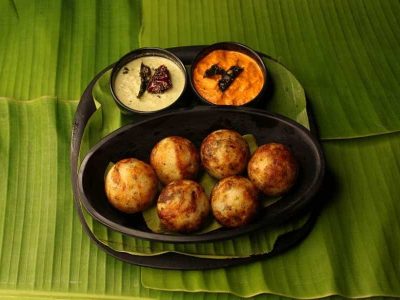
Puli Bongaralu, also known as Masala Bonda, is a deep-fried snack from Andhra Pradesh made with a fermented rice flour and urad dal base. The name bongaralu (sometimes written as bongralu or bongulu) refers to the rounded shape of each piece. What sets this apart from a standard bonda is the 24-hour resting period for the rice flour mixture, which develops a mild sourness in the batter. A tempering of mustard seeds, red chilli, urad dal and asafoetida goes into the batter just before the bondas hit the oil.

About the Recipe
This recipe works in two stages that cannot be rushed. Half the rice flour is boiled with water to form a cooked dough, then combined with the remaining raw flour and left to ferment for 24 hours. Urad dal soaks separately for 4 hours and is ground to a smooth paste. Chana dal soaks for 1 hour and is added whole for texture. The seasoning is fried in oil and stirred into the batter just before shaping. Each portion is rolled into a 2-inch round and fried over medium heat until golden brown.
Why You Will Love This Recipe
The 24-hour ferment does most of the work for you. By the time you are ready to fry, the batter already has flavour built in, so the bondas taste more interesting than a batter mixed and fried on the same day.
The texture is the other strong point. The cooked rice flour base keeps the inside soft while the outside crisps up in the oil. The whole chana dal pieces add a small bite that breaks the uniformity. These bondas hold together well and do not fall apart in your hand.
Cooking Tips
The most common beginner mistake is frying on high heat. The outside browns too fast and the inside stays raw. Keep the flame at medium throughout.
If the batter feels too loose after fermentation, the bondas will not hold their shape when dropped into the oil. Add a small amount of rice flour to firm it up before shaping.
Make sure the urad dal is ground to a fine, smooth paste. A coarse paste makes the bonda dense.
Top Tips
- Boil only half the rice flour with water; the other half stays raw. Mixing both together and resting for 24 hours gives the right texture.
- Grind the soaked urad dal with as little water as possible to get a thick, smooth paste. Too much water makes the batter runny.
- Add the soaked chana dal whole into the batter. Do not grind it. The whole dal pieces give a slight crunch inside the bonda.
- Fry the seasoning ingredients until the mustard seeds splutter before adding to the batter, otherwise the raw spice flavour stays in the finished bonda.
- Shape the rounds with slightly damp hands so the batter does not stick and the surface stays smooth before frying.
- Fry in batches. Overcrowding the pan drops the oil temperature and the bondas absorb more oil instead of crisping up.
Serving and Storing Suggestions
Serve Puli Bongaralu immediately after frying while the outside is still crisp. They go well with coconut chutney or a simple tomato chutney on the side. Once they cool, the crust softens and the texture changes.
These bondas do not store well once fried. The fermented batter can be kept covered in the refrigerator for up to a day if you want to fry in batches, but shape and fry only what you plan to eat right away.
Similar Recipes
Nutrient Benefits
Urad dal contributes protein and iron. Rice flour keeps the batter gluten free, making this a suitable snack for those who avoid wheat. Chana dal adds a small amount of fibre and protein.

Puli Bongaralu (Masala Bonda)
Ingredients
- 1 cup Rice Flour
- 1/2 cup Urad Dal
- few Curry Leaves
- 1 Onion finely chopped
- 1/2 tsp Ginger chopped
- 1 Green Chillies finely chopped
- as per taste Salt
- 1/2 tbsp Chana Dal
- for frying Oil
For Seasoning:
- 1/2 tbsp Oil
- 1/4 tsp Mustard Seeds
- 1 Red Chillies
- 1/4 tsp Urad Dal
- a small pinch Asafoetida Powder
Instructions
- Boil half the rice flour with a little water.
- Mix with the remaining half and keep aside for 24 hours.
- Soak urad dal for 4 hours.
- Drain and grind to a fine paste, adding little water if required.
- Mix the rice and ground dal together with curry leaves, onions, green chillies, ginger and salt.
- Soak chana dal for 1 hour and add it to the mixture.
- Fry the seasoning ingredients in 1 tblsp oil and add it to the rice dal mixture.
- Take small walnut sized portions and shape into 2 inch rounds.
- Heat oil in a pan.
- Deep fry these rounds (bondas) till golden brown over medium heat.
- Serve hot.
Sign up for our newsletter
Add Awesome Cuisine as a Preferred Source

Frequently Asked Questions
Why does the rice flour need to rest for 24 hours?
The resting period allows mild fermentation to take place. This gives the batter a slight tang and makes the finished bonda softer on the inside. Skipping this step and frying on the same day will give you a bonda that tastes flat and has a denser texture.
Can I reduce the soaking and resting times to make this faster?
The urad dal needs at least 4 hours of soaking to soften enough for grinding to a smooth paste. Less soaking leaves the dal grainy. The 24-hour rice flour rest is what makes this recipe what it is. The most practical way to plan ahead is to prepare the rice flour mixture the evening before and fry the next day.
My bondas are breaking apart in the oil. What went wrong?
This usually means the batter is too wet. After fermentation the batter can loosen. Add a small amount of rice flour, mix it in and test one bonda before shaping the rest. Also make sure the oil is hot enough before you add the bondas. If the oil is not hot enough, the shaped rounds soften and break before a crust forms.
What is the difference between Puli Bongaralu and a regular masala bonda?
Most masala bonda recipes use a besan or maida batter mixed on the same day. Puli Bongaralu uses a rice flour and urad dal base that is fermented for 24 hours, which gives it a slightly sour flavour and a different texture. The mustard seed and red chilli seasoning stirred into the batter before frying is also specific to this Andhra style.
Can I use store-bought rice flour instead of making my own?
Yes, store-bought rice flour works here. The key step is still to cook half the flour with water before mixing it with the other half. This cooked portion is what holds the bonda together during frying. Using all raw flour, even good quality, will not give the same result.