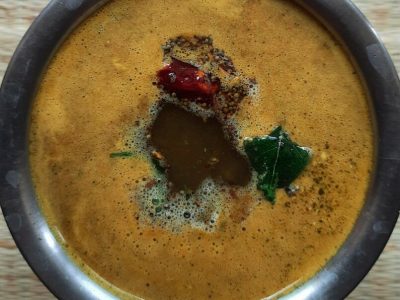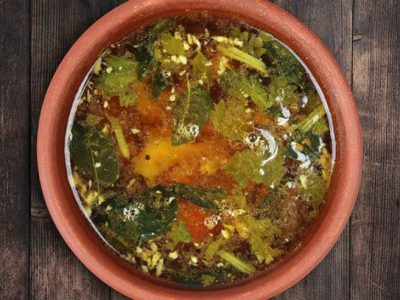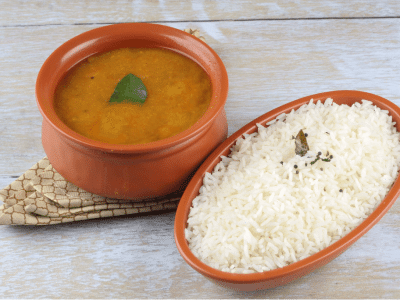
Udipi Saaru has been a point of quiet debate between my husband and me since we first made it together. He grew up eating the version his aunt made in Mangalore, which was thinner, sourer, and had barely any dal in it. My version follows a recipe I picked up from a cookbook focused on temple-style cooking from Udupi, and it leans a little richer because of the coconut in the ground masala.
We have never fully agreed on whose is more . I have stopped trying to settle it and just make mine, which is this one. What keeps me coming back is that combination of round dried chillies and fenugreek seeds ground together with toasted coconut. That slightly bitter, nutty undertone is unlike anything you get from a ready-made rasam powder, and it is the reason I bother making the masala fresh every time.
About the Recipe
Every ingredient here is something a regular Indian kitchen already has on hand. Toor dal, tamarind, dried chillies, fenugreek, jaggery, curry leaves — nothing here requires a special trip. The masala takes about ten minutes to fry and grind, and the saaru itself simmers for roughly 25 minutes total. I make this on evenings when I want something hot and satisfying without spending an hour at the stove. It pairs well with plain steamed rice, and a small bowl of it also works alongside a heavier meal to cut through richness.
Why you will love this recipe
The ground masala is the real reason to make this. Frying each spice separately before grinding takes a little patience, but it means every ingredient releases at its own pace without burning. The fenugreek adds a faint bitterness that balances the tamarind sourness, and the toasted coconut rounds it out so the saaru does not taste sharp or flat.
Because the dal is cooked separately and added at the end, you control the thickness. I often leave it on the thinner side so it soaks into the rice rather than sitting on top of it. The mustard and cumin seeds going into hot oil at the end, that brief hiss before the curry leaves hit the pan, is one of those sounds that signals the whole thing is almost ready.
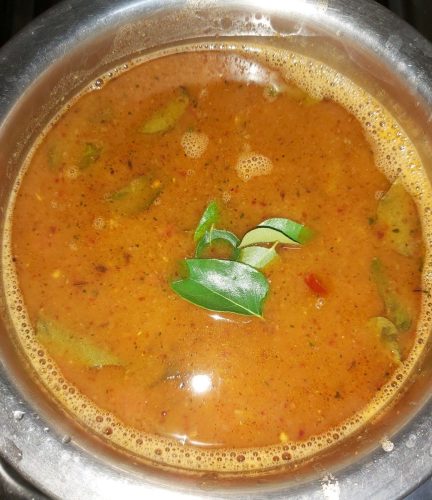
Cooking Tips
The most common beginner mistake here is frying all the masala ingredients together in one go. They have different burn points — coconut goes golden quickly, coriander seeds need longer. Fry them in the order they need: start with the dry spices, finish with the coconut. If the masala turns bitter, the coconut was overcooked.
Keep the heat moderate throughout. Also watch the jaggery — add it after the tamarind has simmered for a few minutes, otherwise the raw jaggery taste can linger in the final saaru.
Top Tips
- Pressure cook the toor dal until it is completely soft and mashable. An undercooked dal will make the saaru taste grainy once it is stirred in.
- When grinding the masala, add water one tablespoon at a time. Too much water makes the paste loose and the saaru can turn thin before you want it to.
- Use round dried red chillies for heat and long ones for colour. The combination gives a more balanced spice level than using only one type.
- Taste the tamarind extract before adding it. If it is very sour, start with 3/4 cup and adjust from there, because the jaggery only softens so much.
- The tempering goes in last. Pour it into the saaru immediately after frying so the mustard and curry leaves do not sit in hot oil and go past their peak aroma.
Serving and Storing Suggestions
Serves 3 to 4 people. Preparation and cooking time is about 45 to 55 minutes including soaking and grinding. Serve hot over plain steamed rice, with a side of papad or a dry vegetable fry. Leftovers keep well in the refrigerator for up to two days in a sealed container.
Reheat on the stovetop over low heat with a splash of water, because the dal tends to thicken as it sits. I do not recommend freezing it as the coconut in the masala can turn grainy after thawing.
Similar Recipes

Udipi Saaru
Ingredients
- 1 cup Tamarind Extract
- 1/3 cup Toor Dal
- 2 to 3 Tomatoes (cut into 1/2 inch cubes)
- 2 tsp Jaggery (powdered)
- Salt as per taste
- 1/2 tsp Turmeric Powder
- 2 tbsp Coriander Leaves (chopped)
For the Masala:
- 2 tsp Coconut Oil
- 4 Dry Red Chillies (2 long and 2 round)
- 1 tbsp Coriander Seeds
- 1 tbsp Jeera
- 1 tsp Fenugreek Seeds
- 1/2 tsp Asafoetida Powder
- 1 tbsp Coconut (grated)
For Tempering:
- 2 tsp Coconut Oil
- 1/2 tsp Mustard Seeds
- 1/2 tsp Cumin Seeds
- 1 Dried Red Chilli (halved)
- 1 sprig Curry Leaves
Instructions
- Wash the dal and drain.
- Pressure cook with 2/3 cup of water for 5 minutes and set aside.
- Heat oil in a pan for the masala.
- Fry each ingredient separately over moderate heat.
- Fry grated coconut till golden.
- Combine all fried ingredients and grind to a fine paste with 1 to 2 tblsp of water.
- Keep aside.
- Heat a pan and add the chopped tomatoes with 1 cup of water.
- Bring to boil.
- Lower heat and simmer for 10 minutes till tomatoes are soft and mushy.
- Add the tamarind extract, powdered jaggery, salt and turmeric powder.
- Simmer for another 10 minutes.
- Add the ground masala and cooked dal.
- Simmer for another 5 more minutes.
- Add more water if it is too thick.
- Heat oil for tempering in a small pan.
- Fry all the tempering ingredients and add it to the saaru.
- Garnish with coriander leaves.
- Serve hot with rice.
Sign up for our newsletter
Add Awesome Cuisine as a Preferred Source

Frequently Asked Questions
My saaru turned out too sour even after adding jaggery. What went wrong?
The tamarind extract was likely too concentrated. Next time, dilute it a little more before adding, or reduce the quantity to 3/4 cup. Adding an extra teaspoon of jaggery at the end can help, but if the sourness is already strong, a small pinch of salt and a little more cooked dal stirred in will balance it better than more sweetener.
Can I use store-bought rasam powder instead of making the fresh masala?
You can, but the dish will taste noticeably different. The freshly ground masala with coconut and fenugreek is what makes Udipi Saaru distinct from a regular rasam. If you do substitute, use about one and a half tablespoons of rasam powder and add one tablespoon of fresh grated coconut blended with a little water to bring back some of that body.
The saaru looks too thin after I added the water. How do I fix it?
Let it simmer uncovered on low heat for five to ten more minutes. The liquid will reduce and the dal will help thicken it slightly. Avoid adding more dal paste at this stage because it can make the saaru taste flat. Thin is actually fine for this recipe — it is meant to soak into rice, not sit thick like a dal.
Can I skip the jaggery if I do not have it?
A small piece of jaggery is worth finding because it does more than add sweetness — it softens the sharp edge of the tamarind. If you genuinely cannot get it, use half a teaspoon of dark brown sugar as a substitute. White sugar works in a pinch but does not have the same depth.
My masala turned slightly bitter. Is there a way to rescue the saaru at that stage?
The bitterness usually comes from the coconut being overcooked during frying. Once it is in the saaru, you can reduce it by adding an extra teaspoon of jaggery and a small pinch of salt. A little extra cooked dal stirred in also dilutes the bitter note. Going forward, watch the coconut closely when frying — it should be pale golden, not deep brown.