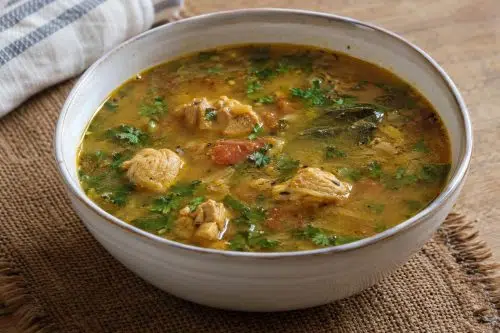
This Chettinad chicken soup gets its body from reserved tuvar dal water rather than cream or coconut milk, which keeps it substantial without being heavy. Whole spices tempered in oil, including cinnamon, fennel seeds and curry leaves, go in first, followed by onions, tomatoes, ginger and green chilli. Boneless chicken is stir-fried directly in those aromatics before the liquid is added. It works as a starter or a light meal on its own.
About the Recipe
The recipe has two distinct stages. First, tuvar dal is cooked until creamy and its cooking water is set aside. The dal itself is not used in the soup, only the water, which carries enough starch to give the broth a gentle body.
Second, the chicken is cooked in a tempered base of whole spices and aromatics, then simmered in that dal water along with additional warm water. Crushed garlic and salt go in with the liquid. Coriander leaves are added once the soup comes to a boil, and the heat is reduced to finish the chicken through.
Why You Will Love This Recipe
The tempering does a lot of the work here. Fennel seeds, cumin seeds, cinnamon and curry leaves bloom in hot oil before anything else goes in, and that base carries through the entire bowl.
There is no stock required and no long marination. The dal water thickens the soup naturally, so it has texture without being stodgy. If it thickens too much as it sits, a cup or two of water brings it back.
If you enjoy Chettinad Chicken Masala, this soup uses a similar spice profile in a much lighter format.
Cooking Tips
The most common mistake is discarding the dal water. Once the dal is drained, that liquid must be kept aside as it forms the soup base.
When stir-frying the chicken, keep the heat at medium so the spices coating the pieces do not scorch before the meat is sealed. Use warm water rather than cold when adding the liquid, so the soup comes back to a boil quickly.
Watch the pot as it simmers. The broth can thicken faster than you expect, especially if the dal was particularly starchy.
Top Tips
- Cook the dal until it is genuinely creamy before draining. Undercooked dal produces thin, flavourless water that will not give the soup any body.
- Reserve at least 3 cups of dal water. If the dal has absorbed most of the water during cooking, add a little extra water to the pot, stir and drain again.
- Stir-fry the chicken over medium heat, not high, so the turmeric and garam masala coat the pieces without burning before the liquid is added.
- Add the garlic with the liquid, not with the aromatics at the start. This keeps a fresh garlic note in the finished soup rather than a cooked-out one.
- If the soup thickens beyond what you want after simmering, add warm water in small amounts and stir. Cold water can make the fat in the broth look separated.
- Taste for salt only after the garlic has had a few minutes to cook into the broth, as raw garlic can make the seasoning seem sharper than it actually is.
Serving and Storing Suggestions
Serve hot, ladled into deep bowls. It works well as a starter before a rice meal or as a light lunch with plain bread or rice on the side. If you enjoy other spiced chicken soups, Chicken Noodle Soup is a milder option worth trying.
Leftover soup keeps in the refrigerator for up to two days. Reheat gently over low heat and add a splash of water if it has thickened. Avoid boiling it hard during reheating as the chicken can toughen.
Similar Recipes
- Chettinad Chicken Masala
- Chettinad Ginger Chicken
- Chettinad Chicken
- Chicken Noodle Soup
- Chicken Ishtu
Nutrient Benefits
Boneless chicken is a useful source of protein. Tuvar dal contributes protein and some fibre through the cooking water that forms the soup base. Ginger, garlic and turmeric appear in meaningful quantities here, as they do in much of everyday Indian cooking. Coriander leaves add a small amount of vitamins. Only 2 tablespoons of oil are used for the entire quantity, so the soup is relatively light on fat.
Chettinad Chicken Soup
Ingredients
- 1/4 cup Tuvar Dal
- 3/4 tsp Turmeric Powder
- 1/2 cup, finely sliced Onions
- 1/4 cup, finely sliced Tomatoes
- 1 tsp, minced Fresh Ginger
- 1 , finely chopped Green Chilli
- 1 cup, cubed Boneless Chicken
- 1/2 tsp Garam Masala Powder
- 1/4 tsp Black Pepper Powder
- 1/4 tsp Cumin Powder
- 4 , crushed Garlic Cloves
- 1 tsp Salt
- 1/4 cup, chopped Fresh Coriander Leaves
- For Tempering:
- 2 tblsp Oil
- 1 Bay Leaf
- 2 one inch piece Cinnamon Sticks
- 3 Curry Leaves
- 1/2 tsp Cumin Seeds
- 1/4 tsp Fennel Seeds
Instructions
- Wash the dal and drain. Cook the dal with 1/4 tsp of turmeric powder and 3 cups of water till creamy.
- Drain dal water and reserve.
- Put the oil in a deep pan over medium heat.
- When the oil is hot add the bay leaf, cinnamon sticks, curry leaves, cumin seeds and fennel seeds.
- Add the onions, tomatoes, ginger and green chilli.
- Stir for a few seconds till onions are soft.
- Add the chicken and stir-fry over medium heat.
- Sprinkle 1/2 tsp of turmeric powder, garam masala powder and the black pepper and cumin powder into the pan.
- Stir well and cook uncovered for 2 minutes.
- Add dal water to pan with an additional 3 cups of warm water.
- Mix in garlic and salt.
- Cook over medium heat till the soup comes to a boil.
- Add coriander leaves.
- Reduce heat and simmer, till the chicken is tender, stirring frequently.
- If the soup thickens, add 1 to 2 cups of water to thin it down.
- When the chicken is cooled remove from heat.
Sign up for our newsletter
Add Awesome Cuisine as a Preferred Source

Frequently Asked Questions
Can I use the cooked dal in the soup as well, or only the water?
The recipe uses only the dal water. The cooked dal itself is not added to the soup. You can set it aside and serve it separately with rice. Adding it to the soup would make the broth much thicker and change the texture significantly.
My soup became very thick after simmering. What should I do?
This is expected if the dal was starchy, and the recipe accounts for it. Add warm water a little at a time, stir, and check the consistency before adding more. Do not add too much at once or the flavour will become thin.
Can I use bone-in chicken pieces instead of boneless chicken?
You can, but the cooking time will be longer. Bone-in pieces need more time to cook through than cubed boneless chicken. Keep the heat at medium and simmer until the meat is fully tender and coming away from the bone. The soup will also have a slightly richer flavour from the bones.
Is there a substitute for tuvar dal if I do not have it at home?
Moong dal is the closest substitute. It cooks to a similar creamy consistency and produces a usable starchy water. Chana dal takes longer to cook and produces a thicker water, so you may need to dilute it slightly. The flavour of the soup base will be a little different but the method stays the same.
How do I know when the chicken is properly cooked?
The chicken cubes should be fully opaque with no pink visible when you cut into a piece. They should feel firm rather than soft and spongy. Simmer until the chicken is tender and cooked through. Do not rely on timing alone as it varies with the size of the cubes.