Picture a Tuesday afternoon at 4pm. Your child has just dragged their school bag through the door, shoes still half on, already announcing they’re ‘starving to death’. The lunchbox came back half-eaten again – because who finishes their sabzi when there’s a cricket game at break time? You have maybe ten minutes before homework meltdown begins, and you’re staring at the fridge wondering whether biscuits and juice count as a snack.
They don’t. But here’s the thing – making something better doesn’t have to take longer.
Indian kitchens have always known how to feed a hungry child fast. The poha sitting in your cupboard, the makhana jar on the shelf, the leftover upma in the fridge – these are the building blocks of some of the most nutritious after-school snacks imaginable. You just need to know what to reach for, and sometimes how to put it together in a new way.
This list covers 10 snack ideas your kids will actually want to eat on a school day – not one of them requires hours in the kitchen, and most can be prepped ahead so the 4pm chaos doesn’t have to feel like chaos at all.
Table of Contents
Key Takeaways
- All 10 snacks can be made in under 30 minutes – most in 10 to 15.
- Indian pantry staples like poha, makhana, moong dal, oats and jaggery are nutritionally excellent for growing children.
- Homemade snacks cost 60 to 80 percent less than packaged alternatives and contain no hidden additives or preservatives.
- A good snack for a school-going child should provide protein, complex carbohydrates, or healthy fats – ideally two of the three.
- Snacks with fibre and protein prevent energy crashes and improve focus for evening homework sessions.
- You can batch-prep several of these on Sunday to avoid weekday morning stress.
Children aged 6 to 14 are in a period of rapid physical and cognitive growth – their brains and bodies genuinely need refuelling between meals. What they eat after school shapes how well they concentrate on homework, how they sleep, and how they show up the next morning. Getting this right is not a small thing.
What makes a snack ‘school-day worthy’?
A school-day snack should do three things: restore energy after a long day of concentration, provide nutrients that support growth (protein, calcium, iron, B vitamins), and keep the child satisfied without killing their appetite for dinner. It should NOT be a mini-meal or a sugar hit that sends them off a cliff thirty minutes later.
One in five children aged 5-19 globally are living with overweight – driven significantly by unhealthy snacking patterns. Source: UNICEF Child Nutrition Report, 2025 (unicef.org)
1. Poha Chivda – The Snack That Travels Anywhere
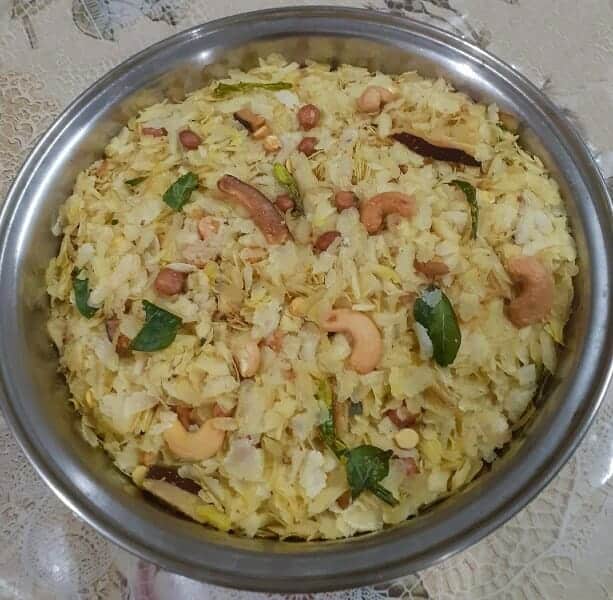
Chivda is underrated as a children’s snack. It’s dry, it’s crunchy, it packs well, it needs no refrigeration, and it lasts for weeks in an airtight container. Most importantly, it’s genuinely nutritious – poha gives you iron and quick carbohydrates, peanuts add healthy fats and protein, and the turmeric slipped in during the tadka isn’t just for colour. It’s doing anti-inflammatory work in the background.
The version you want to make for school days uses less oil than the deep-fried festive kind, roasting the poha dry until it puffs and crisps instead. You can scale up a big batch on Sunday and put it in a jar. It keeps. It travels. It’s endlessly snackable.
Full recipe: Crispy Poha Chivda Recipe
Key Ingredients:
- Thick poha (flattened rice), peanuts, cashews
- Curry leaves, dried red chillies, turmeric
- Salt, a pinch of sugar, oil or ghee for roasting
Method:
- Dry roast the poha on medium heat, stirring constantly, until it turns crisp and light golden. Set aside.
- In the same pan, heat 1 tablespoon of oil. Roast peanuts, cashews, and curry leaves separately until golden.
- Add dried chillies and asafoetida, fry for 30 seconds. Add turmeric, salt, and a pinch of sugar.
- Combine everything, toss well, cool completely, and store in an airtight jar.
2. Oats Laddus – Old Soul, New Ingredients
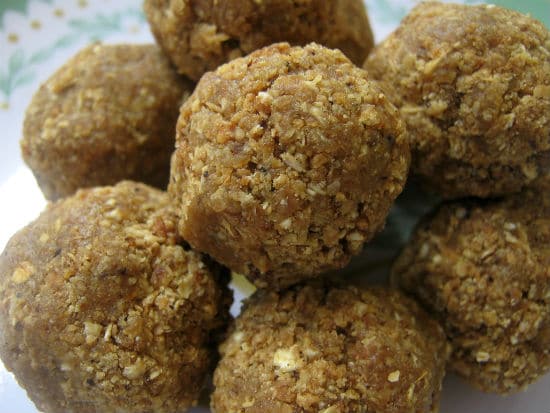
Your nani made laddus with besan, ghee, and sugar. These work on exactly the same principle – binding roasted ingredients with something sticky and sweet – but the modern version swaps refined sugar for jaggery and adds oats to the mix. The result is a laddu that gives children fibre, protein, calcium, and complex carbohydrates in every small, palm-sized ball.
Children accept these as a treat rather than a health food, which is exactly the point. Make a batch of 15-18 on a Sunday evening. They keep for two weeks in a cool dry place, and they travel beautifully in a tiffin box or snack bag.
Full recipe: Oats Laddu Recipe
Key Ingredients:
- Rolled oats, cashews, almonds, raisins
- Jaggery powder, cardamom, a spoon of ghee
Method:
- Dry roast oats on medium flame until nutty and slightly golden. Cool and grind to a fine powder.
- Dry roast cashews and almonds separately, cool, and grind coarsely.
- Mix the oat powder, nut powder, jaggery, and cardamom in a bowl.
- Melt ghee, fry raisins briefly, add to the mixture. Mix well while warm.
- Shape into laddus while still slightly warm. Cool completely before storing.
3. Moong Dal Chilla – Protein on a Pan
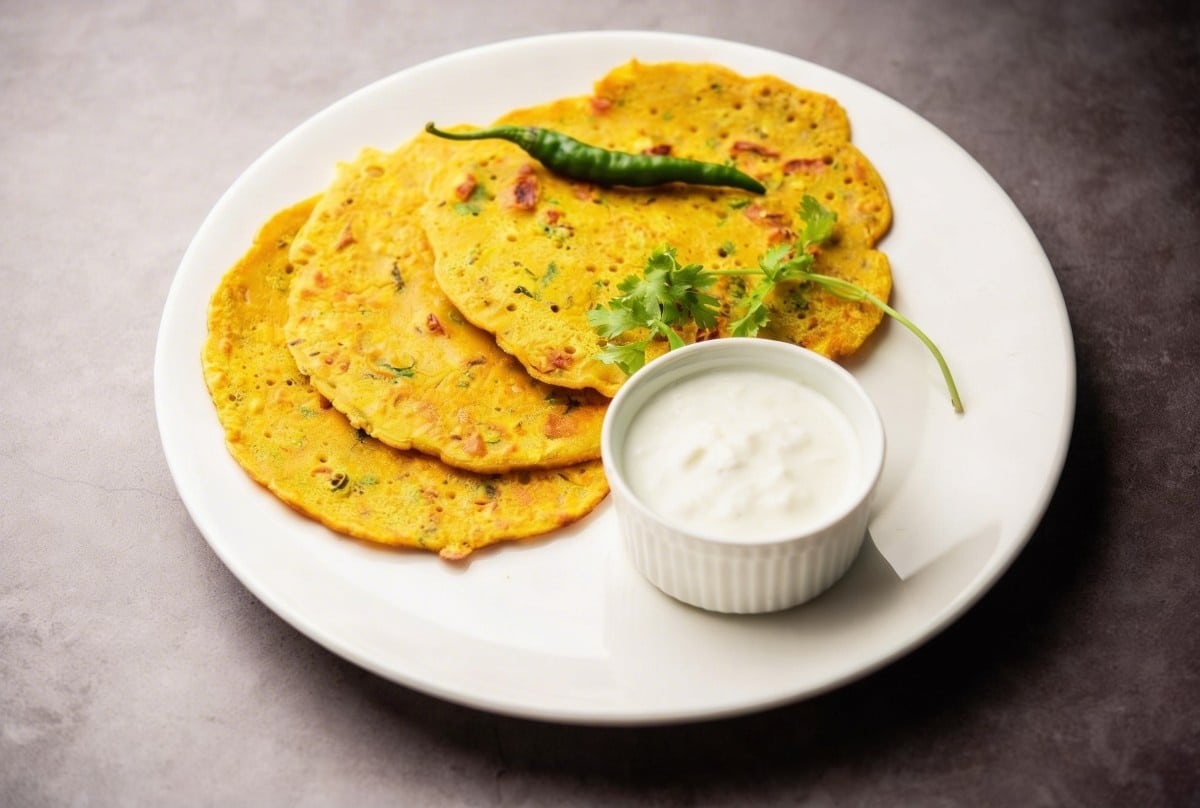
Moong dal is protein royalty in Indian cooking, and the chilla – a savoury pancake made from soaked and blended dal – is the fastest way to get that protein onto a plate. A few minutes on a hot tawa, and you have something that genuinely fills a hungry child up.
The trick to a good chilla is getting the batter right – not too thick, not too thin. Spread it like a dosa and press gently so the edges crisp up. Add grated carrot, finely chopped spinach, or green peas to the batter and you’ve hidden an entire serving of vegetables inside something that tastes like a savoury pancake. Serve with green chutney or a spoon of curd on the side.
“A moong dal chilla made with grated vegetables is one of the most protein-complete snacks you can give a school-going child. It costs almost nothing to make and takes fifteen minutes from batter to plate.”
Key Ingredients:
- Moong dal (soaked for 2-4 hours), grated carrot, finely chopped onion
- Green chillies, ginger, cumin seeds, salt, asafoetida
- Oil for the tawa
Method:
- Drain soaked moong dal. Blend with green chillies, ginger, cumin, and a little water to a smooth, pourable batter.
- Stir in grated vegetables, onion, salt, and asafoetida.
- Heat a flat tawa, grease lightly with oil. Pour a ladleful of batter and spread in a circle.
- Cook on medium heat until the base firms and edges lift. Flip, cook for 2 more minutes. Serve immediately.
4. Roasted Makhana – The Snack That Belongs in Every Kitchen
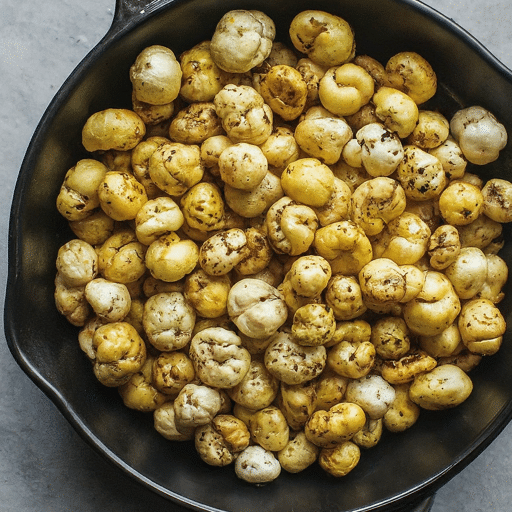
Makhana – fox nuts, or lotus seeds – has been eaten in Indian kitchens for centuries, most often during fasting or in kheer. But the roasted version has quietly become one of the most popular healthy snacks in the country, and for very good reason.
They’re low in calories, high in protein and calcium, and have a satisfying crunch that makes chips feel unnecessary. A handful of makhana roasted in a teaspoon of ghee with a pinch of rock salt and cumin powder is ready in 10 minutes and contains roughly 4 grams of protein per cup. For a school-going child who needs sustained focus, that matters.
You can vary the flavour endlessly – chaat masala, turmeric and pepper, cinnamon and jaggery for a sweet version. Make a large jar and it keeps for two weeks. This is the snack you should always have on hand.
Makhana contains approximately 9.7g of protein per 100g – comparable to several types of cheese – alongside calcium, magnesium, and potassium. Source: Indian Food Composition Tables, National Institute of Nutrition (NIN), ICMR, 2017
5. Boiled Egg Roll – Quick, Filling, Actually Exciting
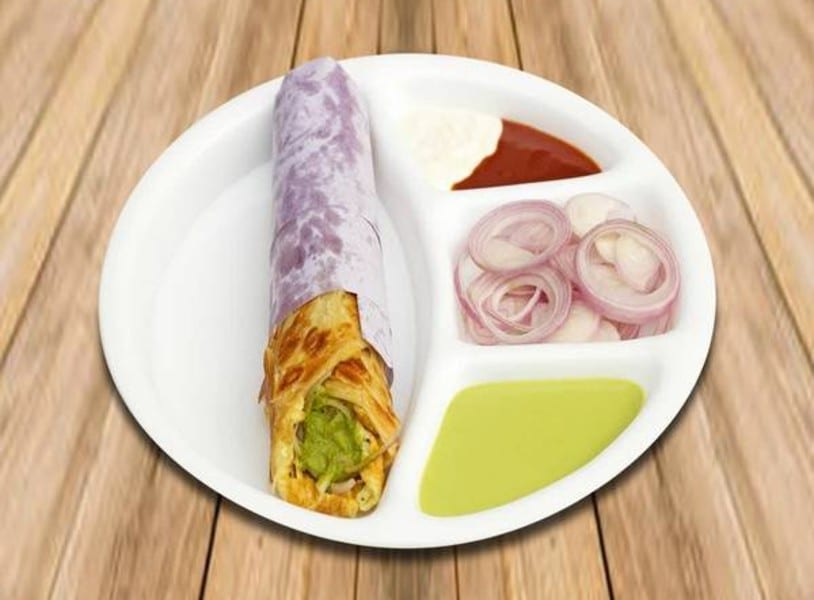
An egg by itself is fine. An egg inside a thin roti or whole wheat paratha with a smear of chutney and some julienned veggies is something a child will actively request. The boiled egg roll – or the quick kathi roll version made with a beaten egg cooked directly on the paratha – is one of the most complete snacks you can put together in 10 minutes.
Eggs provide choline, which is critical for brain development and memory – something children need every single day. Pair that with the fibre from a whole wheat roti and the crunch of raw cucumber or onion inside, and you have a snack that genuinely nourishes. No deep-frying, no baking, no waiting.
For picky eaters, add a little tomato ketchup or pudina chutney inside the roll. The point is to get the egg in there.
Key Ingredients:
- Boiled eggs (or egg scrambled on tawa), thin whole wheat roti or paratha
- Mint chutney or tomato sauce, thinly sliced onions, cucumber
- Chaat masala, salt, pepper
Method:
- Boil eggs ahead of time (keep them in the fridge for up to 3 days).
- Warm a roti on the tawa. Spread chutney lightly over it.
- Slice the boiled egg and place on the roti with onion, cucumber, a pinch of chaat masala.
- Roll tightly, wrap in foil or parchment if going into a tiffin box.
6. Seasonal Fruit with Chaat Masala – The Simplest Thing That Works
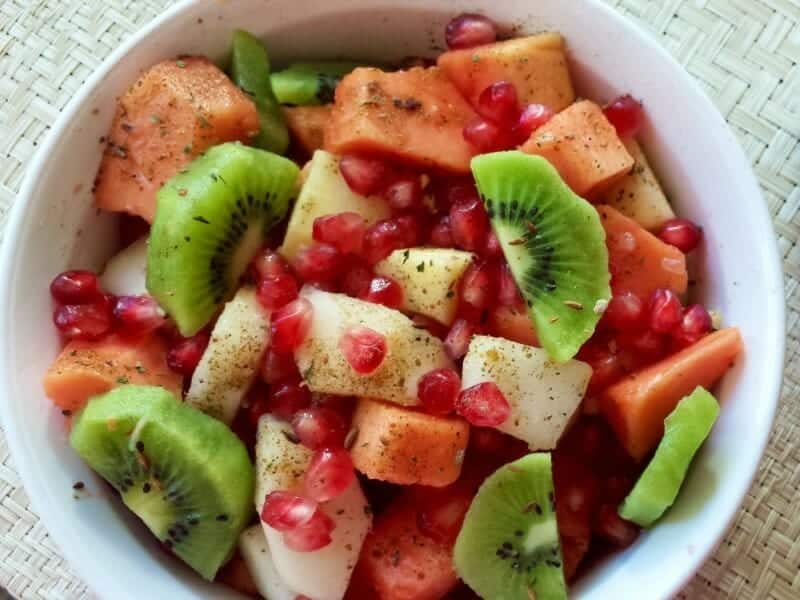
This barely counts as a recipe, but it counts enormously as a snack. Sliced banana, guava, papaya, or mango – whatever the season is offering – dressed with a pinch of chaat masala, a squeeze of lime, and perhaps a little black salt.
Fruit gives children natural sugars for quick energy without the blood sugar spike that comes from refined sweets. The fibre slows absorption, the vitamins are intact, and the chaat masala turns something plain into something genuinely exciting. Indian kids who find a bowl of plain cut fruit boring will happily eat it the moment chaat masala appears.
In summer, chilled watermelon with a pinch of salt and lime is cooling and hydrating. In the cooler months, guava with chaat masala is a classic. Eating with the seasons is not just poetic – it means the fruit is ripe, nutritious, and affordable.
“The best snack is often the simplest one. A child who has been given fruit consistently, made interesting with spices and citrus, develops a taste for it that lasts.”
7. Vegetable Upma – Underappreciated and Deeply Good
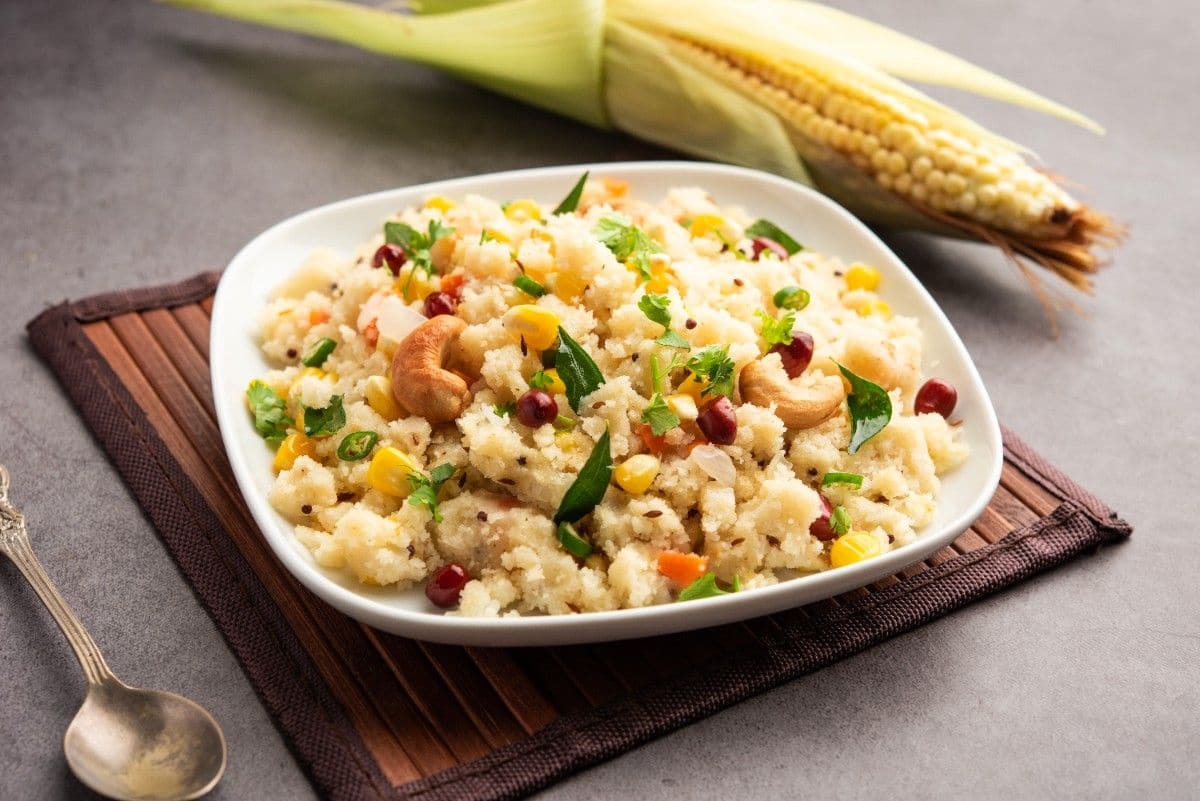
Upma is one of those dishes that children either love or pointedly ignore, and the difference is almost always in the making. Overcooked, gluey, underseasoned upma is nobody’s favourite. But upma made right – with a good tempering of mustard seeds, curry leaves, and dried chillies, studded with vegetables and cashews, with each rava grain separated and fluffy – is genuinely satisfying.
For school-day snacks, vegetable upma works brilliantly because it can be made in bulk, stays good for a day or two in the fridge, and reheats in minutes. Add grated carrot, green peas, or finely chopped beans. A squeeze of lime at the end makes all the difference. The complex carbohydrates in semolina provide sustained energy – no 5pm crash.
If your child refuses upma, try making it in mini portions in a tiffin-sized bowl. Portion size affects perception more than we think.
8. Peanut Butter Toast – Fast, Filling, No Cooking Required
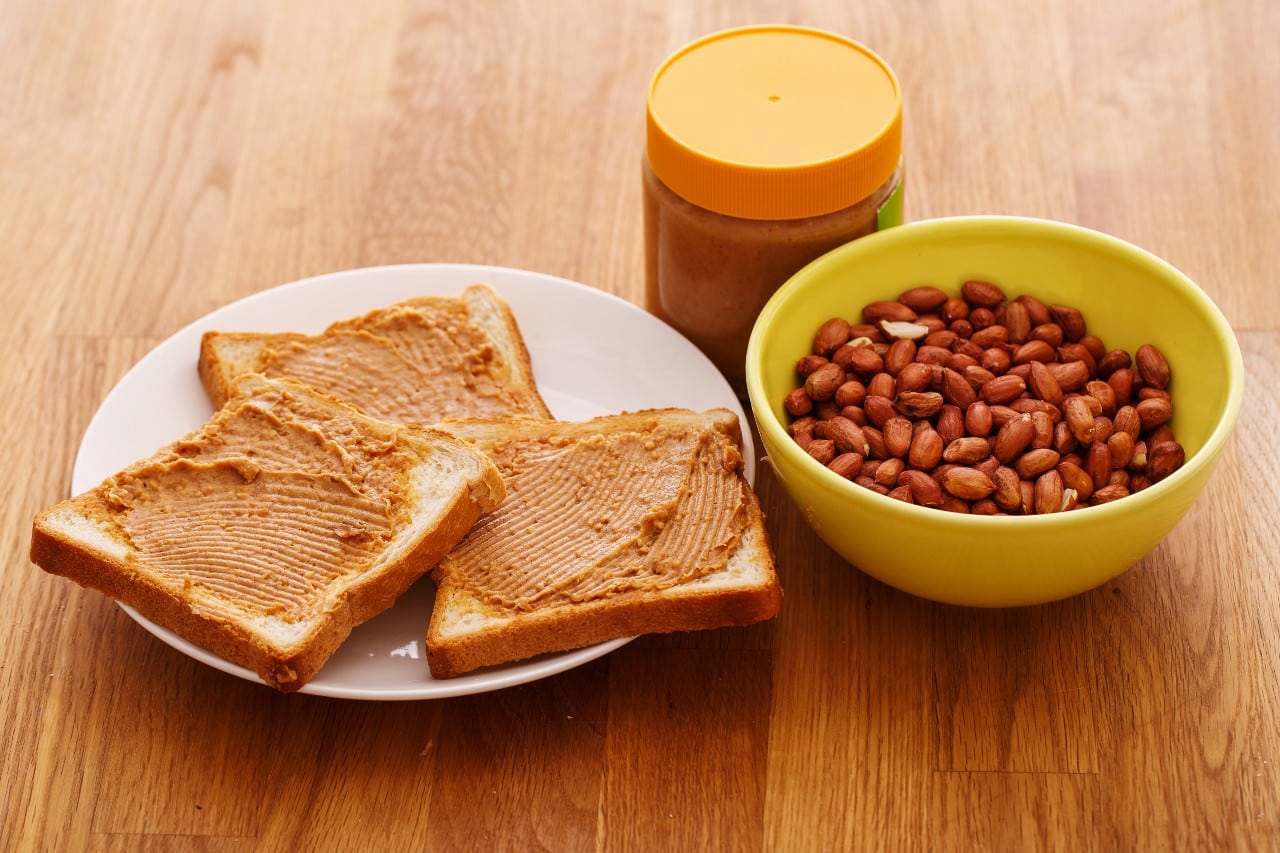
Not everything needs a tadka. On the days when there simply is no time – after a long day, before an activity class, in a genuine rush – peanut butter on whole wheat toast is one of the most nutritionally complete quick snacks you can put in front of a child.
Good quality peanut butter (look for the kind with just peanuts and salt on the ingredient list – no added sugar, no palm oil, no hydrogenated fat) is high in protein, healthy fats, and fibre. Pair it with whole wheat bread and you have complex carbohydrates. Add a sliced banana on top and you’ve added potassium, natural sugar, and a little extra fibre.
The Indian alternative: a thick smear of groundnut chutney on a multigrain roti. Same principle, more familiar flavour.
9. Curd with Honey and Seasonal Fruit – The Gut-Friendly Option
The dahi bowl is criminally underused as a children’s snack. Full-fat homemade curd – or a good-quality store-bought variety with live cultures – is a probiotic powerhouse that supports digestion, provides calcium for growing bones, and contains protein that keeps children feeling full. A drizzle of honey and some chopped fruit turns it into something sweet enough that no child complains.
Mango in summer. Banana year-round. Pomegranate in winter. Chiku when it’s in season. The flavour changes with the calendar, which means this never feels repetitive. If your child is lactose-sensitive, coconut yoghurt works well too.
A word on honey: use it sparingly and only for children over one year old. A teaspoon is enough. The point is to make the curd appealing, not to sweeten it into dessert territory.
10. Sweet Corn Chaat – The Weekend Treat That Belongs on Weekdays Too
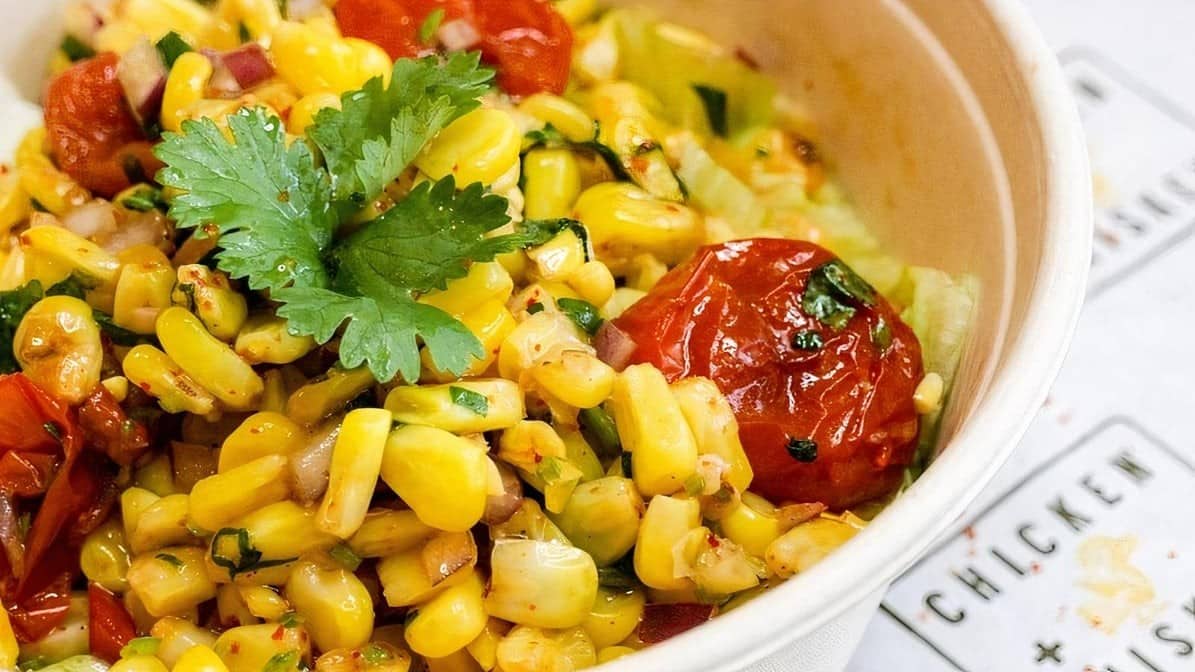
Sweet corn chaat sits in that perfect territory between snack and mini-meal – substantial enough to tide a child over until dinner, exciting enough that they’ll ask for it again. Boiled corn kernels tossed with finely chopped onion, tomato, cucumber, lime juice, chaat masala, and a little coriander. Ready in 10 minutes.
Sweet corn is a whole grain. It provides fibre, antioxidants including lutein and zeaxanthin (good for eye health), and B vitamins that support energy metabolism. The fresh vegetables add vitamin C and crunch. The chaat masala ties it all together with that sour-salty-spicy combination that Indian palates find impossible to resist.
Full recipe with tips: Sweet Corn Chaat Recipe
Great for: weekends, after-school, or anytime you want something that feels a bit festive but takes almost no effort.
At a Glance: All 10 Snacks Compared
| Snack | Prep Time | Key Nutrients | Best For |
| Poha Chivda | 20 min | Iron, carbs, healthy fats | Tiffin box, travel |
| Oats Laddu | 30 min | Fibre, protein, calcium | After school, long days |
| Moong Dal Chilla | 15 min | Protein, B vitamins, folate | Breakfast, mid-morning |
| Roasted Makhana | 10 min | Protein, phosphorus, calcium | Quick hunger fix |
| Boiled Egg Wrap | 10 min | Protein, choline, iron | Filling after-school bite |
| Fruit with Chaat | 5 min | Vitamins C & A, natural sugar | Refreshing 3pm slump |
| Vegetable Upma | 20 min | Complex carbs, B vitamins | Morning or evening snack |
| Peanut Butter Toast | 5 min | Healthy fats, protein, fibre | Quick energy pre-activity |
| Curd with Honey | 5 min | Calcium, probiotics, protein | Post-play, digestion |
| Sweet Corn Chaat | 10 min | Fibre, antioxidants, vitamin B | Weekend treat-snack |
Homemade vs Packaged School Snacks – Why It Matters
Every biscuit packet, cream cracker, or ‘healthy’ fruit drink marketed at children deserves a closer look at the label. Here’s a comparison that makes the case clearly.
| Factor | Packaged Snacks | Homemade Snacks |
| Ingredients | Additives, preservatives, refined flour | Whole grains, natural sweeteners, real ingredients |
| Sugar content | High – often hidden as ‘glucose syrup’ | Controlled – use jaggery or none at all |
| Salt/sodium | Very high – 300-600mg per serving | You decide how much goes in |
| Shelf life | Months (due to preservatives) | Days to weeks (no chemicals) |
| Cost | Rs. 30-80 per small pack | Rs. 10-20 for similar quantity |
| Nutrition | Calories with little return | Protein, fibre, vitamins intact |
| Freshness | Made weeks or months ago | Fresh, made same day or recently |
UNICEF’s U-Report poll (2023) found that unhealthy foods and drinks were more commonly available in schools than fruits or vegetables across 8 South Asian countries. Source: UNICEF Child Nutrition Report, 2025 – drishtiias.com/unicef-report
Tips to Make School Snacks Actually Happen
Knowing what to make is only half the problem. The other half is execution on a Tuesday when everyone is tired. A few things that help:
- Batch prep on Sunday. Oats laddus, chivda, and roasted makhana all keep well for a week or more. Make them once and you’re sorted.
- Keep boiled eggs in the fridge. A couple of boiled eggs prepped at night means a roll or a quick protein fix is always 2 minutes away.
- Chop fruits ahead. A container of chopped seasonal fruit in the fridge means the 4pm bowl takes 30 seconds to put together.
- Involve your child. Children eat more enthusiastically what they had a hand in making – even if that hand just stirred the batter or sprinkled the chaat masala.
- Skip the packaging judgement. A child eating homemade poha chivda from a reused container is doing better than one eating a ‘multigrain’ packaged snack with 17 ingredients.
For more ideas on building nutritious habits from the ground up, read our guide on high-protein Indian breakfast options and why skipping breakfast is a bad idea – both habits ripple into how children snack through the day.
Looking to understand what nutrients your child needs most? Our article on fibre-rich foods for kids is a good place to start.
One Last Thing
The snack you give your child after school is not just food. It’s the moment between a long day and the rest of the evening – the fuel for homework, for play, for conversation. It does not need to be elaborate. It does not need to be Instagram-worthy. It needs to be real, made with something that came from a whole ingredient, and offered with the quiet assurance that you thought about it.
That’s enough. Start with one snack from this list this week. See which one your child reaches for first next time.
Frequently Asked Questions
What is the healthiest after-school snack for a school-going child?
A snack that provides a combination of protein, complex carbohydrates, and healthy fats is ideal. Moong dal chilla, a boiled egg roll, or a bowl of curd with fruit and a drizzle of honey all meet this standard. The key is to avoid refined sugar and maida-heavy packaged snacks, which cause energy spikes followed by crashes that make homework sessions harder.
How early can I prepare school snacks to save time on busy mornings?
Most dry snacks – poha chivda, roasted makhana, oats laddus – can be made in a batch at the weekend and stored for a week or two. Boiled eggs keep in the fridge for up to three days. Chopped fruit should be prepped fresh daily but can be done the night before for some fruits like papaya and melon. The goal is to make the 4pm rush require no more than five minutes of actual assembly.
Are Indian snacks like chivda and makhana actually nutritious for children?
Yes, when made at home with minimal oil and no artificial additives, these are excellent snacks. Poha provides iron and carbohydrates. Makhana is high in protein, calcium, and phosphorus. Peanuts and cashews in chivda add healthy fats and protein. The issue with packaged versions of these snacks is the excess salt, refined oil, and preservatives – not the base ingredient itself.
My child refuses anything that looks ‘healthy’ – what do I do?
The trick is flavour, not disguise. Indian spices – chaat masala, cumin, lime, and black salt – make plain fruit exciting, make curd irresistible, and transform a bowl of boiled corn into something children actively ask for. Start with something familiar in a new form – if your child likes roti, make a peanut butter roll. If they like chaat, make a fruit chaat. Build from what they already enjoy.
How much should a school-going child eat as a snack?
For children aged 6 to 12, a snack should ideally provide between 150 and 250 calories and include at least one whole food group – a grain, a dairy product, a fruit, a nut, or a legume. This is enough to restore energy without spoiling appetite for the next main meal. For teenagers with higher energy demands, 300 calories from a more substantial snack – like upma or a chilla – is appropriate.