
Table of Contents
Key Highlights
- Virundhu Sappadu is a traditional Tamil feast served on a banana leaf during weddings, festivals, family gatherings, and special occasions.
- Vegetarian Virundhu Sappadu meals commonly include sambar, rasam, aviyal, poriyal, kootu, and payasam served on a banana leaf.
- Non-veg Virundhu Sappadu menus often feature mutton curry, fish fry, chicken biryani, prawn masala, and regional Tamil gravies.
- Wedding Virundhu Sappadu includes multiple courses, starters, rice dishes, sides, breads, desserts, and elaborate banana leaf serving traditions.
- Kannanannan Virundhu Sappadu is known for its larger variety of spice-rich meat and seafood dishes served as a festive Tamil feast.
- Traditional Virundhu Sappadu recipes balance spicy, tangy, mild, crispy, and sweet dishes within the same meal experience.
- Awesome Cuisine features classic Virundhu Sappadu recipes, Tamil gravies, festive meals, and traditional South Indian dishes.
Many people have heard of Virundhu Sappadu but are unsure what makes it different from a regular South Indian meal. Some associate it only with weddings, while others are unfamiliar with the dishes, serving style, and traditions that define this Tamil feast.
Virundhu Sappadu is not centred around a single dish. A complete meal can include rice, gravies, vegetable sides, desserts, and non-vegetarian preparations served together on a banana leaf. With different regional and family variations, understanding what is typically included can feel confusing.
From traditional vegetarian spreads to elaborate non-veg Virundhu Sappadu menus, these meals remain an important part of Tamil cuisine and celebrations. Exploring the dishes, meal structure, and commonly prepared recipes offers a better understanding of this long-standing culinary tradition.
What Is Virundhu Sappadu and Why Is It Important in Tamil Culture?
Virundhu sappadu is a traditional Tamil feast that consists of multiple dishes served together on a banana leaf during weddings, festivals, family gatherings, and special occasions. In Tamil, ‘virundhu’ means feast or hospitality, while ‘sappadu’ refers to a complete meal.
A typical Virundhu Sappadu includes rice, gravies, vegetable dishes, accompaniments, desserts, and, in some cases, non-vegetarian preparations. The meal is usually served in a structured manner, with different dishes placed in specific sections of the banana leaf.
More than just a complete meal, Virundhu Sappadu represents Tamil hospitality and the tradition of serving guests generously during important occasions. The elaborate spread, banana leaf presentation, and variety of dishes reflect the cultural importance of food, community, and togetherness in Tamil households.
What Are the Different Types of Virundhu Sappadu?
Virundhu sappadu varies based on the occasion, region, and family traditions. Some meals focus on traditional vegetarian dishes served during festivals and temple gatherings, while others include meat and seafood preparations for celebrations. Wedding Virundhu Sappadu is usually the most elaborate version, featuring a wider variety of dishes served on a banana leaf.
Traditional Vegetarian Virundhu Sappadu
Traditional vegetarian Virundhu Sappadu is commonly served during festivals, temple celebrations, weddings, and religious gatherings. The meal focuses on rice, lentil-based gravies, vegetable dishes, accompaniments, and desserts prepared as a balanced Tamil feast.
1. White Rice
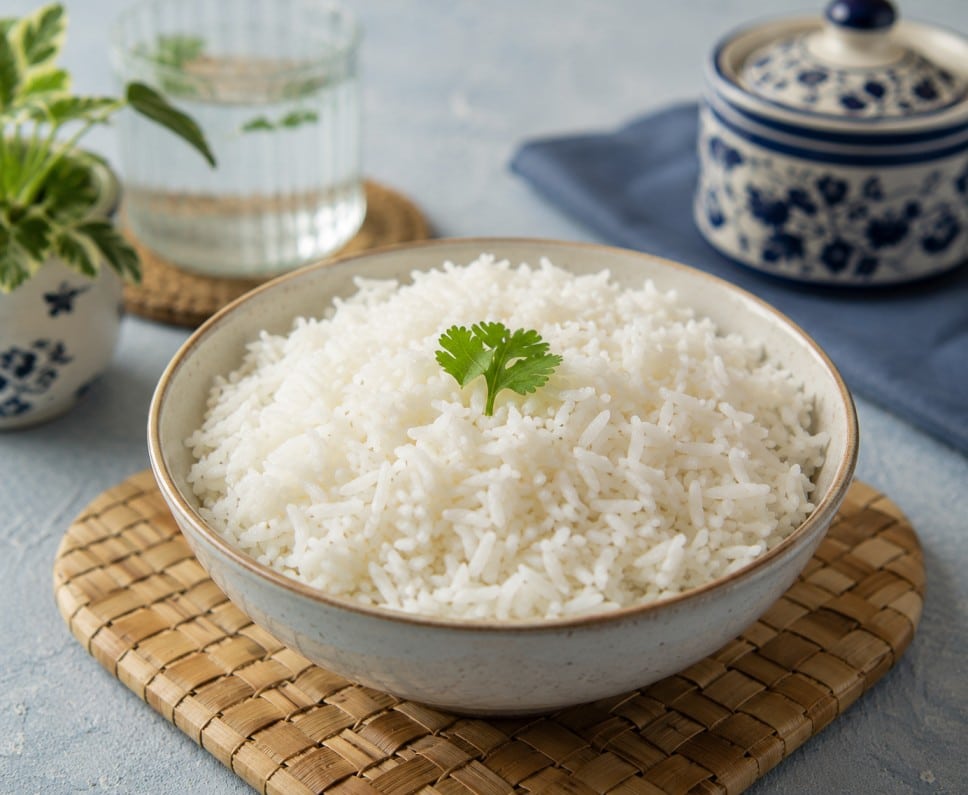
White rice forms the base of many traditional Tamil feast meals and is usually served with different gravies throughout the dining sequence. Its mild flavour allows stronger dishes such as sambar, rasam, and kuzhambu to stand out while helping balance spicy, tangy, and rich preparations served alongside vegetable sides and desserts.
Common Ingredients
- Raw rice
- Water
Basic Preparation Method
- Wash rice thoroughly.
- Cook with water until soft and fluffy.
- Serve hot with gravies and sides.
White rice helps balance the different gravies, vegetable dishes, and side preparations served during the meal. Its simple flavour and soft texture make it an essential part of traditional Tamil feast-style dining
2. Sambar
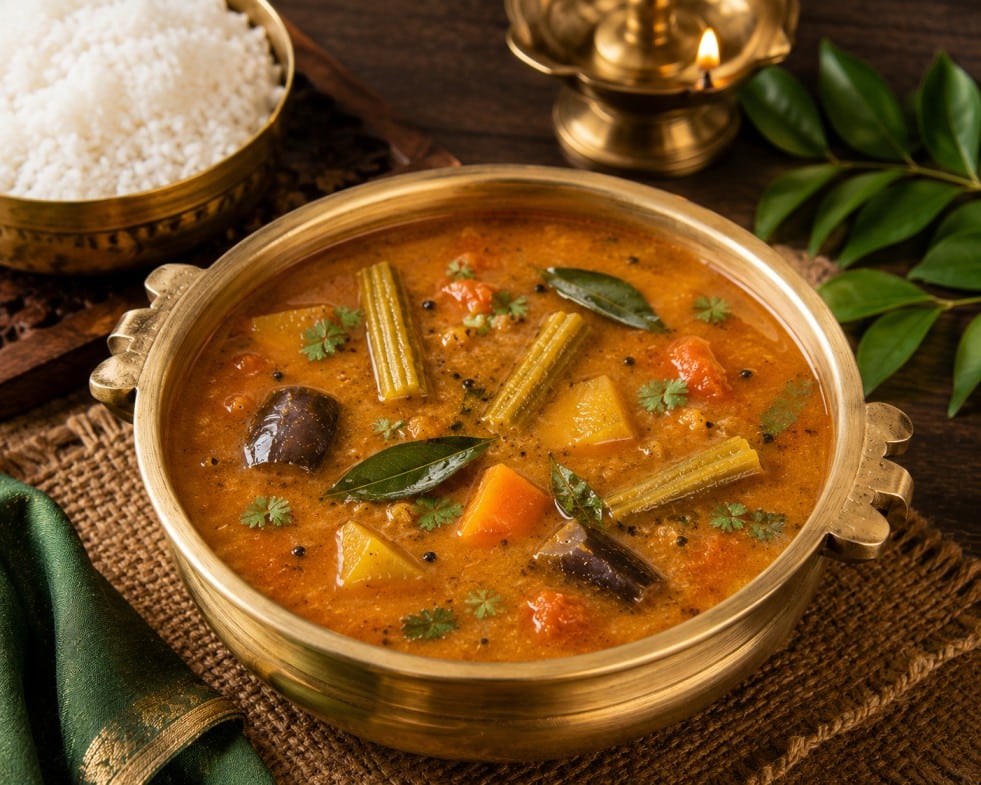
Sambar is a lentil-based gravy prepared with vegetables, tamarind, and regional spice blends. The combination of cooked dal, tangy tamarind, and vegetables gives the dish a rich flavour that pairs especially well with steamed rice. Different vegetables such as drumstick, pumpkin, brinjal, or shallots are often used depending on regional cooking styles and family preferences, making sambar one of the most recognisable gravies served in traditional Tamil feasts.
Common Ingredients
- Toor dal
- Tamarind
- Drumstick
- Shallots
- Tomato
- Sambar powder
- Curry leaves
Basic Preparation Method
- Cook the lentils until soft.
- Prepare tamarind extract and cook with vegetables.
- Add sambar powder and salt.
- Mix cooked dal into the gravy.
- Finish with a tempering of mustard seeds and curry leaves.
Sambar adds depth, spice, and tanginess to rice-based meals while pairing well with vegetable side dishes and appalam. Its balance of lentils, vegetables, and spices makes it one of the most widely prepared gravies in Tamil cooking.
3. Rasam
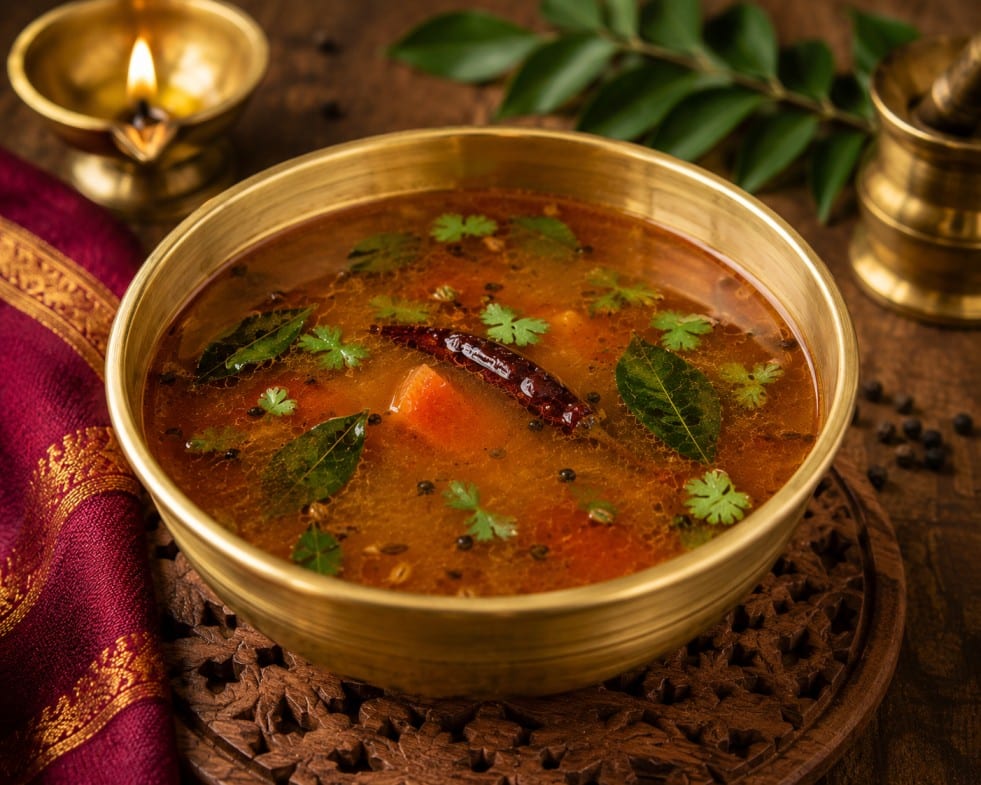
Rasam is a thin, spice-based broth prepared with tamarind, tomatoes, pepper, cumin, and herbs. Its sharp flavour and lighter consistency make it different from thicker gravies such as sambar and kuzhambu. Garlic, curry leaves, and freshly crushed spices give rasam a strong aroma that pairs especially well with steamed rice. Different regional variations may include lentils, coriander, or extra pepper depending on household cooking styles and flavour preferences.
Common Ingredients
- Tamarind
- Tomato
- Black pepper
- Cumin
- Garlic
- Curry leaves
- Coriander leaves
Basic Preparation Method
- Prepare tamarind water and boil it with tomatoes.
- Add crushed pepper and cumin mixture.
- Simmer with rasam powder and salt.
- Finish with tempered mustard seeds and curry leaves.
Rasam is usually served after heavier gravies because of its lighter texture and spice-forward flavour. The combination of pepper, tamarind, and garlic gives the dish a warming taste that pairs well with rice and simple vegetable preparations.
4. Poriyal
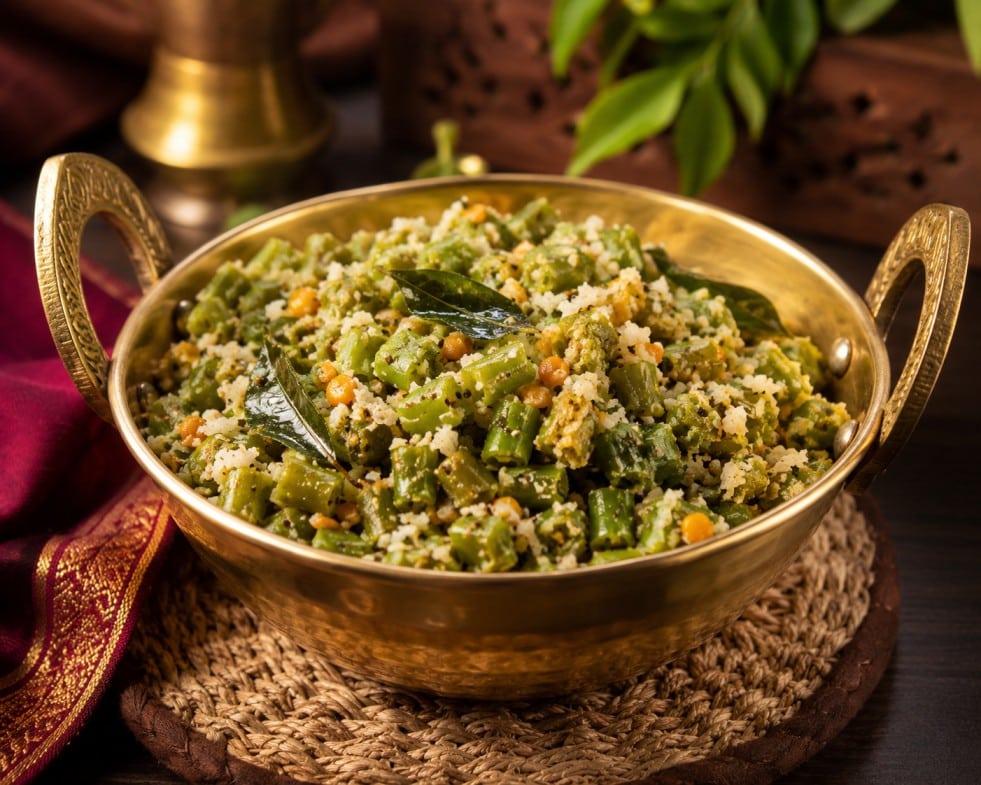
Poriyal is a dry vegetable preparation made by stir-frying finely chopped vegetables with spices, curry leaves, and grated coconut. Beans, cabbage, carrot, and beetroot are some of the vegetables commonly used for this dish. The light seasoning and simple cooking method allow the natural flavour and texture of the vegetables to remain prominent. Its mildly spiced taste pairs especially well with rice, gravies, lentil-based dishes, and other traditional side preparations served during Tamil feasts.
Common Ingredients
- Beans or cabbage
- Mustard seeds
- Curry leaves
- Green chillies
- Grated coconut
- Turmeric powder
Basic Preparation Method
- Chop and cook vegetables until tender.
- Prepare tempering with mustard seeds and curry leaves.
- Add vegetables and spices.
- Finish with grated coconut before serving.
Poriyal adds colour, texture, and vegetable variety to rice-based meals without overpowering stronger gravies and spice-heavy dishes. The combination of lightly cooked vegetables and coconut makes it one of the most versatile side dishes in Tamil cooking.
5. Kuzhambu
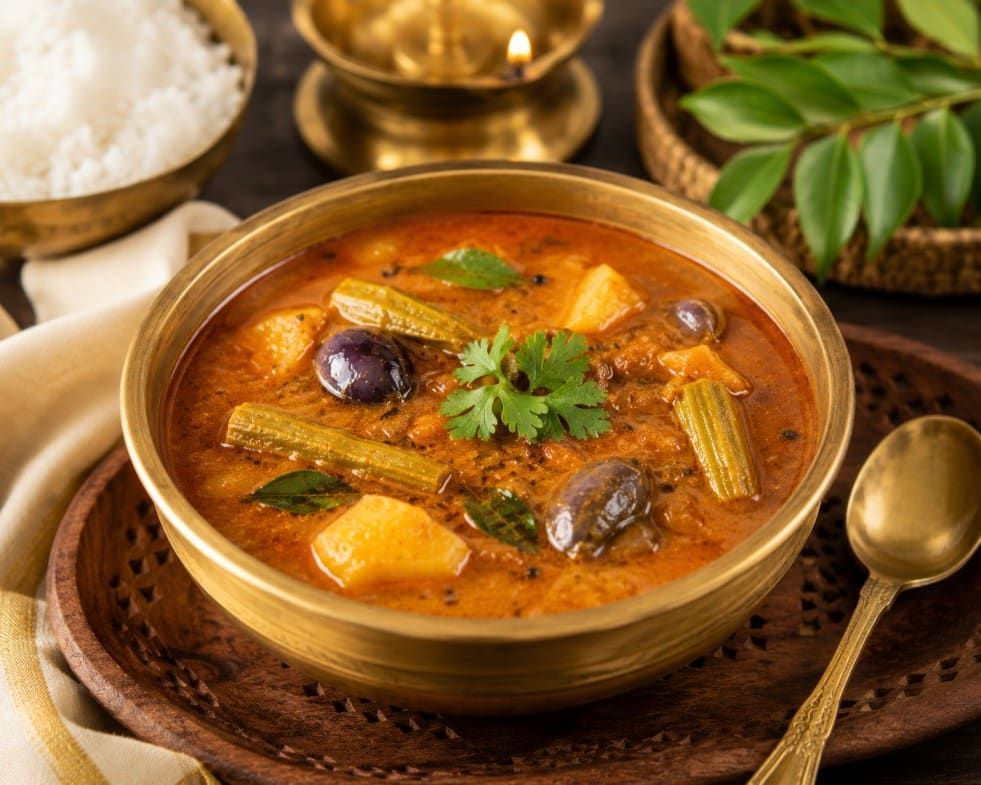
Kuzhambu is a thick tamarind-based gravy prepared with shallots, garlic, spices, and regional seasoning blends. Compared to lighter gravies such as rasam, kuzhambu has a stronger and more concentrated flavour that pairs especially well with steamed rice. Different variations may include vegetables, lentils, or coconut depending on regional cooking styles and family recipes. The balance of tamarind, chilli powder, and garlic gives the dish a rich taste that stands out in traditional Tamil cooking.
Common Ingredients
- Tamarind
- Shallots
- Garlic
- Chilli powder
- Coriander powder
- Curry leaves
Basic Preparation Method
- Sauté shallots and garlic.
- Add tamarind extract and spices.
- Simmer until thickened.
- Serve with rice.
Kuzhambu pairs well with steamed rice, vegetable sides, and appalam because of its bold and tangy flavour profile. The combination of tamarind, spices, and aromatics makes it one of the richer gravies prepared in traditional Tamil cuisine.
6. Aviyal
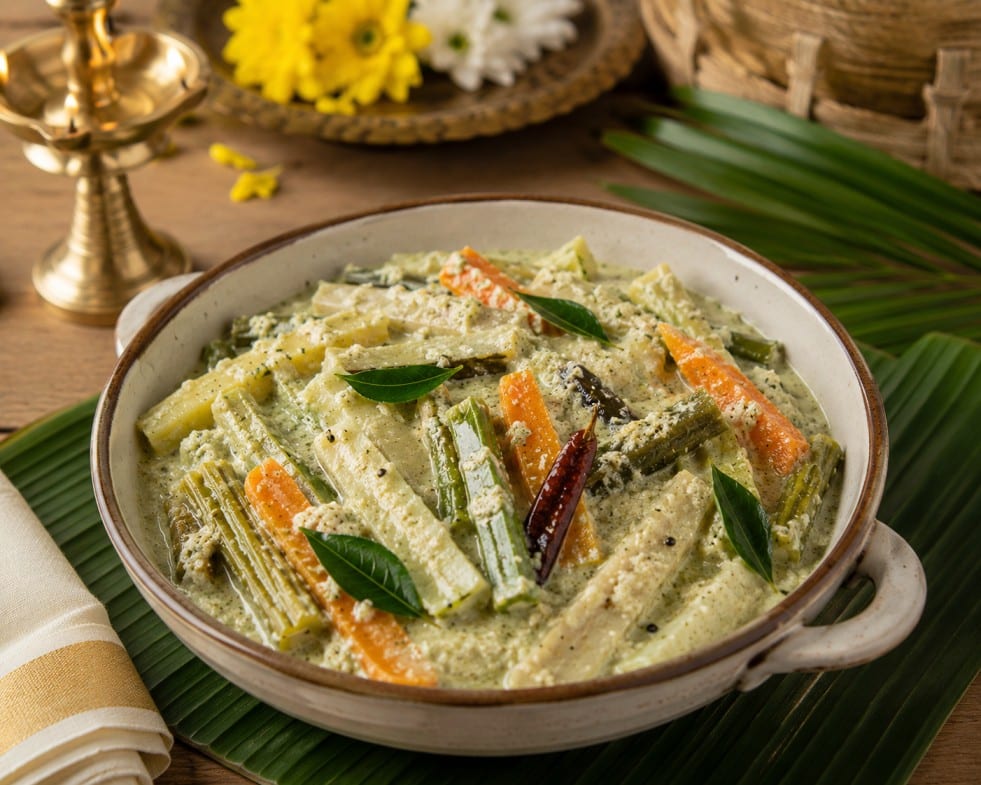
Aviyal is a mixed vegetable dish prepared using coconut, curd, green chillies, and lightly cooked vegetables. Commonly used vegetables include carrot, beans, raw banana, drumstick, and ash gourd. Unlike spice-heavy gravies, aviyal has a milder flavour and thicker consistency that comes from the coconut paste and curd mixture. The dish is known for combining different vegetables into a single preparation while maintaining their individual texture and flavour, making it a distinctive part of traditional Tamil cooking.
Common Ingredients
- Mixed vegetables
- Coconut
- Green chillies
- Curd
- Curry leaves
Basic Preparation Method
- Cook vegetables until tender.
- Grind the coconut and green chillies into a paste.
- Mix with vegetables and curd.
- Finish with coconut oil.
Aviyal pairs well with rice dishes, kuzhambu, rasam, and other gravies because of its mild flavour and creamy consistency. The combination of vegetables, coconut, and curd gives the dish a balanced taste that complements stronger spice-based preparations.
7. Kootu
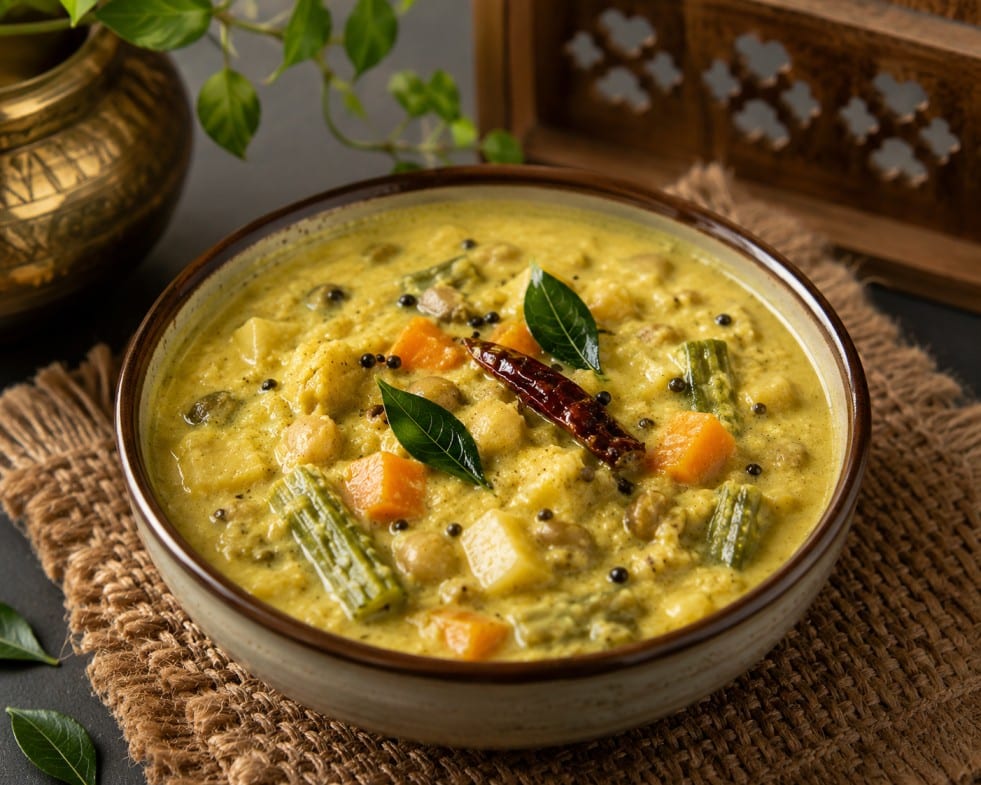
Kootu is a lentil and vegetable-based dish prepared with coconut, cumin, and mild spices cooked into a thick consistency. Vegetables such as snake gourd, cabbage, ash gourd, or chow chow are often used depending on regional and household preferences. Compared to stronger gravies, kootu has a milder flavour profile that comes from the combination of lentils, vegetables, and coconut paste. Its thicker texture allows it to pair well with rice while adding variety to traditional Tamil feast-style cooking.
Common Ingredients
- Moong dal
- Snake gourd or cabbage
- Coconut
- Cumin
- Green chillies
Basic Preparation Method
- Cook lentils and vegetables together.
- Grind coconut, cumin, and chillies.
- Mix into the cooked vegetables.
- Simmer briefly before serving.
Kootu pairs well with steamed rice, kuzhambu, rasam, and vegetable preparations because of its mild seasoning and thicker consistency. The blend of lentils, vegetables, and coconut creates a balanced dish that complements stronger spice-based gravies.
8. Appalam
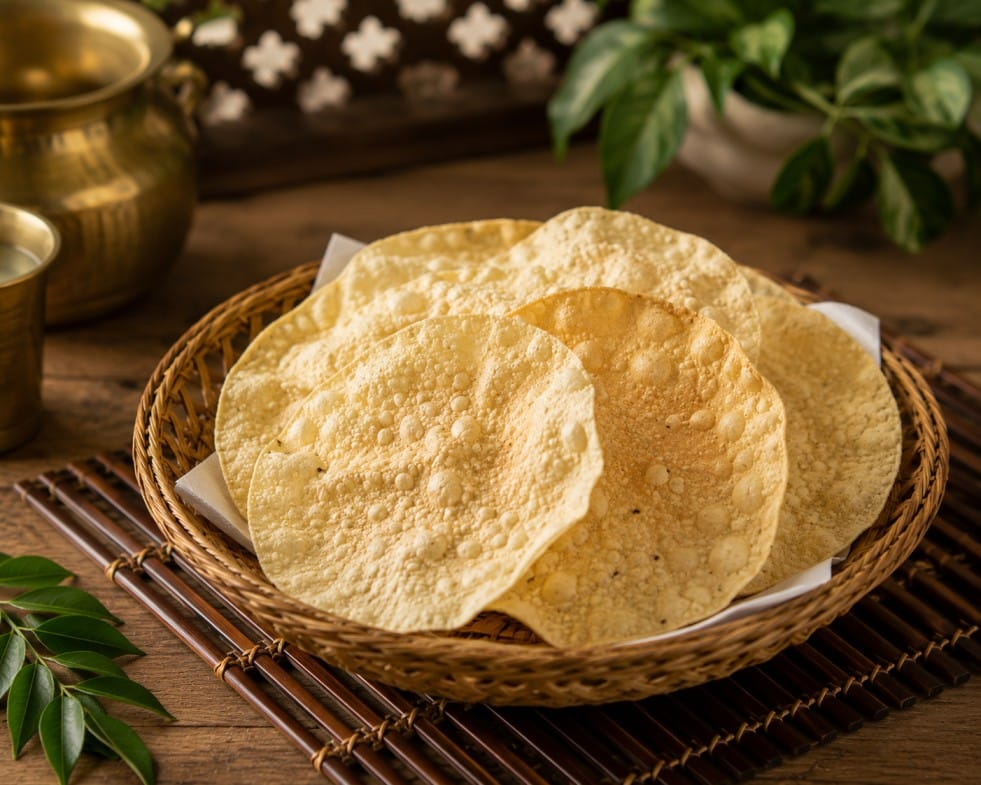
Appalam is a thin and crispy side dish prepared using urad dal flour and deep fried until puffed. Its light texture and salty flavour make it a popular addition alongside rice, gravies, and vegetable dishes. Appalam is often served with sambar rice, rasam rice, and curd rice because it adds a crunchy contrast to softer preparations. Different varieties may also include pepper, cumin, or chilli for additional flavour depending on regional preferences and serving styles.
Common Ingredients
- Urad dal flour
- Salt
- Oil
Basic Preparation Method
- Heat oil in a pan.
- Fry appalam until puffed and crisp.
- Drain excess oil before serving.
Appalam is often served as a simple side dish that pairs well with rice-based preparations and gravies. Its crisp texture and light flavour help add variety to meals that include softer dishes such as sambar, rasam, kootu, and curd rice.
9. Parotta
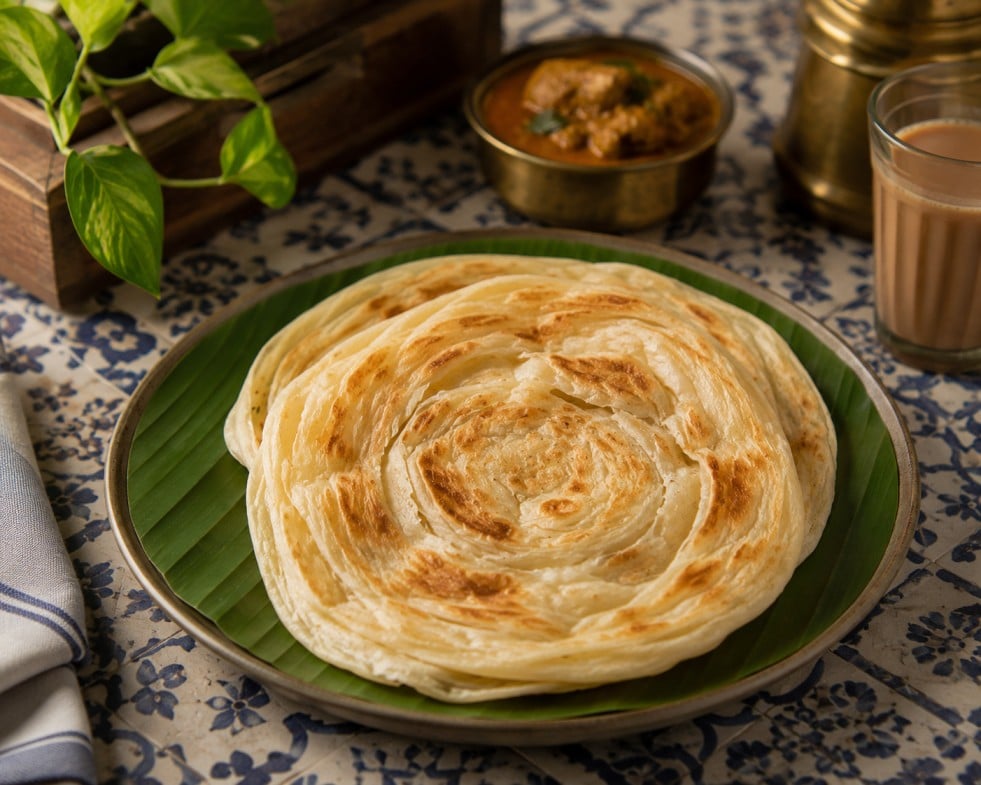
Parotta is a layered flatbread prepared using maida, oil, and water folded into thin flaky layers before cooking on a hot tawa. Its soft texture and layered structure make it especially suitable for thick gravies and spice-rich dishes. Parotta is often served with chicken curry, mutton gravy, salna, and other meat preparations because the bread absorbs masala well while adding variety beyond rice-based dishes commonly found in Tamil-style feasts and celebratory meals.
Common Ingredients
- Maida
- Salt
- Oil
- Water
Basic Preparation Method
- Prepare a soft dough.
- Stretch and fold into layers.
- Shape and cook on a hot tawa.
10. Payasam
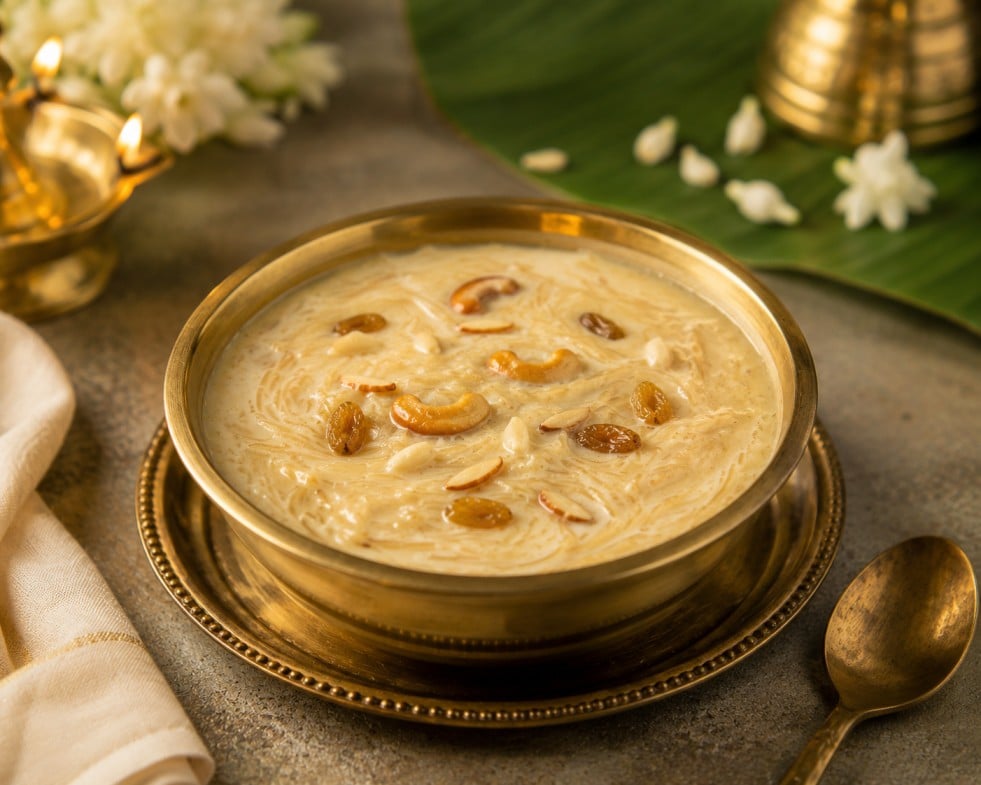
Payasam is a sweet dessert prepared using milk or coconut milk combined with ingredients such as vermicelli, dal, rice, or jaggery. Different regional variations may use moong dal, semiya, or coconut-based preparations depending on family traditions and festive occasions. The combination of ghee, cardamom, roasted cashews, and sweetened milk gives payasam its rich flavour and smooth consistency. It is usually served warm and is considered one of the most recognisable desserts in traditional South Indian cooking.
Common Ingredients
- Milk or coconut milk
- Vermicelli or dal
- Jaggery or sugar
- Cardamom
- Cashews
- Ghee
Basic Preparation Method
- Roast vermicelli or dal in ghee.
- Cook with milk or coconut milk.
- Add sweetener and cardamom.
- Garnish with roasted cashews and serve warm.
Payasam is often served after rice dishes and gravies because of its rich sweetness and smooth texture. The combination of milk, sweetener, ghee, and cardamom gives the dessert a comforting flavour that contrasts well with spice-heavy preparations.
11. Kesari
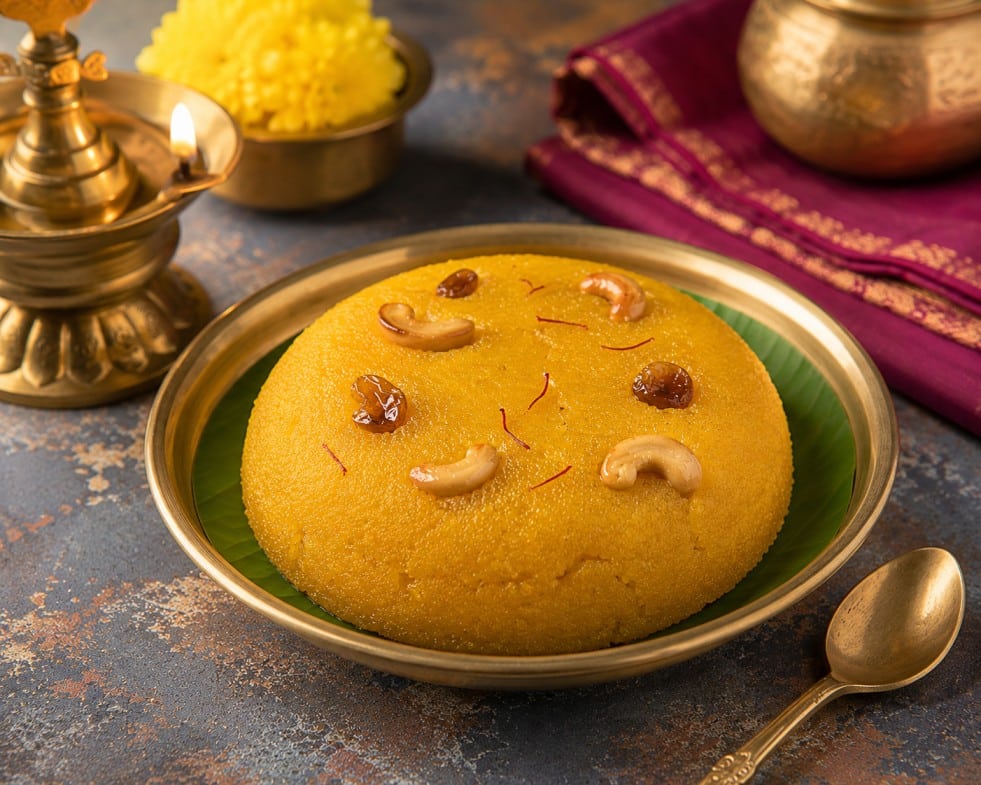
Kesari is a semolina-based sweet dish prepared with rava, ghee, sugar, and cardamom cooked into a soft pudding-like consistency. Cashews and raisins are often added for additional texture and flavour. The dish is known for its bright colour, rich ghee aroma, and smooth texture, making it a popular sweet prepared for festivals, weddings, and family gatherings. Kesari is usually served warm and pairs well with other traditional desserts such as payasam and fruit salad during larger feast-style meals.
Common Ingredients
- Rava
- Sugar
- Ghee
- Cardamom
- Cashews
Basic Preparation Method
- Roast rava in ghee.
- Cook with water and sugar.
- Add cardamom and roasted cashews.
Kesari adds sweetness and variety to meals that include spice-rich gravies, rice dishes, and savoury sides. The combination of ghee, cardamom, and roasted nuts gives the dessert a rich flavour that remains popular across many South Indian celebrations and gatherings.
Traditional vegetarian Virundhu Sappadu focuses on balance, variety, and the combination of different flavours served together as a complete Tamil feast. The mix of lentil-based gravies, vegetable sides, accompaniments, and desserts reflects the simplicity and depth of traditional Tamil vegetarian cooking prepared for festivals, weddings, and religious gatherings.
Non-Veg Virundhu Sappadu Menu
A non-veg Virundhu Sappadu menu combines traditional Tamil rice dishes, gravies, vegetable sides, and desserts with meat and seafood preparations cooked using regional spices. These meals are commonly served during weddings, family celebrations, and festive gatherings, with dishes such as mutton curry, fish fry, chicken biryani, and prawn masala forming an important part of the feast.
1. Mutton Curry
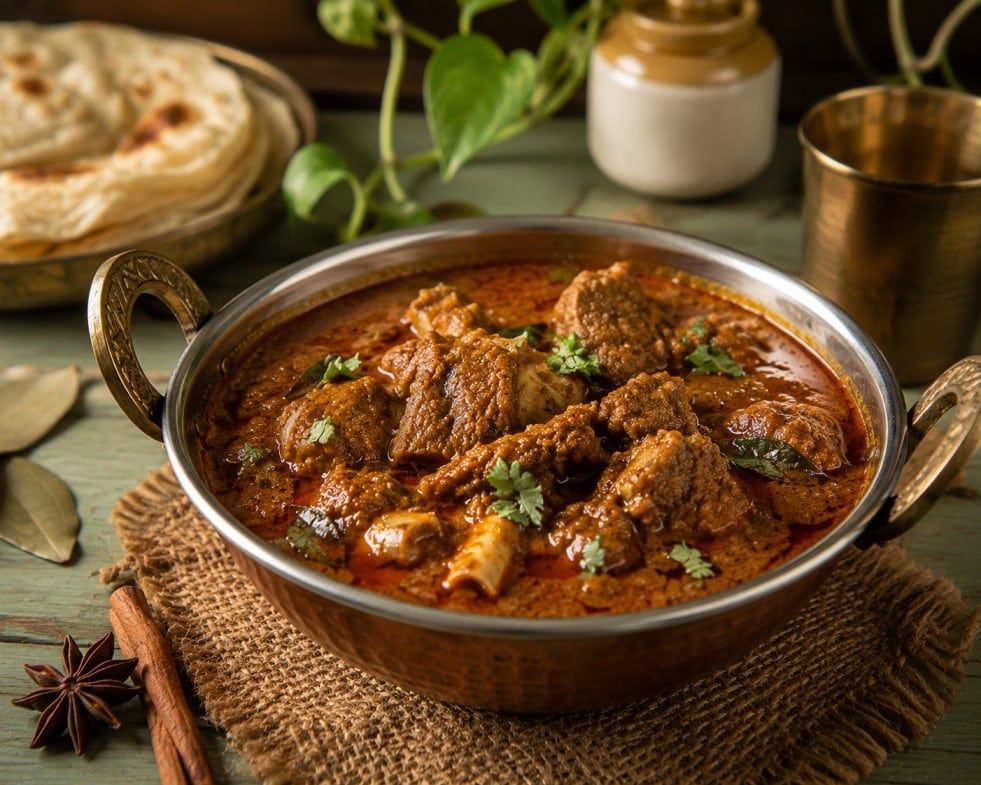
Mutton curry is a slow-cooked meat dish prepared with onions, tomatoes, ginger garlic paste, and spice-heavy masala gravy. The cooking process allows the meat to become tender while absorbing the flavours of chilli powder, coriander powder, and aromatic spices. Different regional variations may use coconut, pepper, or roasted spices for additional depth and richness. Its thick consistency and strong flavour make it one of the most filling dishes served alongside rice, biryani, and layered flatbreads during larger feast-style meals.
Common Ingredients
- Mutton
- Onion
- Tomato
- Ginger garlic paste
- Chilli powder
- Coriander powder
- Garam masala
Basic Preparation Method
- Marinate and pressure cook the mutton.
- Sauté onions, tomatoes, and spices.
- Add cooked mutton and simmer.
- Cook until the gravy thickens.
Mutton curry pairs well with biryani, steamed rice, parotta, and other spice-rich dishes because of its thick masala gravy and tender meat. The balance of slow-cooked spices and rich texture makes it one of the most popular meat preparations in Tamil cooking.
2. Chicken Curry
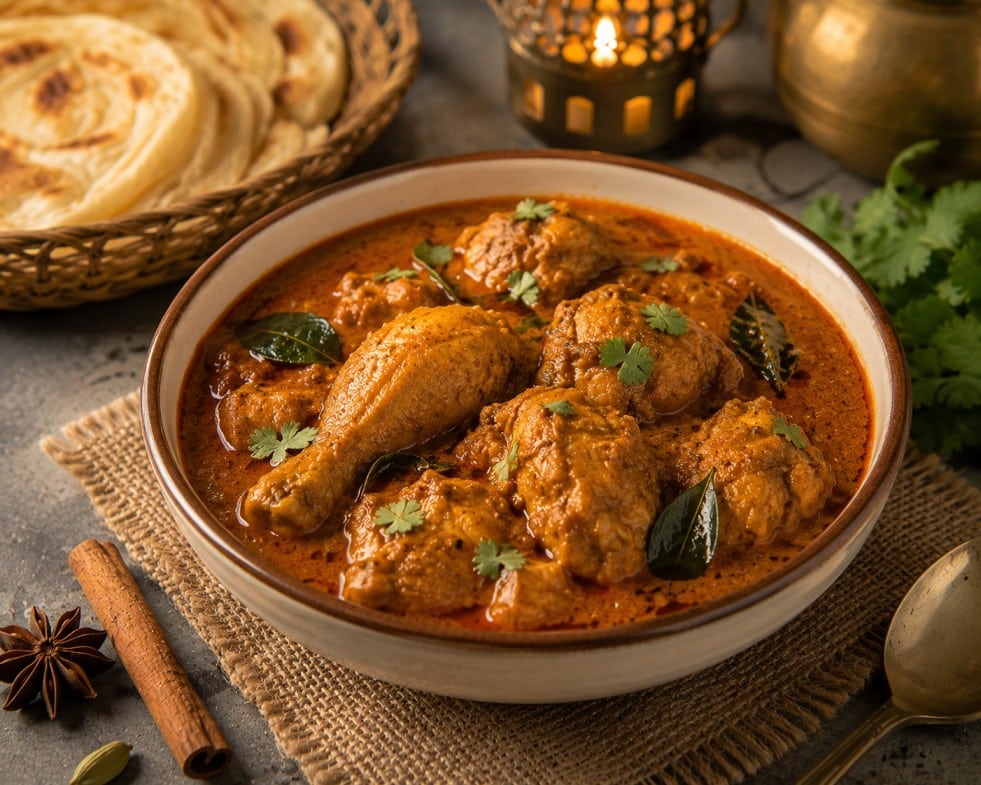
Chicken curry is a spice-rich gravy prepared with chicken, onions, tomatoes, and regional masala blends cooked into a thick consistency. The combination of slow-cooked onions, ginger garlic paste, and spices gives the dish a deep flavour that pairs well with rice, biryani, and flatbreads. Different regional styles may include coconut, black pepper, or curry leaves for additional richness and aroma. Its balanced mix of spice and gravy makes it one of the most widely prepared meat dishes in South Indian cooking.
Common Ingredients
- Chicken
- Onion
- Tomato
- Ginger garlic paste
- Chilli powder
- Coriander powder
Basic Preparation Method
- Sauté onions and tomatoes with spices.
- Add chicken and cook thoroughly.
- Simmer until the gravy thickens.
Chicken curry pairs well with steamed rice, biryani, parotta, and dosa because of its thick gravy and balanced spice flavour. The combination of tender chicken and aromatic masala makes it a staple dish prepared for gatherings, celebrations, and family-style meals.
3. Fish Fry
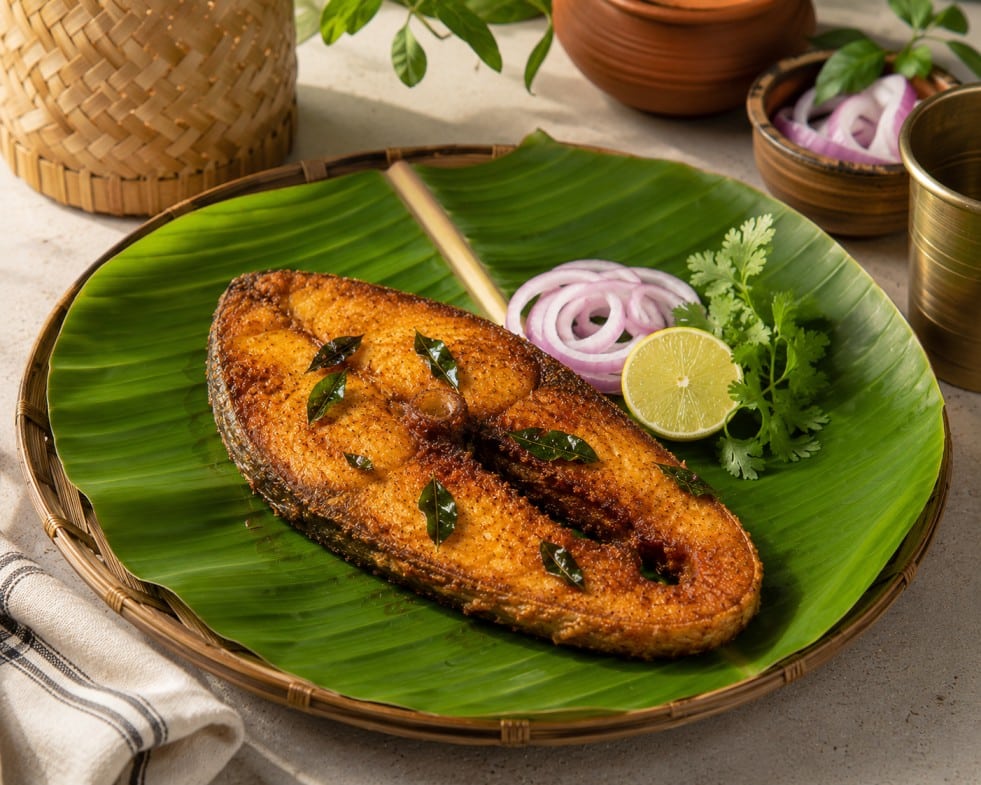
Fish fry is a seafood side dish prepared by marinating fish with chilli powder, turmeric, ginger garlic paste, and regional spices before shallow frying until crisp. Different varieties of fish may be used depending on regional availability and cooking styles. The spicy outer coating and crisp texture create a strong contrast to softer rice dishes and thick gravies. Curry leaves, lemon juice, and masala blends further enhance the flavour, making fish fry a popular part of coastal South Indian cooking.
Common Ingredients
- Fish fillets
- Chilli powder
- Turmeric powder
- Ginger garlic paste
- Lemon juice
- Curry leaves
Basic Preparation Method
- Marinate fish with spices and lemon juice.
- Rest for 20–30 minutes.
- Shallow fry until crisp on both sides.
- Serve hot with onion slices.
Fish fry pairs well with rice, biryani, rasam, and spice-based gravies because of its crisp texture and strong masala flavour. The combination of fried spices, tender fish, and citrus marinade gives the dish a bold and distinctive taste.
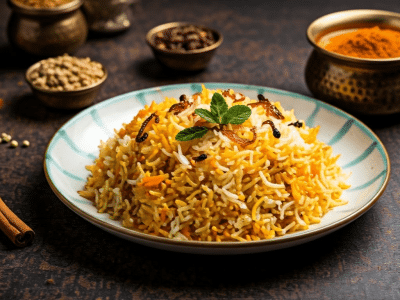
4. Chicken Biryani
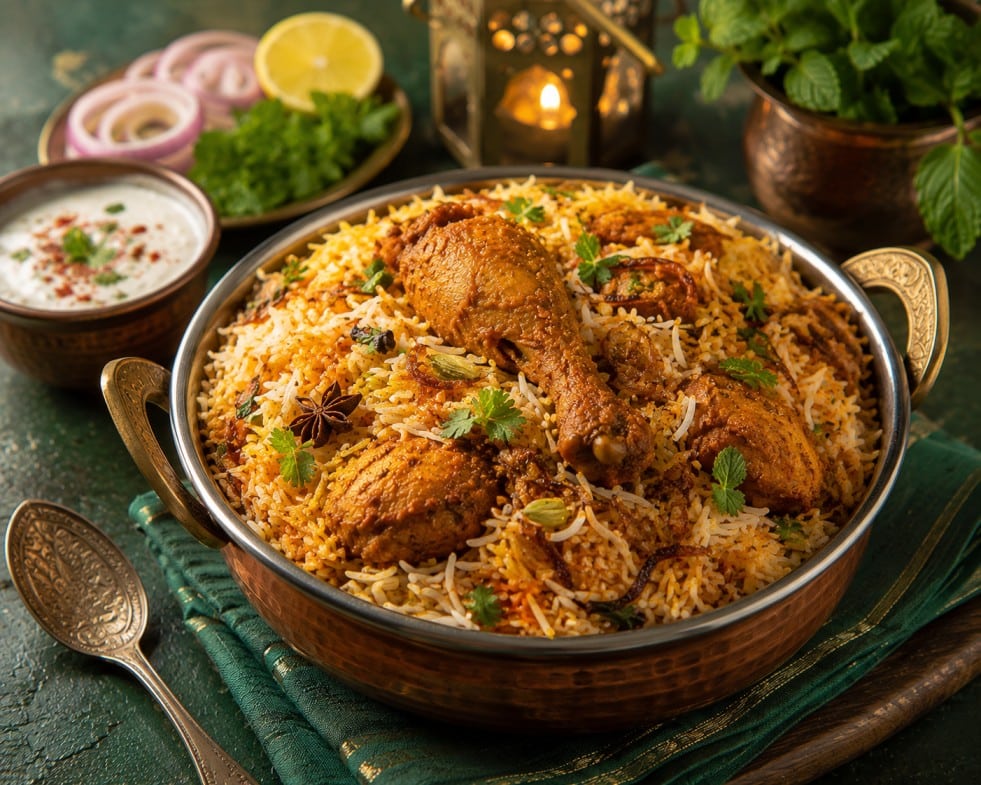
Chicken biryani is a rice-based dish prepared by cooking marinated chicken, basmati rice, herbs, and aromatic spices together in layers. Ingredients such as mint leaves, fried onions, ghee, and biryani masala give the dish its rich aroma and flavour. Different regional styles may vary in spice levels, rice texture, and cooking techniques. Its combination of tender chicken, seasoned rice, and slow-cooked masala makes chicken biryani one of the most substantial dishes prepared for larger gatherings and celebrations.
Common Ingredients
- Basmati rice
- Chicken
- Onion
- Tomato
- Biryani masala
- Mint leaves
- Ghee
Basic Preparation Method
- Marinate chicken with spices.
- Cook onions, tomatoes, and masala.
- Add rice and water.
- Cook until the rice and chicken are fully done.
Chicken biryani pairs well with raita, chicken curry, mutton gravy, and fried side dishes because of its layered spices and rich flavour. The combination of aromatic rice, masala, and tender chicken makes it one of the most popular celebratory rice dishes.
5. Prawn Masala
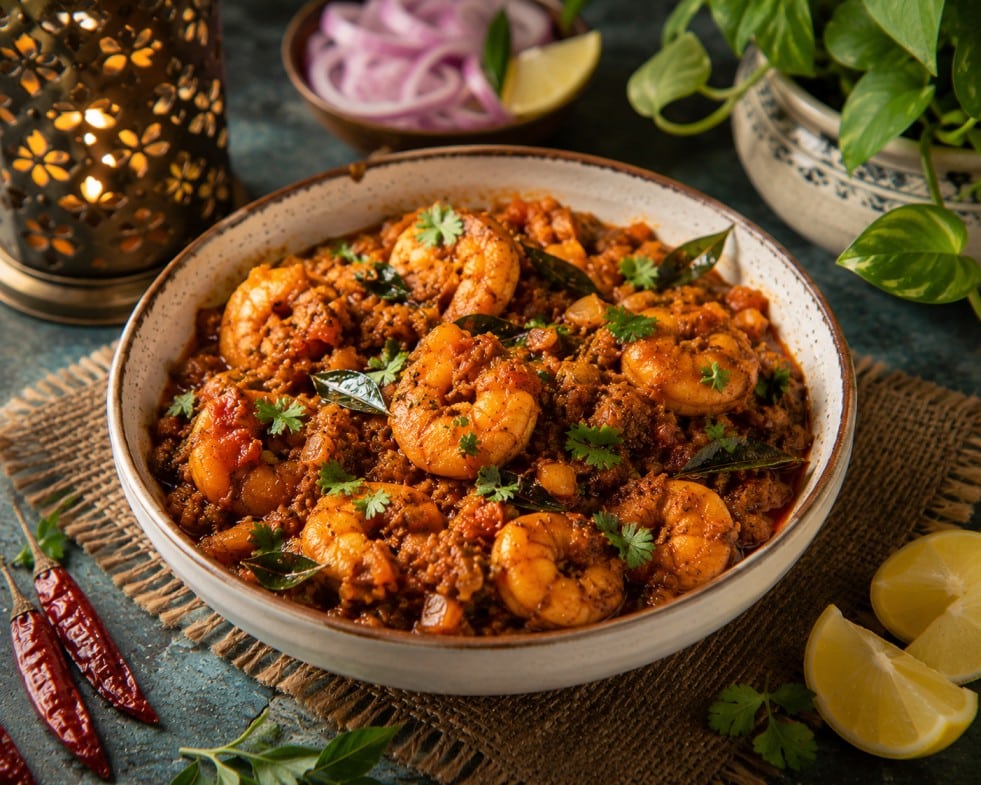
Prawn masala is a seafood gravy prepared with prawns cooked in onion, tomato, curry leaves, and spice-based masala. The dish is known for its thick consistency, bold flavour, and strong aroma created by the combination of chilli powder, turmeric, garlic, and regional seasoning blends. Different coastal cooking styles may use coconut, pepper, or roasted spices for additional richness and depth. Its concentrated masala and tender prawns make it a popular seafood preparation served alongside rice, biryani, and layered flatbreads.
Common Ingredients
- Prawns
- Onion
- Tomato
- Ginger garlic paste
- Chilli powder
- Turmeric powder
- Coriander powder
- Curry leaves
Basic Preparation Method
- Clean and marinate prawns with turmeric and salt.
- Sauté onions, tomatoes, and spices until soft.
- Add prawns and cook briefly in the masala.
- Simmer until the gravy thickens and coats the prawns evenly.
The combination of prawns, curry leaves, and spice-based masala gives this dish a bold seafood flavour and thick consistency. Its rich seasoning and aromatic gravy make it a popular addition alongside rice dishes, biryani, and layered flatbreads prepared during larger gatherings.
Non-veg Virundhu Sappadu menus vary across Tamil Nadu based on regional cooking styles and family traditions. Coastal feasts often include seafood dishes such as fish fry and prawn masala, while other menus focus on richer mutton curries, chicken gravies, biryani, and spice-heavy preparations served during celebrations and festive gatherings.
What Makes Kannanannan Virundhu Sappadu Popular?
Kannanannan Virundhu Sappadu is popular because it is known for serving a more elaborate and flavour-focused version of a traditional Tamil feast, especially for non-vegetarian meals. Unlike a regular Virundhu Sappadu that may focus on a balanced mix of standard dishes, Kannanannan-style feasts are recognised for their wider variety of meat and seafood preparations, richer gravies, and stronger regional flavours.
Another factor that makes Kannanannan Virundhu Sappadu stand out is the emphasis on abundance and variety. Instead of limiting the meal to a few curries and sides, the feast often includes multiple non-vegetarian dishes served together, creating a more extensive dining experience.
The serving style also contributes to its popularity. Meals are traditionally served on banana leaves with multiple courses brought out continuously, giving the experience a festive and communal feel. The combination of generous portions, spice-rich dishes, and traditional Tamil serving customs has made Kannanannan Virundhu Sappadu especially popular among people looking for a more indulgent Tamil feast experience.
Conclusion
Virundhu sappadu remains one of the most celebrated parts of Tamil cuisine because of its variety, traditional serving style, and connection to hospitality and community gatherings. From vegetarian meals and non-veg Virundhu Sappadu menus to elaborate wedding feasts, each version reflects different aspects of Tamil food culture. The combination of gravies, rice dishes, vegetable sides, desserts, and regional specialities creates a balanced and memorable dining experience.
For more traditional Tamil recipes and feast-style dishes, explore the collection of South Indian recipes on Awesome Cuisine.
Frequently Asked Questions
Which restaurants in Chennai are known for their non-veg Virundhu Sappadu meals?
Several restaurants offering Virundhu Sappadu in Chennai are known for traditional banana leaf meals featuring mutton curry, fish fry, chicken gravy, and biryani. Many people look for places that focus on authentic Tamil flavours, generous portions, and freshly prepared non-vegetarian dishes.
Can you recommend authentic recipes for preparing a non-veg Virundhu Sappadu at home?
A traditional non-veg Virundhu Sappadu menu commonly includes mutton curry, chicken gravy, fish fry, biryani or ghee rice, rasam, vegetable sides, and payasam. Preparing spice pastes and marinades in advance helps manage the cooking process more efficiently at home.
How is a non-veg Virundhu Sappadu typically served in Tamil Nadu?
A non veg Virundhu Sappadu menu is traditionally served on a banana leaf with rice, gravies, meat dishes, vegetable sides, accompaniments, and desserts arranged in sections. The meal is usually served course by course, beginning with sides and followed by rice, curries, and desserts.
What types of meats are commonly featured in a non-veg Virundhu Sappadu?
A non-veg Virundhu Sappadu commonly includes mutton, chicken, fish, and prawns prepared using regional Tamil spices and gravies. Popular dishes include mutton curry, chicken gravy, fish fry, prawn masala, and biryani served alongside traditional rice and side dishes.
What are some popular side dishes and accompaniments for a non-veg Virundhu Sappadu?
Popular side dishes and accompaniments in a non-veg Virundhu Sappadu include rasam, poriyal, kootu, pachadi, appalam, pickle, and raita. These dishes balance the richness of meat curries and help create a complete and varied Tamil feast experience.

Thanks for the interesting vazha ela tips.
But Mam, very sad to see that Tanjavur meal is not included.
“Chozhanadu sorudaithu”!!