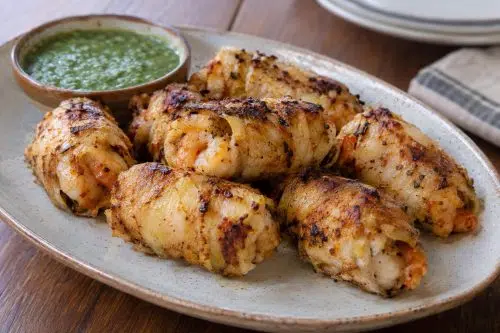
Jalpari Kebab is a seafood kebab that uses two marinating stages and a short poaching step to produce rolls that are firm on the outside and tender inside. The name points to the sea, and the recipe delivers on that with both fish and prawns in every piece. The first marinade, built on ginger garlic paste, mango pickle masala and carom seeds, goes directly onto the raw fillets. The second, a drained yoghurt and cream base lifted with saffron and green cardamom, coats the rolls after poaching. The kebab ends up well-seasoned all the way through, not just on the surface.
About the Recipe
The technique here is more structured than a standard fish tikka. Poaching the wrapped rolls before the oven sets the shape so the fillet does not unravel on the skewer.
Using drained yoghurt in the second marinade keeps the coating from releasing too much liquid during roasting. Mango pickle masala in the first marinade adds a sharp, oily depth that plain spices alone cannot replicate. Carom seeds are split between both marinades, giving a consistent warmth without being heavy.
Why You Will Love This Recipe
Most fish kebabs are simply marinated fillets grilled flat. This one rolls a whole prawn inside the fillet, so every piece has two textures and two kinds of seafood in one mouthful.
The poaching stage before roasting means you are not guessing whether the fish is cooked through when it comes out of the oven. It is already set from the inside. The oven finish then concentrates the second marinade into a lightly coloured, fragrant coating.
For anyone who finds plain grilled fish a little dry, the cream and yoghurt marinade keeps the surface moist even at 180 degrees Celsius.
Cooking Tips
The most common beginner mistake here is skipping the draining of the yoghurt. Undrained yoghurt makes the second marinade too thin and it slides off the roll during roasting.
Pat the fillets completely dry before the first marinade or the spices will not stick. Do not over-poach. Ten minutes with the lid on is enough. If the rolls feel very firm before going into the oven, they are already cooked through and the oven is only for colour and flavour from the marinade.
Top Tips
- Drain the yoghurt through a muslin cloth or fine strainer for at least 20 minutes before making the second marinade.
- Extract the juice from the ginger garlic paste by pressing it through a fine sieve and use both the paste and the juice in the first marinade as the recipe instructs.
- Wrap the rolls tightly in aluminium foil with no gaps so water does not enter during poaching and dilute the first marinade.
- Place the rolls under cold running water for the full minute after poaching. This stops the cooking immediately and makes the rolls easier to handle when removing the foil.
- If using an oven rather than a tandoor, place the skewers on a rack over a tray so heat circulates around the rolls rather than the bottom sitting in marinade drip.
- Choose fillets that are thin and even in thickness so each roll is the same size and cooks evenly on the skewer.
Serving and Storing Suggestions
Serve the kebabs immediately after removing from the skewers with mint chutney and thin-sliced onion rings. They work well as a starter or as part of a larger spread alongside Konkani Masala Prawns.
Leftover rolls can be refrigerated for up to one day. Reheat in a hot oven for five minutes rather than a microwave to keep the coating from going soggy. Do not freeze after roasting as the texture of the fish changes on thawing.
Similar Recipes
Nutrient Benefits
Fish fillets provide lean protein, and prawns add to that while remaining low in fat. Yoghurt contributes calcium, and the marinade uses a measured amount of oil, keeping the overall fat content relatively modest for a roasted kebab. Lemon juice adds a useful amount of vitamin C.

Jalpari Kebab
Ingredients
- 12 Thin Fish Fillets
- 220 gms, shelled, deveined Prawns
- 5 tsp Ginger Garlic Paste
- 5 tsp Mango Pickle Masala
- 1 tsp Carom Seeds
- 1 tsp White Pepper Powder
- 2 tsp Garam Masala
- Salt to taste
- 1 tsp Red Chilli Powder
- 1 tsp Lemon Juice
- 4 tsp Refined Oil
- 3/4 cup, drained Yoghurt
- 2 tbsp Cream
- Saffron - a few strands
- Green Cardamom Powder - a pinch
- 5 cups Water
Instructions
- Extract juice from ginger garlic paste and keep aside.
- Clean the fish fillets and prawns.
- Pat dry with a cloth.
- Make a marinade with ginger garlic paste, juice, mango pickle masala, half of carom seeds, white pepper powder, garam masala, salt, red chilli powder, lemon juice and oil.
- Marinate the fish fillets in the prepared marinade and keep aside for 5 minutes.
- Prepare second marinade of yoghurt, cream, saffron, green cardamom powder and remaining half of other ingredients.
- Keep aside.
- Put one fish fillet flat on a tabletop.
- Place a prawn at one end of the fillet and roll the fillet.
- Wrap it tightly with cling wrap or aluminum foil.
- Boil water in a pot and cook the rolls for 10 minutes keeping the pot covered.
- Drain the water and place the rolls under running water for 1 minute. Remove the foil.
- Marinate the rolls in the second marinade for 5 minutes.
- Skewer the rolls and roast in hot tandoor or in an oven at 150-180C for 10 minutes.
- Remove from skewers.
- Transfer to a serving platter.
- Serve hot with mint chutney.
Sign up for our newsletter
Add Awesome Cuisine as a Preferred Source

Frequently Asked Questions
Can I make Jalpari Kebab without a tandoor?
Yes. The recipe specifies an oven at 150 to 180 degrees Celsius for 10 minutes, which works well. Place the skewers on a wire rack over a baking tray so the heat reaches all sides of the roll. If your oven has a grill or broiler function, switch it on for the last two minutes to get a little colour on the surface.
What kind of fish fillet works best for rolling?
You need fillets that are thin, flexible and without pin bones. Sole, basa or tilapia fillets cut thin work well because they bend without cracking when you roll them around the prawn. Thicker fillets from fish like pomfret or surmai can be used if you gently flatten them with a heavy flat object before rolling.
Why does the recipe use two separate marinades instead of one?
The first marinade is oil-based and goes onto the raw fish to season it through. The second marinade, made with drained yoghurt and cream, is applied after poaching. If you put the yoghurt marinade on raw fish and then poached it, the dairy would wash off in the water. Keeping them separate means the fish is seasoned from the inside and coated on the outside.
My rolls keep unrolling when I try to skewer them. What am I doing wrong?
This usually happens when the foil was not wrapped tightly enough during poaching, so the roll did not set firmly. Make sure the foil is wound tight with no loose ends before the rolls go into the water. Poach for the full 10 minutes with the lid on, and run them under cold water immediately after. This helps the shape hold before you remove the foil.
Can I substitute mango pickle masala if I do not have it?
Mango pickle masala has a specific sharpness and oiliness from the pickling spices. The closest substitute is a small amount of amchur powder combined with a little mustard oil and a pinch of fennel powder. The flavour will not be identical but it gives a similar sour and spiced note in the first marinade. Avoid using sweet mango chutney as it will change the character of the marinade entirely.