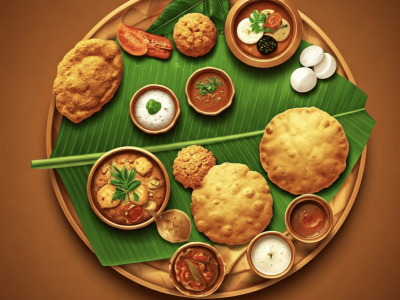
The oil is just shy of smoking, and you can hear the difference between a pan that is ready and one that is not. The first handful of sliced onion goes in with a hiss, the edges turn translucent, and within a minute the whole kitchen smells like somebody is about to feed you. Nobody has ever needed a recipe to know that something good has started.
That smell is why so many Indian home cooks talk about onion the way they talk about salt or oil. It sits in the base of dal, sabzi, biryani, kadhi, and keema. It goes raw on the side of a plate, pickled beside a kebab, and fried to a crisp on top of a pulao. Some home cooks even file it under herbs, because it lives in the same corner of the kitchen as coriander and curry leaves. Whether that label is right depends on whether you ask a botanist or a cook.
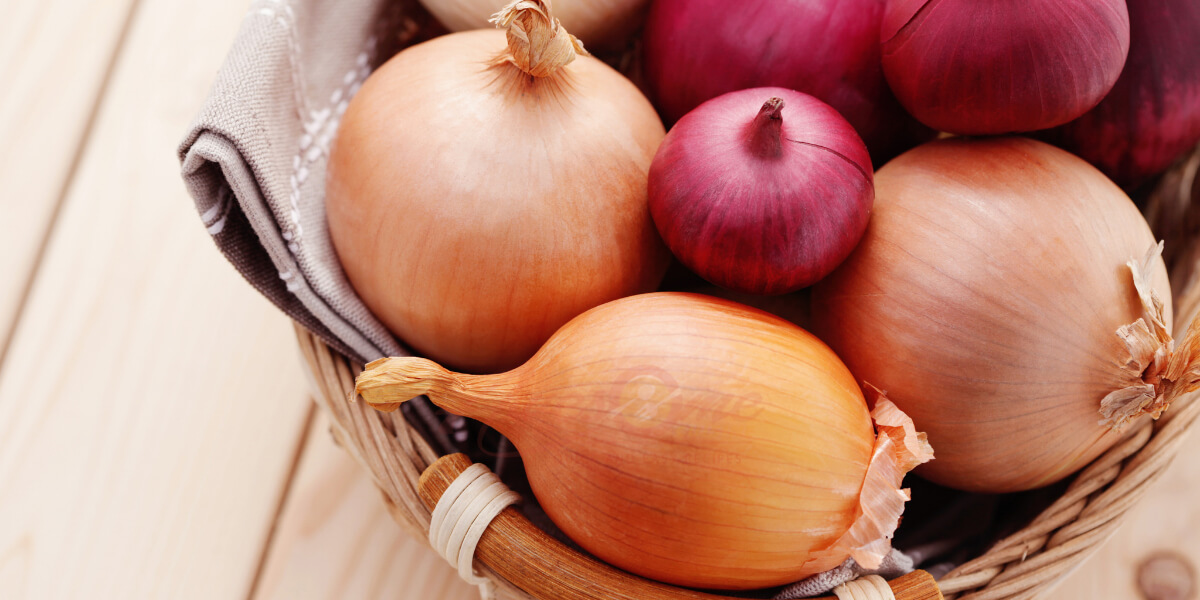
Table of Contents
Key Takeaways
- Onion is botanically a bulb vegetable of the species Allium cepa, and cooks call it a kitchen herb only in the loose, culinary sense.
- The tears come from a gas that the enzyme lachrymatory-factor synthase produces once you cut the onion, and a cold onion and a sharp knife reduce how much reaches your eyes.
- Onion is mostly water, with a modest amount of fibre, potassium, and flavonoids, so its main value in the kitchen is flavour.
- Trials on onion supplements show small improvements in blood lipids, and studies on gastric cancer show an association that cannot prove cause.
- Onion contains fructans, which can trigger symptoms in people with irritable bowel syndrome, and the green tops of spring onion are the usual workaround.
- Choosing the right onion for the dish, and giving it enough time in the pan, improves flavour more than any other onion tip.
It matters right now because onion is in almost every meal you will cook this week, and a few small facts change how you handle it. Knowing why it stings, when it turns sweet, and what the research does and does not say about its health claims lets you cook with more confidence and fewer myths.
Is Onion a Herb or a Vegetable?
Onion is a vegetable. Botanists classify it as a bulb, the swollen underground base of leaves of Allium cepa, a plant in the same genus as garlic, chives, and leeks. Cooks sometimes call it a herb because it seasons food, and spring onion greens behave like a herb when they are chopped over a finished dish.
The confusion has a fair reason behind it. A herb, in the kitchen sense, is a leafy plant used in small amounts to flavour food. Onion is used in large amounts, sliced thick and cooked down until it becomes part of the gravy. The green shoots of a young onion, on the other hand, get chopped and scattered like coriander, which is why the label sticks to the whole family.
| Sense | Is onion included? | What it means in practice |
| Botanical | No, it is a bulb vegetable | The edible part is a storage organ, not a leaf or a seed |
| Culinary (vegetable) | Yes | Cooked in quantity as a base, a side, or a main ingredient |
| Culinary (herb) | Only the green tops of spring onion | Chopped fresh and added at the end for aroma |
Why Does Cutting an Onion Make You Cry?
Cutting an onion breaks its cells, and an enzyme called lachrymatory-factor synthase then produces the gas that stings your eyes. Japanese researchers identified this enzyme in 2002, which corrected an older belief that the gas simply formed on its own as a by-product.
The older explanation, which the previous version of this article repeated, blames a compound called allyl propyl disulfide. The Imai team wrote in Nature in 2002 that the tear factor “is not formed as a by-product of this reaction, but that it is specifically synthesized by a previously undiscovered enzyme, lachrymatory-factor synthase.”
The sting is the onion’s own defence, and your eyes happen to be in range.
Kitchen habits that reduce the sting are well known, though the mechanism for each is a reasonable inference and not something tested in a home kitchen. Chill the onion for twenty minutes so less gas escapes. Use a sharp knife, because a blunt blade crushes more cells. Cut the root end last, because that part holds the most of the sulfur compounds.
What Is Actually in an Onion?
A raw onion is about 86 percent water, with roughly 48 kilocalories per 100 grams. The Indian Food Composition Tables 2017, compiled by the ICMR-National Institute of Nutrition, list the values for the large onion in the table below.
| Per 100 g raw onion (large) | IFCT 2017 value | Note |
| Energy | 201 kJ (about 48 kcal) | Kilocalories converted from kJ |
| Moisture | 85.76 g | Mostly water |
| Protein | 1.5 g | Minor contribution |
| Total fat | 0.24 g | Near zero |
| Dietary fibre | 2.45 g | Insoluble 1.92 g, soluble 0.53 g |
| Carbohydrate | 9.56 g | Free sugars 5.88 g |
| Potassium | 171 mg | Highest mineral listed |
| Calcium | 21.03 mg | Small amount |
| Vitamin C | 6.69 mg | Small amount |
| Iron | 0.43 mg | Small amount |
The same table lists flavonoids, which are plant pigments with antioxidant activity in the lab. Per 100 g, it records 1.62 mg of quercetin, 2.79 mg of quercetin-3-glucoside, and 7.24 mg of isorhamnetin. The sugar profile also stands out, since the free sugars break down into 2.52 g of sucrose, 1.89 g of fructose, and 1.47 g of glucose, which helps explain why a slow-cooked onion tastes sweet without added sugar, although browning reactions add to that sweetness. The table also lists 3.8 g of oligosaccharides, but the IFCT defines that group as raffinose, stachyose, verbascose and ajugose, so the figure does not measure fructans, the carbohydrate behind most onion intolerance. The IFCT does not report fructans at all, which is why the IBS section below relies on Monash University instead.
Onion supplies little protein or fat, so its practical value sits in flavour.
Do Onions Lower Cholesterol or Cancer Risk?
Onion supplements slightly lowered LDL cholesterol in a 2021 meta-analysis, and higher onion intake was associated with lower gastric cancer risk in a 2022 pooled case-control analysis. Both findings are modest and come from studies with clear limits, which are described below.
The authors also reported that onion supplementation “did not significantly lower triglycerides”, and they concluded that the benefits “need to be treated with caution considering that some of the results are not robust.” The 10 trials used extracts, juice, and whole raw or steamed onion at different doses, and the authors note that most were small (individual trials had 12 to 92 participants), that eight of the ten were run in Korea, and that the longest lasted 12 weeks. A bowl of raita is a different exposure from those protocols. The older claim on this site, that raw onions reduce cholesterol, was flagged as debatable, and this research supports that caution.
The cancer question has better data, though it has its own limits. A 2022 pooled analysis in the British Journal of Cancer (Dalmartello et al.) pooled 17 case-control studies from the Stomach cancer Pooling (StoP) Project, comparing 6,097 gastric cancer cases with 13,017 controls. High onion intake carried an odds ratio of 0.69 (95% CI 0.55 to 0.86) compared with low intake, and the association was stronger in Asian studies (0.50, 95% CI 0.29 to 0.86) than in European ones (0.96, 95% CI 0.81 to 1.13).
The evidence chain people often draw runs like this: onion contains quercetin, quercetin has antioxidant activity, antioxidants reduce cell damage, and less cell damage means less cancer. Each link is plausible, and the studies above only measured the ends of the chain. The gastric cancer data compare what cases and controls report eating, so recall bias is possible, and people who eat more onion may also differ in salt intake, smoking, or how much processed food they eat. The authors themselves wrote that “the heterogeneity of results across geographic regions and possible residual confounding suggest caution in results interpretation.” A lower lipid number in supplement trials and a lower odds ratio in observational data are worth knowing about. Neither result is a reason to eat more onion than you enjoy.
Folk uses such as onion juice for coughs, onion paste on the forehead for headaches, and onion with sugar for a sore throat were not tested in the sources reviewed here, so treat them as tradition and see a doctor for a persistent problem.
Which Onion Should You Cook With?
Use red onion for raw salads and pickles, large white or yellow onion for gravies, and small shallot-type onions for sambar and vengaya kuzhambu. The choice changes how sweet, sharp, or juicy the dish turns out.
| Onion type | Flavour | Best use |
| Large red or pink | Sharp raw, mellow when cooked | Kachumber, raita, pickled rings, gravies |
| Large white or yellow | Balanced, turns sweet when browned | Base for curries, biryani, soups |
| Small shallot-type | Sweet, slightly garlicky | Sambar, kuzhambu, whole in gravies |
| Spring onion | Mild bulb, grassy green tops | Stir-fries, parathas, garnish |
Timing matters more than the variety. Onions for a north Indian gravy need ten to fifteen minutes in the pan, past translucent and into golden brown, before the tomatoes go in. For a full example, try a brown onion soup, where the browning is the whole recipe, or the stuffed onion kachori from Rajasthan, where the onion is cooked with spices before it goes into the dough.
Spring onion has its own place: the white bulbs go in early with the aromatics, and the green tops go in at the end, as you would treat a herb. A spring onion kulcha shows how well the greens hold up inside a stuffed bread.
A few mistakes come up often. Many cooks hold the salt until the onion has started to colour, because salt draws water out and the pan then has to steam it off first, while others salt early to soften the onion faster, so treat this as a preference. Do not crowd the pan, because moisture has nowhere to go. Lower the heat and stir patiently when the edges start to catch, since burnt onion turns the whole gravy bitter and cannot be rescued.
Golden onion in the pan is the foundation of the recipe, and the spices that follow build on it.
Can You Eat Onion With IBS?
Many people with irritable bowel syndrome cannot tolerate onion because it contains fructans, a type of fermentable carbohydrate. Monash University, which developed the low FODMAP diet, lists onion among the foods to exclude during the first phase.
Monash explains that “the fructan content in onion and garlic are soluble in water”, so removing the onion from a soup after cooking does not help. It also notes that fructans do not leach into oil, and it suggests “using the green parts of spring onion or chives as a replacement for onion.” You can read the reasoning in the Monash FODMAP blog post, which dates from 2015, so check current Monash guidance before you rely on it for a specific portion size.
If onion upsets your stomach, the practical route in an Indian kitchen is to build the tadka with asafoetida, cumin, ginger, and the green tops of spring onion. Monash also lists asafoetida powder as a way to replace onion flavour and warns that its smell is potent. Check the label for added flours if you avoid wheat, and talk to a dietitian before dropping a food group for good.
Why Do Some Indian Kitchens Skip Onion?
Jain, sattvic, and many fasting traditions leave out onion and garlic because they are considered to stimulate the senses and, in the Jain case, because pulling bulbs from the soil harms the plant and the small life around it. The habit comes from religious and cultural practice and does not rest on a health finding.
In practice, that means a large branch of Indian cooking has learned to build depth without onion. A dinner made with tomato, hing, ginger, and roasted spices can be very good, as the dinner recipes without onion and garlic on this site show. During the nine days of Navratri, when many families avoid both, the Navratri recipes prove the same point. If you want to see how the two ingredients compare, our page on garlic is a good next stop.
What Is Onion Called Across India?
Onion has a different name in almost every Indian language. The IFCT 2017 records the common ones alongside its scientific name, Allium cepa.
| Language | Name | Language | Name |
| Hindi | Pyaz | Tamil | Vengayam |
| Malayalam | Ulli | Kannada | Eerulli |
| Telugu | Neerulli or Ullipaya | Marathi | Kanda |
| Gujarati | Kando | Punjabi | Gandhe |
| Bengali | Peyaj | Odia | Piaja |
India grows onion on a very large scale. The Press Information Bureau’s final estimates, released on 17 March 2026, put onion production at 307.67 lakh tonnes in 2024-25, and the same release records the planted area rising from 15.41 lakh hectares in 2023-24 to 19.68 lakh hectares. Swings in area and harvest of that size may help explain why onion prices move so sharply between seasons.
Start With One Slow Onion
Tonight, take one onion and give it a proper twenty minutes over medium heat, stirring when you remember to and leaving it alone when you do not. Taste a spoonful before the next ingredient goes in the pan. You will find sweetness that was not there when you started, and after that it becomes hard to hurry through this step again.
Frequently Asked Questions
Is onion a herb or a vegetable?
Botanically, onion (Allium cepa) is a bulb vegetable. Cooks apply the word herb loosely because onion seasons food and because spring onion greens are chopped like herbs, so the answer changes with whether you speak as a botanist or as a cook.
Why do onions make you cry?
Onion cells release the irritating gas through the action of the enzyme lachrymatory-factor synthase when you cut them. Chilling the onion and using a sharp knife are common ways to reduce the amount released, and cutting under a ventilation fan moves the gas away from your face. These are kitchen habits and were not tested in the sources reviewed here.
Is raw onion healthier than cooked onion?
Raw onion keeps more of its vitamin C, which drops with heat, while some people find cooked onion gentler on the stomach. The IFCT lists only 6.69 mg of vitamin C per 100 g of raw onion, so the difference is small either way. Choose based on the dish and how your stomach responds.
Can people with IBS eat onion?
Fructans in onion trigger symptoms in many people with IBS, which is why Monash University advises leaving onion out during the elimination phase of the low FODMAP diet. Spring onion greens are the usual substitute, and a dietitian can help you test which foods and portions suit you.
Which onion is best for Indian gravies?
Large white or yellow onions are the usual choice for gravies because they brown evenly and turn sweet. Red onions work too and give a slightly sharper base. Small shallot-type onions suit South Indian dishes such as sambar.
Sources and Further Reading
- Longvah T, Ananthan R, Bhaskarachary K, Venkaiah K (ICMR-National Institute of Nutrition, 2017), Indian Food Composition Tables 2017 (IFCT), entry G017, Onion, big.
- Imai S, Tsuge N, Tomotake M, Nagatome Y, Sawada H, Nagata T, Kumagai H (Nature 419, 685, 17 October 2002), An onion enzyme that makes the eyes water.
- Huang W, Tang G, Zhang L, Tao J, Wei Z (Food Science & Nutrition 2021;9:3563-3572, doi 10.1002/fsn3.2309), Effect of onion on blood lipid profile: a meta-analysis of randomized controlled trials.
- Dalmartello M, Turati F, Zhang ZF and 38 co-authors (British Journal of Cancer, 2022), Allium vegetables intake and the risk of gastric cancer in the Stomach cancer Pooling (StoP) Project.
- Press Information Bureau, Government of India (17 March 2026), Union Minister Shri Shivraj Singh Chouhan releases Final Estimates of 2024-25 and First Advance Estimates of 2025-26 of area and production of horticulture crops.
- Monash FODMAP Team (Monash University FODMAP blog, 1 June 2015), Cooking with onion and garlic – myths and facts.