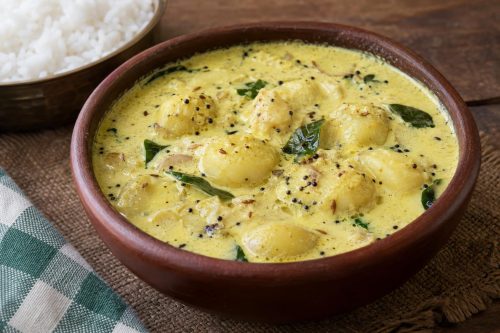
Baby Potato Mor Kuzhambu is a South Indian buttermilk curry that sits somewhere between a light gravy and a tangy yoghurt-based dish. The potatoes are halved and cooked in the spiced masala paste before the buttermilk goes in at the very end, off the flame. Buttermilk added too early or over high heat will split and turn grainy, so the order of steps matters. The result is a pale, mildly sour curry with soft potatoes and a coating gravy that soaks into hot rice particularly well.
About the Recipe
The masala is built from soaked Bengal gram dal, toor dal and raw rice, ground together with coconut, ginger, garlic, green chillies and coriander seeds. Soaking the dals and rice for a full 60 minutes is important. Under-soaked grains will not grind smoothly and will leave a gritty texture in the finished gravy.
The buttermilk is stirred in only after the flame is switched off, then the pan goes back on low heat for just 30 to 40 seconds with constant stirring. This keeps the gravy smooth and the buttermilk stable. See also Mor Kuzhambu for the plain version of this curry.
Why You Will Love This Recipe
Baby potatoes hold their shape through cooking in a way that regular potato pieces often do not, so every serving has defined chunks rather than a mash. The ground masala paste, with its combination of two dals, raw rice and fresh coconut, gives the gravy a gentle body and a flavour that is noticeably different from a plain mor kuzhambu.
If you enjoy Milagu Mor Kuzhambu or Mullangi Mor Kuzhambu, this version with baby potatoes is worth trying.
Cooking Tips
The most common mistake is adding buttermilk while the pan is still on a high flame, which causes it to curdle immediately. Always switch off the flame first, stir in the buttermilk, then return to the lowest heat for no more than 40 seconds while stirring continuously.
Under-soaking the dals and rice is the other thing to watch. It produces a coarse paste and a grainy gravy, so 60 minutes of soaking is the minimum. Use fresh buttermilk rather than sour or old buttermilk, as excessive sourness will overpower the masala.
Top Tips
- Soak the Bengal gram dal, toor dal and raw rice for the full 60 minutes before grinding to get a smooth paste.
- Grind the masala to a genuinely fine paste. Stop and scrape down the sides of the grinder at least once during grinding.
- Cook the potatoes until just tender before adding the masala. Overcooked potatoes will break apart when you stir in the liquid.
- Switch off the flame before pouring in the buttermilk, then keep the heat on its lowest setting for the final 30 to 40 seconds and stir without stopping.
- Use 400 ml of fresh buttermilk as specified. Thicker curd thinned with water works in place of buttermilk if needed, but the flavour will be slightly different.
- Halving the baby potatoes rather than leaving them whole helps the masala coat them properly and speeds up cooking.
Serving and Storing Suggestions
Serve Baby Potato Mor Kuzhambu hot with plain steamed rice. A dry vegetable side such as Potato Onion Fry or a simple papad works well alongside it.
Leftovers can be refrigerated for up to one day. Reheat on a very low flame with constant stirring, the same way as the original finish step, to prevent the buttermilk from separating. Do not boil the reheated curry.
Similar Recipes
- Mor Kuzhambu
- Milagu Mor Kuzhambu
- Mullangi Mor Kuzhambu
- Garlic Baby Potatoes
- Potato and Green Pea Curry
Nutrient Benefits
Baby potatoes provide carbohydrates and some potassium. Buttermilk contributes protein and calcium. Bengal gram dal and toor dal add plant protein and fibre to the masala. Coconut provides fat, and ginger and garlic are standard flavouring ingredients that appear across many traditional South Indian gravies.
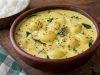
Baby Potato Mor Kuzhambu
Ingredients
- 500 gms Baby Potatoes
- 1/2 tsp Asafoetida Powder
- 4 to 5 Onions
- 400 ml Fresh Buttermilk
- For the masala:
- Turmeric Powder - a big pinch
- 10 cloves Garlic
- 2 inch piece Ginger
- 1/2 cup, grated Coconut
- 2 tblsp Bengal Gram Dal
- 2 tblsp Toor Dal
- 1 tblsp Raw Rice
- 2 tsp Coriander Seeds
- 4 Green Chillies
- For Tempering:
- 5 to 6 tsp Oil
- 2 tsp Mustard Seeds
- Curry Leaves - few
- Coriander Leaves - few
- 2 tsp Cumin Seeds
Instructions
- Soak the bengal gram, toor dal and raw rice for 60 minutes.
- Drain well.
- Combine them together with coriander seeds, green chillies, garlic, coconut, ginger and turmeric powder.
- Grind them to a fine paste.
- Peel the baby potatoes and halve them.
- Heat oil in a pan.
- Fry the mustard seeds for 30 seconds.
- Add the onions, cumin seeds, curry leaves and coriander leaves.
- Saute for a minute or two.
- Add the baby potatoes and cook for 2 to 3 minutes.
- Add the ground masala and stir well.
- Add a little water and asafoetida powder.
- Mix well and cook until the potatoes are tender.
- Switch off the flame and add the buttermilk.
- Stir well and place it back on low flame for 30 to 40 seconds, stirring all the time.
- Remove and serve with hot rice.
Sign up for our newsletter
Add Awesome Cuisine as a Preferred Source

Frequently Asked Questions
Can I use regular potatoes instead of baby potatoes?
Yes, regular potatoes cut into medium cubes will work. Baby potatoes are used here because they hold their shape well during cooking. If using regular potatoes, cut them into roughly equal-sized pieces so they cook at the same rate, and check them for tenderness before adding the masala.
Why did my buttermilk curdle and turn grainy?
This happens when buttermilk is added while the pan is on a high or medium flame. The recipe instructs you to switch off the flame first, stir in the buttermilk, and then return to the lowest possible heat for only 30 to 40 seconds with continuous stirring. If your buttermilk still splits, the heat was too high or the stirring too infrequent during those final seconds.
Can I skip soaking the dals and rice to save time?
It is better not to skip the soaking step. Bengal gram dal, toor dal and raw rice are hard before soaking, and a grinder or blender will not reduce them to a smooth paste without the 60-minute soak. The resulting masala will be coarse and will give the gravy an uneven, rough texture.
What can I use if I do not have fresh buttermilk?
Thin plain curd with water to reach a pourable consistency similar to buttermilk. Roughly 200 ml of curd thinned with 200 ml of water works as a substitute for the 400 ml of fresh buttermilk called for in the recipe. Avoid using very sour curd as it will make the finished curry sharply acidic.
How do I know when the potatoes are tender enough before adding the masala?
Press a potato half gently with the back of your spoon. It should give without much resistance but should not break apart or mash. At that point the potatoes are ready for the masala to be stirred in. If you add the masala while the potatoes are still hard, they will need more cooking time in the thickened masala, which can cause it to stick to the pan.