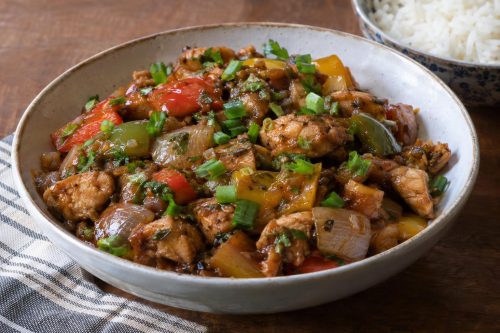
Chilli Soya Chicken is a straightforward Indo-Chinese style dish with a good balance of heat, salt and a mild tang from vinegar, all built around fried boneless chicken pieces. The two main flavour carriers are soy sauce and chilli paste, supported by fresh ginger, garlic and green chillies sautéed with onions and capsicums. The chicken is fried first and then tossed through the sauce, so it stays firm rather than turning soft or watery. It is a reliable choice for weeknight cooking when you want something that tastes considered without spending a long time in the kitchen.
About the Recipe
The recipe has two distinct stages. First, chicken is marinated briefly in ginger garlic paste and salt, then shallow fried until light golden. Then a base of onions, capsicums, ginger, garlic and green chillies is built in a separate pan, the sauce ingredients are added, and the fried chicken is folded in at the end.
This two-stage approach means the chicken keeps a slightly firm exterior even after it absorbs the sauce. Using three colours of capsicum adds more than colour. Each variety has a slightly different level of sweetness, which rounds out the overall flavour without any extra effort.
Why You Will Love This Recipe
The clearest reason to make this dish is the flexibility between a saucy version and a completely dry one. Serving it over rice? A little extra water in the sauce makes sense. Want something closer to a starter or a side? Simply cook the water off entirely. Very few dishes give you that choice without changing anything else.
The ingredients are also easy to find. Boneless chicken, soy sauce, chilli paste, capsicum and spring onions are available in most supermarkets, so this is not a recipe that needs a special shopping trip.
Cooking Tips
A common mistake is adding the fried chicken too early and then overcooking it while the sauce comes together. Build the sauce fully first, taste it, then add the chicken and give it only two minutes in the pan.
Also watch the salt carefully. Soy sauce already carries a fair amount of sodium, so add the measured salt cautiously and taste before adding more.
Top Tips
- Pat the chicken pieces dry before frying so they colour properly rather than steaming in the pan.
- Fry the chicken in batches if your pan is small. Crowding the pan drops the temperature and you get pale, soft pieces instead of golden ones.
- Build and taste the sauce before adding the chicken. Adjusting salt, vinegar or chilli is much easier at that stage.
- For the dry version, use a wide pan and keep the flame on medium-high once you add the chicken so moisture evaporates quickly without the chicken turning rubbery.
- Add spring onions and coriander leaves only after switching off the flame so they stay fresh and do not wilt into the dish.
Serving and Storing Suggestions
Serve Chilli Soya Chicken hot over steamed rice. The saucy version works particularly well this way. The dry version can be served as a starter or alongside fried rice or noodles.
Leftovers keep well in a sealed container in the refrigerator for up to two days. Reheat gently in a pan with a small splash of water to loosen the sauce. Avoid microwaving for too long as the chicken can turn chewy.
Similar Recipes
- Andhra Chilli Chicken
- Dry Green Chili Chicken
- Garlic and Chicken Pepper Stir Fry
- Chicken Noodle Stir-Fry
Nutrient Benefits
Boneless skinless chicken is a good source of protein and relatively low in fat when shallow fried with a controlled amount of oil. Capsicums, particularly the red and yellow varieties, contribute vitamin C. Served with plain steamed rice, this makes a reasonably balanced plate with protein, carbohydrates and a good mix of vegetables.

Chilli Soya Chicken
Ingredients
- 300 gms, boneless, skinless, chopped Chicken
- 2 tsp Ginger Garlic Paste
- 4 tsp, finely chopped Garlic
- 4 tsp, finely grated Ginger
- 100 gms, finely chopped Onions
- 2 to 3, finely chopped Green Chillies
- 3 , small, chopped (one of each colour, if available) Capsicums
- 1 tsp (available in supermarkets) Chilli Paste
- Coriander Leaves - handful, chopped
- 1/2 tsp Vinegar
- 2 tsp, finely chopped Spring Onions
- 2 tsp Soy Sauce
- Salt as per taste
- Oil as required
- Ajinomoto - a pinch
Instructions
- Combine the chicken, ginger garlic paste and salt in a large bowl.
- Mix well until evenly coated. Keep aside for 2 to 3 minutes.
- Heat oil in a frying pan.
- Add the chicken pieces and fry until light golden brown.
- Remove and keep aside in a warm place.
- Heat 2 tlsp oil in a pan over medium flame.
- Saute the onions, capsicums, ginger, garlic and green chillies for 3 to 5 minutes.
- Add enough water and stir.
- Add the chilli paste, 1/2 tsp salt, ajinomoto, vinegar and soy sauce.
- Mix well and cook for 2 to 3 minutes.
- Add the fried chicken pieces and stir well for 2 minutes or until the chicken pieces are evenly coated.
- Switch off the flame.
- Garnish with spring onions and coriander leaves.
- Serve with rice.
- Tip
- For a dry version, reduce the amount of water or cook until all water has been absorbed/evaporated.
Sign up for our newsletter
Add Awesome Cuisine as a Preferred Source

Frequently Asked Questions
Can I use chicken with bones instead of boneless chicken?
You can, but the cooking time will need to increase. Bone-in pieces take longer to fry through and will also need more time in the sauce to ensure the meat near the bone is fully cooked. Boneless chicken is the better choice here because the two-minute final toss in the sauce is designed for pieces that are already fully cooked from the frying stage.
What can I use instead of ajinomoto?
Ajinomoto is monosodium glutamate and adds a savoury depth to the sauce. If you prefer to leave it out, the dish will still taste good because the soy sauce and chilli paste carry most of the flavour. Some people add a small pinch of sugar to balance the salt and acid, though the result will be slightly different.
How do I make the dry version of this dish?
The recipe tip covers this directly. Either add less water when building the sauce, or after adding the fried chicken, keep the flame on medium-high and stir until all the liquid has evaporated or been absorbed. A wide, heavy pan helps because it gives the moisture more surface area to escape from.
My chicken turned out pale and soft after frying. What went wrong?
This usually happens when the pan is too crowded or the oil is not hot enough before the chicken goes in. When pieces are packed together they release moisture and steam rather than fry. Work in smaller batches, make sure the oil is visibly hot before adding the chicken, and avoid moving the pieces around too much in the first minute so a crust has time to form.
Is chilli paste the same as chilli sauce, and can I substitute one for the other?
They are not identical. Chilli paste is thicker and more concentrated than most chilli sauces. If you are using chilli sauce instead, add a little more than the one teaspoon called for and reduce the water in the sauce slightly to compensate for the extra liquid. Taste as you go because chilli sauces vary considerably in heat level and sweetness between brands.