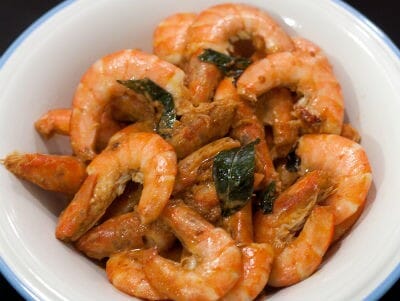
King Prawn Pulao is the dish my brother-in-law requests every single time he visits. Not biryani, not a curry — this. He made the request so many times that I eventually stopped treating it as an occasion dish and started keeping a bag of frozen king prawns in the freezer specifically so I could make it on short notice. The detail that always gets me is the moment the saffron milk goes in at the end.
The rice has already cooked, the prawns have turned pink, and then that small pour of golden milk goes through the whole pot and changes the colour of everything just slightly. It is a quiet thing, but I notice it every time. This pulao does not require special equipment or a long marinade. A wide, heavy pan with a lid is all you need.
About the Recipe
Most of the ingredients here are things an Indian kitchen already has — whole cloves, cinnamon, ginger garlic paste, garam masala. You will need saffron, which is not cheap, but a large pinch is all it takes and the flavour and colour it adds are worth it. From start to finish, this takes about 45 to 55 minutes, which makes it reasonable for a weeknight if you have the prawns ready. I would make this when I have guests arriving and not much time — it looks and smells like you put in real effort, even when you did not.
Why you will love this recipe
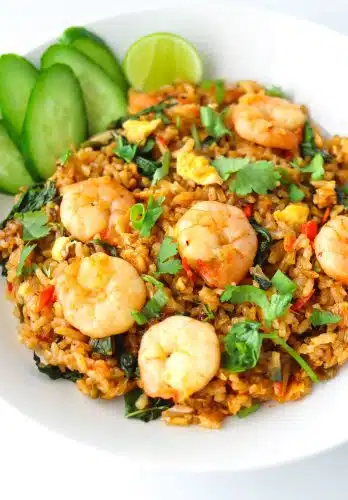
The prawns cook directly in the rice for the final few minutes, which means they absorb all the spiced, saffron-scented steam from the pot rather than sitting separately. That layering of flavour — whole spices in the ghee at the start, red chilli powder through the tomato base, garam masala added late, and saffron right at the end — builds in stages, and each stage does something different.
Ghee at the start gives the onions a richness that oil does not quite match. The green chillies added with the prawns bring a fresh heat that is different from the dried chilli powder used earlier. I keep coming back to this because it gives you a complete, aromatic meal from a single pan, and the washing up is minimal.
Cooking Tips
The most common mistake is adding the prawns too early. King prawns cook fast — five to eight minutes is enough. If they go in when the rice is still largely raw, they will be rubbery and overcooked by the time the rice finishes. Wait until the rice is genuinely half-cooked before adding them.
Also, resist stirring too much once the lid goes on. Each time you lift the lid, steam escapes and the rice takes longer to cook evenly. Stir once when the prawns go in, then leave it.
Top Tips
- Do not skip the half-cooking step for the rice before adding the prawns. If the rice goes in raw with the prawns, one of them will be overcooked by the time the other is done.
- Use warm or hot water, not cold, when you add the 1.25 litres. Cold water slows down the cooking and can make the rice cook unevenly.
- If you are using frozen prawns, thaw them fully and pat them dry before adding. Excess water in the pot at that stage will make the rice mushy.
- The saffron goes in last, after the prawns are cooked and the flame is off. This preserves the colour and the delicate aroma rather than cooking it away.
- A wide, heavy-bottomed pan works better than a narrow deep pot here. The rice cooks more evenly when it is spread out rather than piled up.
- Fresh coriander added right before serving, not during cooking, keeps the garnish bright and fragrant rather than wilted.
Serving and Storing Suggestions
This recipe serves four people comfortably as a main course. Prep time including shelling and deveining the prawns is about 20 minutes, and the cooking takes around 30 to 35 minutes. Serve it hot with a raita — cucumber raita or boondi raita both work well. Leftovers keep in the refrigerator for up to two days.
Reheat with a splash of water and a covered lid on low heat so the rice does not dry out. I would not recommend reheating prawns more than once.
Similar Recipes
Nutrient Benefits
King prawns are a good source of lean protein and low in fat, which makes them a practical choice when you want a filling meal without a heavy base. Saffron contains small amounts of compounds linked to mood and digestion, though the quantity used here is minimal. The whole spices — cinnamon and cloves — have been used in traditional Indian cooking for their warming properties. The dish provides carbohydrates from the rice and some iron from the prawns and coriander leaves.

King Prawn Pulao
Ingredients
- 100 gms Sweet Corn Kernels
- 50 gms Paneer (crumbled)
- 2 Potatoes (boiled, peeled, mashed)
- 10 Cashewnuts (broken)
- 1/2 tsp Cashewnut Paste
- 100 gms Tomato Puree
- 1 tsp Red Chilli Powder (or as per taste)
- Pepper Powder as per taste
- 2 Onion (finely chopped)
- 1 tsp Saunf
- 3 Green Chillies (chopped)
- 1 tsp Garam Masala Powder
- 2 tbsp Maida
- 1/4 tsp Turmeric Powder
- Coriander Leaves (few)
- 2 tbsp Ginger Garlic Paste
- Oil as required
- Salt as per taste
Instructions
- Bring a pan of water to boil.
- Add the sweet corn kernels and soak them for 5 minutes.
- Drain and grind the corn once in the mixie.
- Combine the paneer, potatoes and corn in a bowl.
- Add salt, saunf, half of the green chillies, cashewnuts, coriander leaves, maida and garam masala powder.
- Mix well and make small balls of this mixture.
- Heat oil in a frying pan.
- Deep frying the prepared balls till golden and remove.
- Keep aside.
- In a separate pan, heat a little oil.
- Saute the onions till golden.
- Add ginger garlic paste, remaining green chillies, turmeric powder, pepper powder, tomato puree and salt.
- Mix well and cook till oil starts to separate.
- Add the cashewnut paste and enough water.
- Bring to a boil.
- Add the prepared balls and simmer for a minute.
- Garnish with coriander leaves.
- Serve hot with rice or naan.
Sign up for our newsletter
Add Awesome Cuisine as a Preferred Source

Frequently Asked Questions
My koftas broke apart while frying. What went wrong?
The mixture was likely too moist. This happens when the potato has not cooled fully, or when the ground corn still has water in it. Add another tablespoon of maida, mix again, and make sure you are frying on medium heat rather than high. High heat browns the outside before the inside sets, which causes cracking.
Can I use frozen sweet corn instead of fresh?
Yes, frozen corn works fine here. Thaw it first and pat it dry with a kitchen towel before boiling and grinding. Excess water in the corn is one of the main reasons koftas fall apart, so getting rid of moisture before you start is important.
Can I skip the cashew paste in the gravy?
You can, but the gravy will be thinner and slightly less rounded in flavour. If you do not have cashew paste, soak four to five cashews in warm water for 20 minutes and blend them into a smooth paste. That works just as well as a ready-made paste.
How do I stop the koftas from turning soggy in the gravy?
Add the koftas to the gravy only when you are about to serve. Even five minutes of sitting in the sauce will start to soften them. If you are cooking ahead, keep the gravy and the koftas separate and combine them on low heat for just one minute before plating.
Can I bake the koftas instead of deep frying them?
You can brush them with oil and bake at 200 degrees Celsius for about 20 to 25 minutes, turning once halfway through. They will not have the same golden crust as the fried version, but they hold their shape well and still taste good in the gravy.