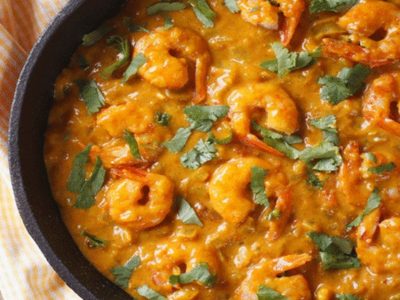
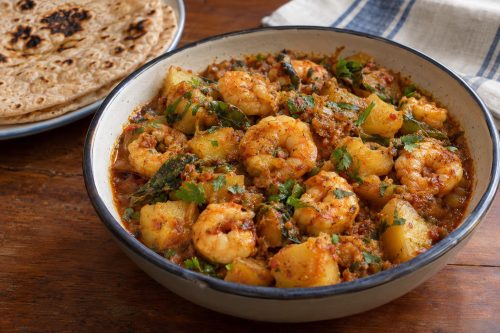
This Parsi prawn and potato recipe is a straightforward dish where the potatoes do most of the work. They sit in a paste of vinegar-soaked red chillies, cumin, garlic, and turmeric for at least an hour before the pan even goes on the heat. That marinating time matters. It is what gives the sauce its body and colour. The prawns are added only at the very end, so they stay tender. Curry leaves, green garlic, and green chillies go in first and build the base. The result is a thick, richly flavoured prawn potato dish that pairs naturally with chapattis.
About the Recipe
The paste is the foundation here. Dry red chillies are soaked in malt vinegar before grinding, which softens them and pulls the vinegar into the paste. That vinegar gives the sauce a slight sharpness and helps it cling to the potatoes during cooking. The potatoes are cut into one centimetre cubes so they cook evenly and absorb the paste well during marination.
Green garlic, meaning both the cloves and the green shoots, is used here rather than dried garlic. It gives a fresher, milder flavour alongside the paste garlic. This kind of curry leaves prawn base is a reliable technique in coastal Indian cooking.
Why You Will Love This Recipe
The sauce is the best reason to make this dish. The potatoes marinate in the spice paste for a full hour, then simmer in just enough water to cover. As they cook, they soften slightly at the edges and thicken the liquid on their own. No thickening agent needed.
By the time the prawns go in, the sauce is already coating and rich. The optional fried egg on top is worth trying. It adds a soft, mild layer that sits well against the heat from the chillies and the sharpness from the vinegar. It also stretches the dish a little if you are feeding an extra person.
Cooking Tips
The most common mistake is adding the prawns too early. Prawns cook in two to three minutes and turn rubbery if they stay on the heat any longer. Add them only after the potatoes are almost done.
Watch the water level during the long simmer too. The sauce should reduce to something thick. If it is still watery after forty minutes, remove the lid and simmer a little longer before the prawns go in. Do not rush the potato marination either. One hour is the minimum.
Top Tips
- Soak the dry red chillies in malt vinegar for at least fifteen minutes before grinding so they blend into a smooth paste without dry bits.
- Cut the potatoes into one centimetre cubes as instructed. Larger pieces will not cook through evenly in the time given.
- Marinate the potatoes in the paste for the full hour. Shorter marination means the paste sits on the surface rather than flavouring the potato through.
- Add water gradually. You want just enough to cover the potatoes. Too much water means a long extra simmer to reduce the sauce before the prawns can go in.
- Add the prawns only when the potatoes are almost done and increase the heat first. Two to three minutes is enough. Pull them off as soon as they turn opaque.
- If you are serving the fried eggs on top, fry them just before serving so they are hot when they go onto the potatoes.
Serving and Storing Suggestions
Serve hot with chapattis as the recipe suggests. If you are using the fried eggs, place them on top just before the dish goes to the table.
Leftover potato and sauce keeps well in the refrigerator for up to two days. Reheat gently over low heat with a splash of water to loosen the sauce. Do not put leftover prawns back into a hot pan. Eat any leftover prawns cold or at room temperature to avoid toughening them further. This dish does not freeze well because the potato texture changes.
Similar Recipes
- Goan Prawn Curry with Mangoes
- Konkani Masala Prawns
- Curry Leaves Prawn
- Prawn Pappas
- Mutton Curry with Potatoes
Nutrient Benefits
Prawns are a good source of protein and relatively low in fat. Potatoes provide carbohydrates and potassium. The eggs, if used, add further protein and fat to the meal. Using vegetable oil in a measured quantity keeps the overall fat content moderate for a curry-style dish.

Parsi Prawn with Potatoes
Ingredients
- 450 gms, raw, shelled, deveined, washed Prawns
- 2 tsp Lemon Juice
- Salt to taste
- Grind to a Paste:
- 6 , soaked in 1 1/2 tbsp malt vinegar Dry Red Chillies
- 1 tsp Cumin Seeds
- 4 to 5 cloves Garlic
- 1/2 tsp Turmeric Powder
- 1 , small, chopped Onion
- 450 gms, peeled, cut into 1 cm cubes Potatoes
- 2 tbsp Vegetable Oil
- 5 to 6 Curry Leaves
- 8 cloves and shoots, fresh, chopped Green Garlic
- 2 , finely chopped Green Chillies
- Salt to Taste
- 2 tbsp, fresh, finely chopped Green Coriander
- 2 (optional) Eggs
Instructions
- Marinate the prawns with the lemon juice and some salt. Keep aside.
- Grind all the ingredients mentioned to a smooth paste, adding a little vinegar if necessary.
- Mix this paste with the potatoes and keep aside to marinate for at least 1 hour.
- Heat the oil in a large pan over medium heat.
- Saute the curry leaves, green garlic, and green chillies for 2 to 3 minutes.
- Add the marinated potatoes.
- Saute for 5 minutes, stirring frequently with a wooden spoon, scraping the base of the pan.
- Add just enough water to cover the potatoes.
- Lower heat and simmer, covered, for about 40 minutes or until the potatoes are almost done.
- The sauce should be thick and rice, if it is too watery, simmer for a while longer.
- Increase heat and add the prawns.
- Cook for 2 to 3 minutes until done.
- Season with salt and garnish with green coriander.
- If you are using the eggs, fry them first and then serve on top of the potatoes.
- Serve with chapattis.
Sign up for our newsletter
Add Awesome Cuisine as a Preferred Source

Frequently Asked Questions
Can I use frozen prawns for this recipe?
Yes, but thaw them completely and pat them dry before marinating with lemon juice and salt. Frozen prawns release water as they cook, and if they go into the pan wet, they will thin out the sauce you have worked to reduce. Drying them first helps the sauce stay thick.
What can I use instead of malt vinegar?
White wine vinegar or cider vinegar are the closest substitutes. Plain white vinegar works too but is sharper, so use a little less. The vinegar is used both to soak the chillies for grinding and to loosen the paste if it is too thick, so keep some extra of whichever vinegar you choose.
What is green garlic and where do I find it?
Green garlic is young garlic that has not yet formed a full bulb. Both the small cloves and the green shoots are used. It is available in Indian grocery stores, especially in winter and early spring. If you cannot find it, use regular garlic cloves for the paste quantity and add a small handful of chopped spring onion greens to approximate the fresh, mild flavour of the shoots.
Why does the recipe ask me to marinate the potatoes for a full hour?
The paste needs time to work into the potato rather than just coat the outside. When the potatoes sit in the vinegar-chilli paste for an hour, the cut surfaces absorb some of the flavour. This means the sauce that forms during simmering tastes of the spices throughout, not just on the surface of each cube.
How do I know when the sauce is thick enough before adding the prawns?
After about forty minutes of covered simmering, lift the lid and check. The sauce should coat the back of a spoon and not look watery. If it is still thin, remove the lid, increase the heat slightly, and simmer for another five to ten minutes until it reduces. Only then increase the heat fully and add the prawns. Getting this right before the prawns go in matters because you cannot simmer the sauce further once the prawns are cooking without overcooking them.