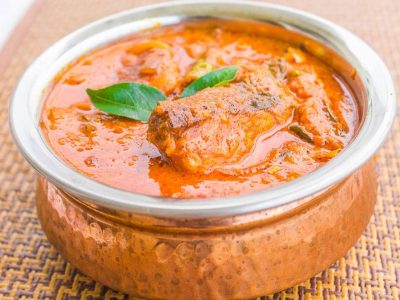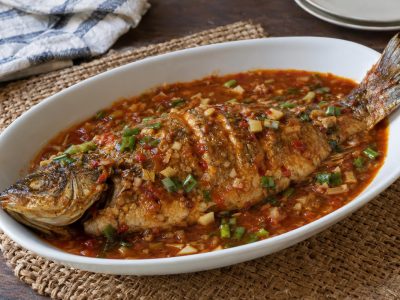
Fish in Methi and Garlic is one of those recipes I make when I want something that feels like a proper cooked meal without spending the whole evening in the kitchen. I first put this together on a Tuesday when I had fish in the fridge, a bunch of fresh methi that needed using up, and not much else going on. That is honestly still the main reason I keep coming back to it.
The detail I find myself thinking about is the step where you squeeze every bit of water out of the washed methi before chopping it. It sounds like a small thing, but when that dry methi hits the oil with the garlic and ginger paste, the aroma it throws off is very different from when you skip the squeezing. It fills the kitchen in a way that makes whoever is passing by stop and ask what is cooking.
About the Recipe
All the ingredients here are straightforward and available in most Indian kitchens or any local market. The methi and coriander are the only fresh produce you need beyond the fish and tomatoes. From start to finish, including the half hour marination time, you are looking at about an hour and fifteen minutes.
I make this most often on weeknights when I want something satisfying but do not want to deal with a complicated masala base. The dry version works well as a main with dal and rice, and the gravy version stretches easily if you have a larger group to feed.
Why you will love this recipe
Fresh methi with garlic is a combination that holds its own against the fish rather than getting lost behind it. The methi brings a slight bitterness, the garlic adds sharpness, and the tomatoes round things out once they cook down until the oil separates. That moment when the oil starts to appear at the edges of the tomato mixture is your cue that the base is ready.
Frying the fish first, before it goes into the masala, gives every piece a golden crust that holds up even after the second round of cooking. At the end, a little jeera powder and elaichi powder sprinkled on top just before serving adds a warmth that makes the whole thing feel finished.

Cooking Tips
The single most common beginner mistake here is putting the fish into oil that is not hot enough. The fish will stick to the pan and break apart when you try to lift it. Get the oil properly hot before anything goes in. Also, do not skip the squeezing step with the methi.
Wet methi in the pan will steam instead of cook and the raw green taste will not go away. If you are using frozen fish, pat it thoroughly dry before marinating or the haldi will not stick and the fry will not colour properly.
Top Tips
- Marinate the fish in salt and haldi for at least half an hour, then rinse it off before frying. This step removes some of the raw fish smell and firms up the flesh slightly.
- Make sure the oil is visibly shimmering and hot before the fish goes in. If you see it smoke slightly, that is the right moment.
- Squeeze the washed methi leaves in your fist until no water comes out. This takes about thirty seconds but makes a real difference to how the paste cooks.
- Grind the methi, coriander leaves, garlic, ginger, and green chillies together into a coarse paste rather than a smooth one. A little texture in the paste is fine and actually works better in this recipe.
- Add the jeera powder and elaichi powder only at the very end, just before serving. Cooking them into the masala too early dulls their flavour.
- For the gravy version, add water to the cooked tomato masala and bring it to a full boil before the fish goes in. That way the gravy does not taste raw or watery.
Serving and Storing Suggestions
Serves 3 to 4 people. Total time including marination is about 1 hour 15 minutes, with about 40 minutes of active cooking. Serve hot with plain rice or chapati. The dry version works well as a side alongside dal.
Leftovers keep in the refrigerator for up to 2 days in an airtight container. Reheat gently in a pan on low flame with a small splash of water if needed, as the masala can catch and burn quickly on high heat.
Similar Recipes
- Fish Curry with Coconut Milk
- Goan Fish Masala
- Methi Chicken (Murgh Methi)
- Ginger Garlic Prawn Stir Fry
- Stuffed Fried Fish with Green Chutney
Nutrient Benefits
Methi leaves are a genuinely useful ingredient beyond just flavour. They are a reasonable source of iron, which is worth noting if you cook for people who eat fish as their primary non-vegetarian protein. Garlic, used in a meaningful quantity here rather than as background flavouring, has well-documented properties around circulation and immunity. Fish, depending on the variety you use, adds protein and healthy fats. Together, this is a meal that earns its place on a regular weeknight table for reasons beyond taste alone.
Fish in Methi and Garlic
Ingredients
- Few leaves of methi (preferably Fresh)
- Few leaves of Corriander leaves
- 5-6 Garlic flakes
- 1/2 inch piece of Ginger
- 3-4 Green Chillies
- 1/2 teaspoon Haldi
- 1 teaspoon Corriander Powder
- Salt as per taste
- 2-3 Tomatoes
- 1 Tablespoon Oil
- Fish
Instructions
- Wash the fish and marinate it with salt and haldi, put aside for 1/2 an hour.
- Again wash it and deep fry it in 1 tbsp oil. Make sure the oil is really hot before you put the fish or else the fish will stick to the base of the pan. Fry the fish till golden brown in color and keep it aside.
- Wash methi nicely and squeeze it completely and remove all the water from it. Now finely chop the methi and washed corriander leaves and grind them along with garlic, ginger and green chillies.
- Heat little oil in the pan put all the above methi, corriander, ginger, garlic and cook it slightly on low flame.
- Now put all the dry masalas (haldi and corriander powder) and salt and cook it on low flame for few more minutes.
- Then add finely chopped tomatoes cook it till ghee oozes out.
- Now add fried fish and turn it on both sides cook it fow 5-6 more minutes. Finally add jeera powder, elaichi powder before serving.
Note: The above recipe is made with very less gravy. If u need with gravy then add water in the mixture before adding the fried fish and boil it properly so that the mixture is blended well and then add fish and cook it as above and add jeera and elaichi powder before serving. Enjoy.
Sign up for our newsletter
Add Awesome Cuisine as a Preferred Source

Frequently Asked Questions
Q: My fish stuck to the pan and broke apart when I tried to flip it. What went wrong?
A: The oil was almost surely not hot enough when the fish went in. Cold or warm oil causes the fish to bond with the pan surface before a crust can form. Heat the oil until it is visibly shimmering, then place the fish in carefully. Also make sure the fish is as dry as possible before it goes into the oil.
Q: Can I use dried methi (kasuri methi) instead of fresh methi leaves?
A: You can, but the result will be noticeably different. Dried methi has a more concentrated, slightly smoky flavour and does not grind into a paste the way fresh leaves do. If you use it, add about one tablespoon directly into the oil with the other ground ingredients rather than grinding it. The dish will still taste good, just different in character.
Q: The masala smells raw and grassy even after cooking. Did I do something wrong?
A: This usually happens when the methi was not squeezed dry before grinding, or when the paste was not cooked on low flame for long enough. The paste needs a few minutes in the oil to cook out that raw green taste before the dry masalas go in. If it still smells sharp after the tomatoes have cooked down, give it another two to three minutes on low flame.
Q: Which fish works best in this recipe?
A: Firm fleshed fish holds up better through the frying and second cooking stage. Surmai (kingfish), rohu, or pomfret all work well. Avoid very delicate, flaky fish as the pieces tend to fall apart when you turn them in the masala.
Q: Can I make this ahead of time for guests?
A: The masala base can be made a few hours ahead and kept covered at room temperature. Fry the fish separately and add it to the reheated masala just before serving. Cooking the fish too far in advance and letting it sit in the masala makes it soft and the crust disappears, which is worth avoiding if texture matters to you.