Somewhere in the back of most Indian kitchen drawers, wrapped in foil inside an old Horlicks tin or tucked into a steel dabba that has held nothing else for thirty years, sits a small twist of orange-red thread. Nobody measures it out carelessly. It comes out for biryani on a good day, for kheer at a wedding, and for the one time a year someone’s exam results mattered enough to deserve a glass of warm saffron milk.
Drop two or three of those threads into warm milk and wait. Real saffron doesn’t flash red the way you’d expect from something so famously expensive. It bleeds colour slowly, almost reluctantly, until the milk turns a deep, glowing gold. That patience, as it turns out, is the whole story of saffron: how it’s grown, how it’s faked, and how it should be cooked with.
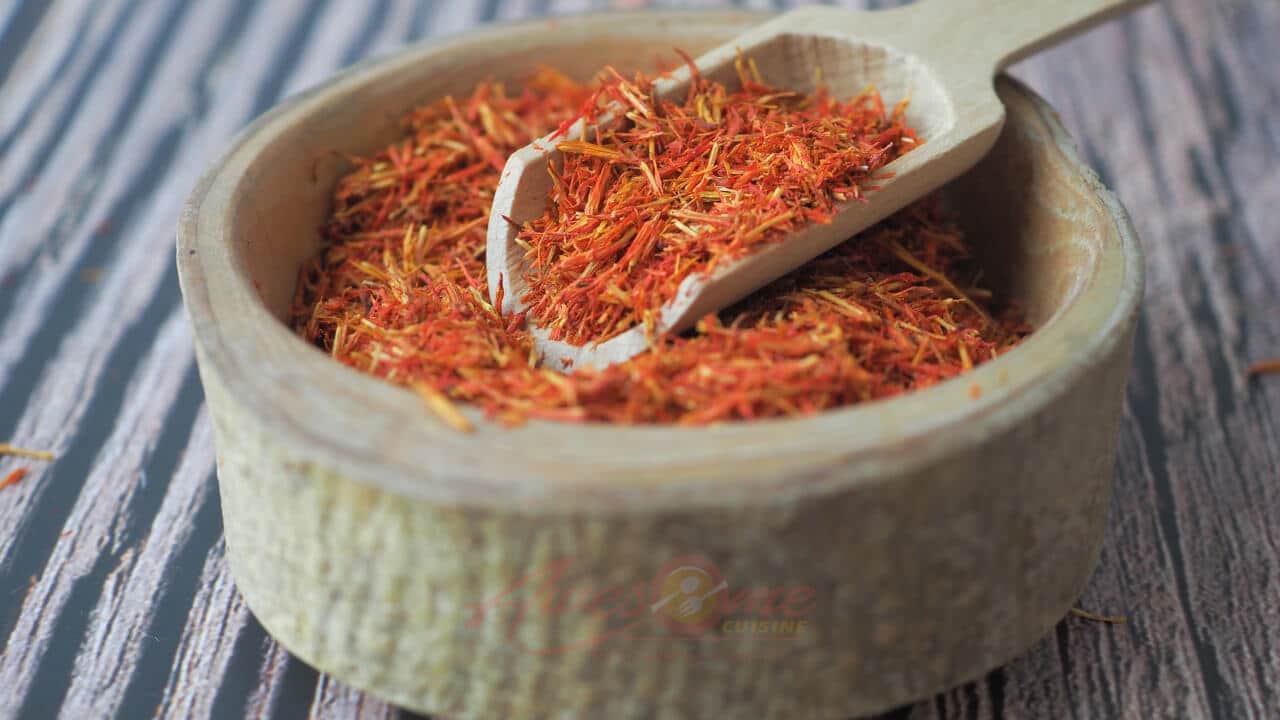
Table of Contents
Key Takeaways
- Saffron is the dried stigma of the Crocus sativus flower, and every single thread is picked by hand.
- Iran grows most of the world’s saffron, but Kashmir’s saffron carries its own GI tag and a milder, sweeter character.
- Real saffron releases colour slowly into warm liquid. If your water turns bright red in seconds, it’s probably dyed.
- A little goes a long way. Most home recipes need a pinch of strands, not a spoonful.
- Saffron has real, researched benefits for mood and inflammation, but the studies use concentrated extract, not a few strands in your kheer.
- You’ll find it across Indian kitchens, in biryani, kheer, peda, lassi and more.
Saffron sits at an odd intersection of luxury and ordinariness. It’s expensive enough to be sold by the gram, yet common enough to live in almost every spice box in India. That gap is exactly why so much of what’s sold as saffron isn’t, and why knowing what you’re buying, and how to use it, actually matters before you spend the money.
What Exactly Is Saffron, and Where Does It Come From?
Saffron is the dried, thread-like stigma of Crocus sativus, a purple-flowering crocus that blooms for barely two weeks each autumn. Each flower produces only three stigmas, hand-picked at dawn before the petals fully open, then dried within hours to lock in their colour and fragrance. It most likely originated somewhere between Greece and Persia, depending on which botanist you ask, and travelled along trade routes for thousands of years before settling into the high-altitude valleys of Kashmir, where it’s been grown for well over a thousand years.
SAFFRON, DEFINED
Saffron, called kesar in Hindi and Marathi, zaafran in Urdu and Persian, and kumkumapoo in Tamil, is the dried stigma of the Crocus sativus flower. It’s used as a spice for its colour and aroma, as a natural dye, and in traditional medicine systems across Asia and the Middle East.
WHO ACTUALLY GROWS THE WORLD’S SAFFRON
Iran produces roughly 85 to 90 percent of the world’s saffron, according to the UN Food and Agriculture Organization, working alongside Iran’s Ministry of Agriculture-Jahad (2025). India, mostly through Kashmir’s Pampore belt, grows a tiny fraction of that volume, but its saffron is prized for quality rather than scale.
How Can You Tell Real Saffron from Fake Kesar?
The fastest test needs nothing but a glass of warm water or milk. Drop in two or three threads and watch them, not the clock. Genuine saffron releases its colour gradually over ten to fifteen minutes, staining the liquid a warm gold while the threads themselves stay mostly red and intact. If the water turns scarlet within seconds, what you’re holding is very likely dyed corn silk, beetroot fibre, or safflower dressed up to look like the real thing.
Smell is your second clue. Real saffron smells like hay and honey with a faint metallic edge, never sweetly floral or perfumed. And price is your third: saffron sold suspiciously cheap, loose, in unmarked packets, is almost never what it claims to be. If you want help telling your spices apart more generally, our Indian Condiments & Spices glossary is a good place to start.
KASHMIR’S OWN SEAL OF AUTHENTICITY
In July 2020, India’s Geographical Indications Registry granted a GI tag to “Kashmir Saffron,” officially protecting the name for saffron grown in the karewa highlands around Pampore and making it easier to call out saffron falsely sold under the Kashmiri name. (Source: The Tribune)
Why Does Saffron Cost So Much?
The short answer is labour, not marketing. Saffron crocus flowers bloom for a matter of days each year, and every flower has to be harvested by hand before the morning sun opens its petals and dries out the stigmas inside. It takes somewhere around 150 flowers, each yielding just three threads, to produce a single gram of dried saffron. No machine has replaced that process anywhere in the world, which is the real reason a pinch of it costs more, gram for gram, than gold.
“Every thread in that tin was picked by hand, from a flower that blooms for two weeks a year and is gone again by noon.”
Origin shapes character almost as much as grade does. Here’s how the major saffron-growing regions compare:
| Origin | Common Grades | Flavour & Colour | Best Known For |
| Kashmir, India | Mongra, Lacha | Milder, sweeter, deep red | GI-tagged; biryani, kheer, sheermal |
| Iran | Sargol, Negin, Pushal | Strong, slightly bitter, intense colour | Bulk of world supply; everyday cooking |
| Spain | Coupe, La Mancha | Delicate, mellow | Traditional paella |
| Greece | Krokos Kozanis (PDO) | Floral, mild | Mediterranean dishes |
How Do Indian Cooks Actually Use Saffron?
Bloom it before you use it; never sprinkle it in dry. Warm a tablespoon or two of milk or water, drop in your threads, and let them sit for ten minutes. This single step is what separates a biryani that tastes faintly medicinal from one that smells like a celebration. Once bloomed, that golden liquid goes into rice, milk, batters or syrups, carrying both colour and fragrance with it.
Saffron shows up across the country in different forms. It’s the soul of a good chicken biryani, the colour behind a pot of saffron rice, the gold in kesar peda and rasmalai, and the streak through a glass of saffron lassi on a hot afternoon. Each of these uses the same trick: a small, bloomed amount, added with restraint.
“Two strands too many and your biryani tastes medicinal instead of magical. Saffron rewards restraint, not generosity.”
If you’re not sure how much is too much, this is roughly what experienced home cooks reach for:
| Dish | Suggested Amount | Quick Tip |
| Biryani or pulao (serves 4-6) | 15-20 strands | Bloom in 2 tbsp warm milk for 10 minutes |
| Kheer or payasam | 8-10 strands | Add near the end so the colour doesn’t cook away |
| Saffron milk or lassi | 4-5 strands | Crush gently between your fingers first |
| Cakes and baked sweets | A small pinch, ground | Mix into warm milk before folding into the batter |
Does Saffron Actually Have Health Benefits?
Yes, but with an important caveat: most of the research uses concentrated saffron extract in capsule form, not the few strands you’d stir into your kheer. Saffron contains compounds called crocin and safranal, both potent antioxidants that give the spice its colour and aroma, and a growing body of clinical research has looked at their effects on mood, inflammation and eye health.
WHAT THE RESEARCH ACTUALLY SHOWS
A 2014 systematic review in Human Psychopharmacology: Clinical and Experimental, by researchers Adrian Lopresti and Peter Drummond, found that saffron extract performed comparably to standard antidepressant medication across several small clinical trials for mild to moderate depression. (Source: PubMed) The studies, though, used standardised, concentrated extract under medical supervision, not a culinary pinch.
None of this makes saffron a substitute for medication or medical advice. If you’re managing a health condition, pregnant, or considering saffron supplements beyond ordinary cooking, talk to your doctor first; concentrated doses are a different matter from a pinch in your milk.
What Mistakes Do Home Cooks Make with Saffron?
- Adding dry threads straight into hot oil or rice. The heat scorches them before they release colour, so bloom them in warm liquid first.
- Using too much. Saffron turns bitter and medicinal past a certain point; a little genuinely goes a long way.
- Buying loose, unmarked, suspiciously cheap saffron. If the price seems too good to be true, it usually is.
- Storing it near the stove or in sunlight. Heat and light break down its colour and aroma fast; an airtight container in a cool, dark cupboard keeps it potent for years.
Where Does Saffron Show Up in Indian Culture?
Saffron’s colour runs deeper than the kitchen. The saffron band on the Indian flag stands for courage and renunciation, sanyasis traditionally wear robes dyed in it, and at Kashmiri Wazwan feasts and weddings, it’s stirred into everything from the welcome kahwah to the final dessert. Few spices carry quite this much symbolic weight alongside their flavour.
“It’s rare for an ingredient to be a spice, a dye, a medicine and a symbol of devotion all at once. Saffron has been all four for thousands of years.”
The next time you reach for that little tin, resist the urge to just sprinkle and hope. Warm a little milk, drop in your threads, give them the ten minutes they ask for, and watch your kheer, your biryani, or your Sunday saffron milk turn a colour no food dye can fake. That’s really the whole secret: patience, not quantity.
Frequently Asked Questions
Is kesar the same as saffron?
Yes. Kesar is simply the Hindi and Marathi name for saffron, the dried stigma of Crocus sativus. You’ll also hear it called zaafran in Urdu and Persian, and kumkumapoo in Tamil. They’re all the same spice, just under different regional names.
How can I tell if my saffron is real?
Drop two or three threads into warm water or milk and watch them slowly. Genuine saffron releases its colour gradually over ten to fifteen minutes and the threads stay mostly red, while fake saffron, often dyed corn silk or safflower, turns the water red almost instantly. A genuine hay-and-honey aroma, rather than a sweet, floral one, is another good sign.
How much saffron should I use in a dish?
Far less than you’d think. A pinch of 15 to 20 strands, bloomed in warm milk or water, is enough for a biryani that serves four to six people, and even less for kheer or lassi. Using too much makes a dish taste bitter and medicinal rather than fragrant.
How should I store saffron so it stays fresh?
Keep it in an airtight container, away from heat, light and moisture, ideally in a cool, dark cupboard rather than anywhere near the stove. Stored this way, good quality saffron keeps its colour and aroma for two to three years, though it’s best used within the first year for the brightest flavour.
Is it safe to eat saffron every day, including during pregnancy?
A pinch used in everyday cooking is generally considered safe for most healthy adults. Saffron in pregnancy, however, is a topic where traditional practice and medical caution don’t always agree, especially around concentrated amounts, so it’s worth talking to your doctor before using it beyond the occasional pinch in food.