
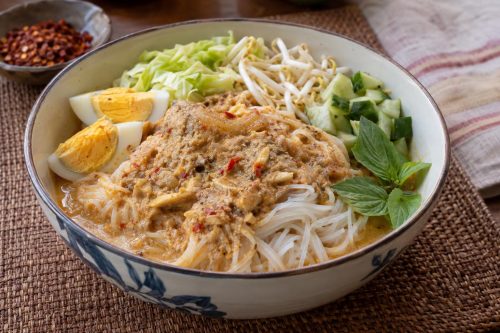
Rice Noodles with Coconut Fish Curry is a complete, satisfying meal that comes together from a handful of fresh and dried ingredients. The coconut fish curry is made by poaching a whole small fish, grinding the flesh with onions, galangal, lemongrass and dried chillies into a paste, and then simmering that paste in thin coconut milk until the sauce thickens. The noodles go into bowls with the curry spooned over the top, and the fresh accompaniments like cucumber, bean sprouts and lemon basil sit alongside, giving each mouthful a mix of warm, cool and crunchy textures.
About the Recipe
Most fish curries add the fish as pieces toward the end. Here, the poached fish is ground into the paste itself, so the sauce carries fish flavour all the way through rather than in isolated bites.
The reserved poaching water goes back into the pan, which keeps that flavour from being wasted. Thin coconut milk does most of the simmering work, and the coconut cream is stirred in only at the end. The dried chillies, galangal and lemongrass give the paste a clear Southeast Asian character.
Why You Will Love This Recipe
The curry sauce here has real body and depth because the fish is ground into the paste rather than sitting on top of it. It is a richer result than you get from a plain coconut milk curry.
The way the dish is assembled at serving time also helps. Each bowl gets noodles, a spoonful of curry and a selection of fresh garnishes, so the textures and temperatures stay distinct right until you eat. The fresh lemon basil in particular lifts the whole thing noticeably.
Cooking Tips
Keep the heat low once the coconut milk goes in and stir regularly. Boiling it hard for too long can make it look grainy and separated.
Blanch the bean sprouts briefly so they soften slightly but still have some bite. Do not skip reserving the fish poaching water as it adds flavour back to the curry.
Grind the paste as smooth as you can so the finished sauce is not gritty.
Top Tips
- Poach the fish gently on a low simmer and reserve every drop of the cooking water before draining.
- Grind the fish and aromatics to a fine paste in the blender, adding a little of the reserved water if needed to get it moving.
- Add coconut cream only after removing the pan from heat or on the lowest possible flame to prevent it from splitting.
- Blanch the rice noodles for exactly 3 minutes and rinse them under cold water immediately so they do not clump together.
- Prepare all the garnishes before you start the curry so the bowls can be assembled and served the moment the curry is ready.
- Taste the curry for salt before serving as fish sauce is already salty, so add any extra salt carefully.
Serving and Storing Suggestions
Serve the noodles immediately after assembling. Rice noodles absorb liquid quickly and turn soft if they sit in the curry for long.
Set the garnishes out separately so each person can add as much cabbage, cucumber, bean sprouts and lemon basil as they like. Leftover curry can be refrigerated for up to two days and reheated gently on a low flame. Store the noodles and garnishes separately from the curry and assemble fresh at the time of serving.
Similar Recipes
- Fish Curry in Coconut Milk
- Fish in A Light Coconut Milk Curry
- Thai Fish and Corn Curry
- Potato Curry with Coconut Milk
Nutrient Benefits
Fish is a good source of protein and provides B vitamins. Bean sprouts and cabbage add some fibre and vitamin C to the bowl. Eggs supply protein and fat. The rice noodles contribute carbohydrate, and together with the vegetables and curry, the dish works as a reasonably balanced single-bowl meal.
Rice Noodles with Coconut Fish Curry
Ingredients
- 500 gms, blanched in boiling water for 3 minutes Rice Noodles
- 2 , peeled and quartered Hard-boiled Eggs
- 1/2 cup, chopped Cabbage
- 1/2 cup, chopped Cucumber
- 1/2 cup, blanched Bean Sprouts
- 1 small bunch Lemon Basil Leaves
- 1 tblsp, dried Chilli Flakes
- For the Coconut Fish Curry:
- 1 , small, about 250 gms Fish
- 1/3 cup, chopped Small Onions
- 2 cloves Garlic
- 2 thick slices Galangal Root
- 2 tblsp, sliced Lemongrass
- 3 , seeds removed Dried Chillies
- Salt as per taste
- 1 tsp, roasted Dried Shrimp Paste
- 1 cup Water
- 1 litre Thin Coconut Milk
- 2 tblsp Fish Sauce
- 1/2 cup Coconut Cream
Instructions
- Wash and clean the fish, removing the head.
- Keep it in a small pan and cover with little water.
- Simmer until soft, covered.
- Drain and reserve the water.
- Remove the flesh of the fish, discarding the skin and bones. Keep aside.
- Add the small onions, garlic, galangal, lemongrass, dried chillies, salt, shrimp paste and water in a pan.
- Simmer over low heat for about 10 minutes.
- Remove and transfer to a blender.
- Add the fish and grind to a paste.
- Put the ground fish mixture in a pan.
- Add the coconut milk and bring to a boil.
- Add the reserved water and fish sauce.
- Reduce heat to low and simmer until it has thickened, stirring from time to time.
- Add the coconut cream and remove.
- Add a portion of the rice noodles along with a little of the other ingredients in serving owls.
- Spoon the coconut fish curry on top and serve immediately.
Sign up for our newsletter
Add Awesome Cuisine as a Preferred Source

Frequently Asked Questions
Which type of fish works best for this recipe?
A small, firm white fish of around 250 grams works well. The fish is poached whole and the flesh is then ground into the curry paste, so you want a variety that flakes cleanly from the bone after simmering. Avoid oily fish like mackerel as the flavour can overpower the coconut milk base.
Can I use dried rice noodles instead of fresh ones?
Yes. Soak dried rice noodles in cold water for about 20 to 30 minutes first, then blanch them in boiling water for 2 to 3 minutes until just tender. Drain and rinse under cold water immediately. The timing may vary slightly depending on the thickness of the noodles, so check the packet instructions as a guide.
What can I use instead of galangal root if I cannot find it?
Fresh ginger is the most practical substitute. It has a sharper, more peppery flavour than galangal but still gives the paste an aromatic warmth. Use the same quantity as the recipe calls for. The curry will taste slightly different but will still work well.
Can I leave out the dried shrimp paste?
The shrimp paste adds a savoury depth to the curry paste that is difficult to replicate exactly. If you cannot find it, you can leave it out and the curry will still be flavourful, though a little lighter in character. Some people add an extra teaspoon of fish sauce to compensate, but go carefully as fish sauce is already in the recipe.
How do I know when the coconut fish curry has thickened enough?
After simmering on low heat with the reserved poaching water and fish sauce added, the curry should coat the back of a spoon and look noticeably thicker than when it first came to the boil. Stir regularly during this stage. If it thickens too quickly before you are ready, add a small splash of water and stir it in. Once you add the coconut cream at the end, remove the pan from the heat straight away.