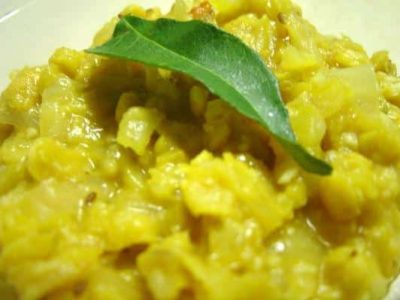
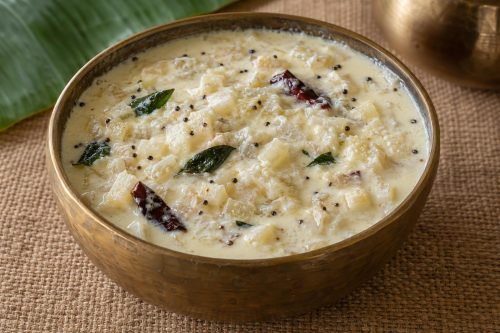
Vazhaithandu Mor Kootu is a Tamil dish that makes good use of the plantain stem, a vegetable that is easy to overlook but cooks well when handled correctly. The base is a roasted masala of fenugreek seeds, dry red chillies, chana dal and cumin, ground with coconut and rice flour to give the gravy body. Curd and fresh coconut milk go in at the end with the heat off, so neither splits nor turns grainy. The result is a mildly tangy, gently spiced kootu that works as an everyday side dish with plain rice.
About the Recipe
The plantain stem needs a little preparation before it goes into the pan. The outer fibrous layers are peeled away to reach the firm core, which is then sliced into discs and chopped small. Soaking the pieces in diluted curd right away keeps them from browning.
The spice paste is built by frying fenugreek, red chillies and chana dal in sesame oil first, then grinding them with raw cumin, green chilli, rice flour and coconut. Rice flour thickens the gravy without making it heavy. Curd and coconut milk go in only at the very end, with the heat off, to keep the texture smooth.
Why You Will Love This Recipe
The spice paste here is well balanced. Fenugreek and dry red chillies are fried until fragrant before grinding, which removes the raw edge and gives the base a rounded, slightly bitter warmth that sits well against the tang of the curd.
The coconut milk added at the end softens everything without making the dish heavy. If you have the plantain stem ready and the masala ground, the actual cooking time is under twenty minutes, which makes this a realistic option for a weekday meal.
Cooking Tips
The most common mistake is adding curd or coconut milk while the pan is still on the heat, which causes both to split. Always remove the pan from the flame before stirring them in.
Do not skip the curd-water soak for the plantain stem. The pieces will discolour within minutes of cutting if left exposed. When frying the masala spices, keep the heat moderate so the fenugreek seeds turn golden without burning. Burnt fenugreek will make the entire dish bitter.
Top Tips
- Immerse chopped vazhaithandu in the diluted curd mixture immediately after cutting to prevent browning.
- Fry fenugreek seeds only until golden, not dark brown, or the finished kootu will taste bitter.
- Remove the pan from heat completely before adding the curd and coconut milk mixture.
- Use sesame oil for frying the masala spices as it suits the flavour of this dish.
- Grind the spice paste as fine as possible so the gravy is smooth and coats the stem pieces evenly.
- Serve the kootu as soon as it is ready since curd-based gravies can turn more sour as they sit.
Serving and Storing Suggestions
Vazhaithandu Mor Kootu is best served hot with plain steamed rice. It also works alongside rasam rice as a second side dish.
Because the gravy contains curd and coconut milk, it does not store well for long. Refrigerate in a sealed container and use within a day. Reheat gently on a low flame and do not let it come to a full boil or the curd will split. The flavour is noticeably better when freshly made.
Similar Recipes
- Mor Kuzhambu
- Milagu Mor Kuzhambu
- Thengaipal Poritha Kootu
- Thengai Paal Mor Kozhambu
- Mullangi Mor Kuzhambu
Nutrient Benefits
Plantain stem is a good source of dietary fibre and contains potassium and vitamin B6. Curd provides calcium and protein. Coconut contributes fats and adds to the overall calorie content of the dish. Fenugreek seeds are a source of iron and magnesium. Together these ingredients make Vazhaithandu Mor Kootu a reasonably balanced vegetarian side dish when served with rice.
Vazhaithandu Mor Kootu
Ingredients
- 1 1/4 cup Curd
- 1 long piece Plaintain Stem (Vazhaithandu)
- 1 1/4 cups, grated Coconut
- For the Masala:
- 2 tsp Sesame Oil
- 1/2 tsp Fenugreek Seeds
- 1/2 tsp Asafoetida Powder
- 4 Dry Red Chillies
- 1/2 tsp Chana Dal
- 1/2 tsp Cumin Seeds
- 1 , chopped Green Chilli
- 2 tsp Rice Flour
- 1/2 cup, grated Coconut
- For Tempering:
- 2 tsp Ghee
- 1 tsp Mustard Seeds
- 1 , halved Dry Red Chilli
- 1 sprig Curry Leaves
Instructions
- Whisk 1 tblsp of curd with 1 cup of water.
- Peel off outer layers of vazhaithandu stem till the core.
- Slice the stem into thin discs and remove excess fibre from the outer edges.
- Chop them into 1/4 inch pieces and immerse immediately in curd mixture to prevent discolouring.
- Mix coconut with 3/4 cup hot water.
- Grind to a paste and extract thick coconut milk.
- Heat oil in a deep pan over moderate heat.
- Add fenugreek seeds, asafoetida, red chillies and dal.
- Fry till spices and chillies are fragrant and dal turns golden.
- Remove from heat.
- Add cumin seeds, green chilli, rice flour and coconut.
- Grind to a fine paste with 1/4 cup water.
- Heat ghee for tempering and add the tempering ingredients.
- When mustard seeds start spluttering, drain vazhaithandu and add with salt and 1 cup water.
- Cover pan and simmer for 10 minutes till vazhaithandu is tender.
- Combine spice paste and 1 cup of curd in a bowl.
- Whisk well and add to pan.
- Stir in coconut milk, mix well and remove from heat.
- Serve immediately with plain rice.
Sign up for our newsletter
Add Awesome Cuisine as a Preferred Source

Frequently Asked Questions
Why does the plantain stem need to be soaked in curd water before cooking?
Plantain stem oxidises quickly once cut and turns a brownish colour within a few minutes. Soaking the chopped pieces immediately in the diluted curd mixture keeps them pale until they go into the pan. Plain water helps to some extent, but the mild acidity in the curd is more effective at slowing the discolouration.
Can I use store-bought coconut milk instead of making it fresh?
Yes, canned or packaged coconut milk works fine. Use about three-quarters of a cup in place of the fresh extract made from one and a quarter cups of grated coconut mixed with hot water. Packaged coconut milk is often richer, so you may want to dilute it slightly with water before adding it to the pan.
What happens if I add the curd while the pan is still on the flame?
The curd will curdle and the gravy will look split and watery. This is the most common reason a mor kootu does not turn out well. Take the pan completely off the heat, whisk the curd and spice paste together in a separate bowl first, then stir the mixture into the cooked stem before adding the coconut milk.
How do I remove the fibre from the plantain stem properly?
After peeling away the outer layers to reach the firm core, slice the stem into thin discs. As you cut each disc you will see fibrous strands running through it. Pull these strands away from the outer edge of each disc before chopping the pieces smaller. If you skip this step the fibre stays stringy in the finished dish.
Can I make the spice paste in advance?
Yes. Fry the masala spices, let them cool completely, then grind the paste with the coconut, cumin, green chilli and rice flour. Store it in a covered container in the refrigerator for up to a day. When you are ready to cook, bring it to room temperature before whisking it into the curd so it combines smoothly without lumps.