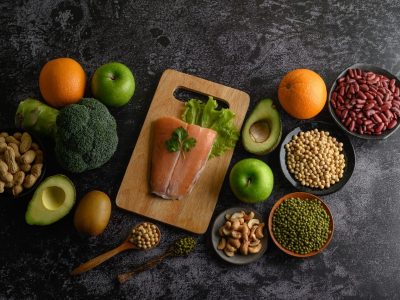
The lipid panel came back a shade past normal, and your doctor said the word every Indian household dreads: cholesterol. Somewhere in the back of your mind, a chorus of aunties starts up. No more ghee. No more fried anything. Say goodbye to that Sunday mutton curry.
Take a breath. That chorus is wrong, or at least only half right. Lowering cholesterol is not about starving your plate of flavour, it is about rebalancing what is already sitting in your kitchen: the dal you make every day, the methi seeds in the jar you never finish, the amla your grandmother swears by. This guide walks through what actually works, backed by the research, not the aunties.
Table of Contents
Key Takeaways
- Soluble fibre from dal, oats, and fruit binds cholesterol in your gut and helps carry it out of the body.
- Swapping saturated fats like vanaspati and excess ghee for mustard oil or groundnut oil improves your LDL-to-HDL ratio.
- Traditional Indian ingredients such as amla, methi seeds, and garlic have real, studied cholesterol-lowering effects.
- You do not need to eliminate ghee or eggs entirely, moderation and balance matter more than total avoidance.
- Most Indian adults with abnormal cholesterol have low HDL rather than high LDL, so raising good cholesterol matters as much as lowering the bad kind.
- Consistent changes typically show up on a lipid panel within two to three months, not overnight.
What Is Cholesterol?
Cholesterol is a waxy, fat-like substance your liver makes and your body needs to build cells and hormones. It travels through your blood attached to two main carriers: LDL, which can deposit into artery walls, and HDL, which carries it back to the liver for disposal. When people say “bad cholesterol”, they mean LDL. When they say “good cholesterol”, they mean HDL.
Why Does This Matter for Indian Kitchens Specifically?
Indian bodies tend to show a different pattern of cholesterol trouble than what most Western diet advice is written for, and that changes what you should actually be eating.
79% of Indian adults studied had an abnormality in at least one lipid parameter, most commonly low HDL rather than high LDL (Joshi et al., ICMR-INDIAB study, PLoS ONE, 2014). That is why an Indian cholesterol diet has to do two jobs at once: bring LDL down and push HDL up, not just cut fat across the board.
This is also why a diet lifted straight from an American cardiology pamphlet, heavy on salmon and avocado, does not always land right for an Indian plate. The good news is that your kitchen already has better tools than salmon does.
Which Indian Foods Actually Lower Cholesterol?
The most effective cholesterol-lowering foods share two things in common: soluble fibre that binds cholesterol in your gut, and healthy fats that shift your LDL-to-HDL balance in the right direction. Here is where Indian kitchens genuinely outperform the generic “eat more kale” advice.
Dal and Legumes
Dal, lentils, rajma, and chana are some of the most cholesterol-friendly proteins available anywhere, not just in India. They carry soluble fibre that binds bile acids in your gut, which forces your liver to pull more cholesterol out of your blood to make new bile. A daily bowl of dal, the kind most Indian households already eat, is doing real work here. Swap in rajma-chawal or a sprouted moong salad a few times a week and you are not adding a chore, you are just leaning into what is already on the table.
Oats and Whole Grains
Oats carry beta-glucan, a soluble fibre that slows how much LDL your gut absorbs. Jowar, bajra, and ragi do something similar with their own fibre profile, and they digest more slowly than polished white rice, which keeps blood sugar and lipid response steadier through the day. Swapping white rice for millet a few days a week, or starting your morning with oats instead of refined cereal, is a small habit that compounds.
Methi (Fenugreek) Seeds
Fenugreek seeds contain saponins that interfere with cholesterol absorption in the intestine, and the fibre in fenugreek leaves works the same way. Soaking a teaspoon of methi seeds overnight and drinking the water on an empty stomach is a home remedy that has actually held up reasonably well in small studies, though it works best as one piece of a broader diet change rather than a standalone fix.
Amla (Indian Gooseberry)
Amla is where Indian kitchens have something genuinely rare: a food with a head-to-head clinical comparison against a prescription statin. Its role in cholesterol goes well beyond the winter murabba jar, and if you want the fuller picture of what it can and cannot do, the site’s guide to amla benefits is worth a look.
500mg of amla taken daily produced cholesterol reductions comparable to the statin simvastatin over six weeks in a controlled trial of 60 patients (Gopa, Bhatt and Hemavathi, Indian Journal of Pharmacology, 2012). This does not mean amla should replace prescribed medication, but it is a genuinely studied effect, not folk wisdom alone.
Garlic
Garlic reduces how much cholesterol your liver synthesises in the first place, largely through allicin, the compound released when a clove is crushed. It is one of the few ingredients that shows up in both traditional Indian remedies and modern cardiology research without much disagreement between the two. A crushed clove or two stirred into your dal or sabzi toward the end of cooking, rather than fried to a crisp at the start, preserves more of that effect.
Isabgol (Psyllium Husk)
If your diet is not getting enough soluble fibre from food alone, a teaspoon of isabgol in warm water before bed is a simple bridge. It swells into a gel in the gut that binds cholesterol much the way oat beta-glucan does, and it is already sitting in most Indian medicine cabinets for digestion, so the cholesterol benefit is essentially a bonus.
Nuts, Seeds, and Curd
A small daily handful of almonds or walnuts brings monounsaturated and omega-3 fats that nudge HDL upward while displacing whatever fried snack you would otherwise reach for. Curd and buttermilk, kept low-fat, add probiotics that some research links to modest improvements in lipid balance, and they are far lighter on saturated fat than cream-based alternatives.
Which Cooking Oil Is Actually Best for Your Heart?
The oil you cook in every single day matters more than any single superfood, because it touches nearly everything on your plate. Here is how the common choices in an Indian kitchen actually compare.
| Oil / Fat | Saturated Fat | Best Use | Effect on Cholesterol |
| Ghee | High | Occasional tadka, festive cooking | Raises LDL if used heavily and daily |
| Vanaspati (hydrogenated) | Very high (trans fats) | Avoid where possible | Raises LDL, lowers HDL |
| Mustard oil | Low | Everyday tempering, sautéing | Improves LDL-to-HDL ratio |
| Groundnut oil | Moderate | Deep frying occasionally, general cooking | Neutral to mildly favourable |
| Olive oil (cold-pressed) | Low | Salads, light sautéing, finishing | Lowers LDL, raises HDL |
| Rice bran oil | Low | Everyday cooking | Improves LDL-to-HDL ratio |
What Does a Cholesterol-Friendly Day of Indian Eating Look Like?
A cholesterol-friendly day does not need a separate shopping list from the rest of your household. It just rearranges the proportions of what is already in most Indian kitchens.
| Meal | What to Eat | Why It Helps |
| Early morning | Soaked methi water, a few walnuts | Saponins and healthy fats start the day’s fibre intake |
| Breakfast | Vegetable oats upma or ragi dosa | Beta-glucan and millet fibre slow cholesterol absorption |
| Lunch | Brown rice or roti, dal, a green vegetable sabzi | Combines soluble fibre with plant protein |
| Evening snack | Roasted chana or a fruit with skin (apple, guava) | Fibre without the saturated fat of fried snacks |
| Dinner | Grilled fish or paneer bhurji with sautéed vegetables in mustard oil | Lean protein plus a heart-favourable cooking fat |
You are not being asked to give up your kitchen. You are being asked to use more of it.
What Foods Should You Cut Back On?
Cutting back is more useful framing than cutting out entirely, because total avoidance rarely lasts and usually is not necessary.
- Vanaspati and other hydrogenated fats, common in bakery items and some packaged snacks
- Deep-fried snacks eaten daily rather than occasionally, samosas and bhajis included
- Processed and cured meats, which carry both saturated fat and sodium
- Excess full-fat dairy like cream and malai, though moderate curd and milk are fine
- Sugary drinks and refined carbs, which do not raise cholesterol directly but worsen triglycerides
What Mistakes Do People Make When Trying to Lower Cholesterol?
A few patterns show up again and again in people trying to fix their numbers, and most of them are easy to correct once you see them.
Relying on one miracle food
Amla is genuinely effective, but eating a spoonful of amla powder while the rest of the day looks unchanged will not move your numbers much. The research behind these ingredients assumes they are part of a broader shift, not a substitute for one.
Cutting out ghee and eggs entirely
Both have been unfairly demonised in the past. Moderate ghee and eggs fit comfortably into a cholesterol-conscious diet for most people; it is the volume and the company they keep on the plate, fried alongside them, that usually causes the trouble.
Ignoring movement and sleep
Diet does the heaviest lifting, but a brisk 30-minute walk most days raises HDL on its own, and poor sleep is linked to higher LDL and inflammation. Skipping this half of the equation slows down everything else you are doing right.
How Long Does It Actually Take to See Results?
Cholesterol does not move overnight, and expecting it to is where most people give up too early. Mayo Clinic cardiologists generally suggest eight to twelve weeks of consistent dietary changes before rechecking a lipid panel, since that is roughly how long it takes for steady habits to show up in the numbers. If your levels are only mildly elevated, diet alone is often enough. If they are significantly high or you have other risk factors, your doctor may combine these changes with medication rather than replace one with the other.
The Last Word
None of this asks you to become a different kind of cook. It asks you to reach for the mustard oil instead of the vanaspati a little more often, to let the dal be the main event instead of the side, and to trust that the amla jar on your grandmother’s shelf was onto something long before anyone ran a clinical trial on it. Go put a pot of dal on tonight. Your heart, and your kitchen, already know the way.
Frequently Asked Questions
Can amla really replace cholesterol medication?
Amla should not replace prescribed cholesterol medication without your doctor’s guidance. Clinical research shows it can meaningfully lower LDL and total cholesterol, in some cases comparably to a low-dose statin, but that finding came from a small trial and should be treated as a complement to medical care, not a substitute for it, especially if your cholesterol is significantly elevated.
How much oats should I eat daily to lower cholesterol?
About 3 to 4 grams of soluble fibre from a standard bowl of oats is a reasonable daily starting point. Research generally points to 5 to 10 grams of total soluble fibre a day for a measurable LDL benefit, so pairing your morning oats with fruit or dal later in the day helps you reach that range.
Is ghee bad for cholesterol?
Ghee is not inherently bad for cholesterol, but it is high in saturated fat and adds up quickly. A small daily spoon used for flavour, rather than as the primary cooking medium for every dish, fits comfortably into most cholesterol-conscious diets.
Do I need to give up eggs if I have high cholesterol?
Most people with high cholesterol do not need to give up eggs entirely. Dietary cholesterol from eggs has a smaller effect on blood cholesterol than saturated fat does for most people, so an egg a few times a week generally fits within a heart-conscious diet unless your doctor has advised otherwise for your specific case.
How fast can Indian home remedies lower cholesterol?
Most home remedies need at least four to six weeks of consistent use before showing any measurable change. Methi water, amla, and garlic all work gradually rather than immediately, which is exactly why pairing them with a broader dietary shift, rather than expecting any single ingredient to work alone, matters so much.