
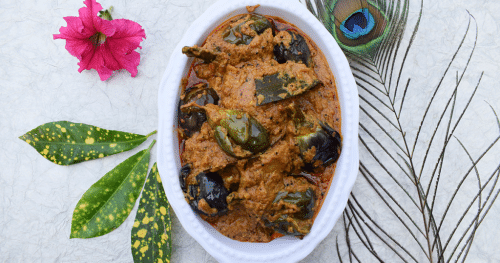
Guthi Vankaya is one of those curries my mother made when she wanted something substantial but did not have much time for prep. She would sit at the kitchen table, slitting brinjals while the masala ingredients toasted on the stovetop. I learned to make this recipe watching her rush through it on busy evenings, and now I turn to it when I need something hearty that does not demand constant attention.
The sesame and peanut masala is what makes this different from other brinjal curries I have tried. It coats each piece and soaks into the slits, giving every bite a nutty, slightly sweet undertone. The tamarind cuts through that richness just enough to keep it from feeling heavy.
About the Recipe
This recipe takes about 45 minutes from start to finish, including the time it takes to grind the masala. Most of the ingredients are pantry staples if you cook Indian food regularly. The brinjals need to be small to medium sized, the kind that fit in your palm, because they cook faster and hold their shape better.
I make this when I want something more filling than a dry sabzi but do not want to deal with lentils or meat. It works well for a simple lunch or dinner, especially if you have leftover rice that needs a good curry to go with it.
Why you will love this recipe
The sesame and peanut masala gives this curry a texture and flavor that plain onion tomato bases cannot match. It thickens the gravy naturally without needing cream or cashews, and the slight bitterness of sesame balances the sweetness from the coconut. The tamarind adds a sour note that keeps the dish from tasting one dimensional.
Once the brinjals go into the pan, they soften without turning mushy if you keep the heat medium low. The whole thing comes together in under an hour, which makes it practical for a weeknight when you want something that tastes like you spent more time on it than you actually did.
Cooking Tips
Beginners often skip soaking the brinjals in salted water, and that leads to them browning too fast or tasting bitter. The salt water also keeps them from absorbing too much oil. Do not rush the onion and tomato base. If the tomatoes are not fully broken down and mushy, the curry will taste raw.
When you add the masala paste, let it cook for a few minutes before adding the tamarind. Otherwise, the raw sesame flavor stays too strong and overpowers everything else. If the gravy looks too thick, add water in small amounts rather than all at once.
Top Tips
- Soak the brinjals in salted water for at least 10 minutes to prevent bitterness and excess oil absorption.
- Grind the masala with just enough water to make a thick paste, not a runny one, so the curry does not become watery.
- Use medium sized brinjals that are firm to the touch. Overripe ones turn mushy and lose their shape.
- Add the tamarind pulp gradually and taste as you go, since tamarind sourness varies widely.
- If you do not have dry coconut, fresh grated coconut works but reduces the shelf life of leftovers.
- Cook the brinjals on medium low heat after adding them so they soften without splitting open too soon.
Serving and Storing Suggestions
This recipe serves four people as a main curry with rice or three people if served with rotis and another side dish. Prep time is about 15 minutes, and cooking takes another 30 minutes. Serve it hot with steamed rice, ghee, and a simple dal on the side. It also pairs well with chapatis or jowar rotis if you prefer.
Store leftovers in an airtight container in the fridge for up to three days. The flavors actually deepen overnight, so the second day tastes even better. Reheat gently on the stovetop with a splash of water if the gravy has thickened too much.
Similar Recipes
- Bagara Baingan
- Ennai Kathirikai
- Stuffed Brinjal Curry
- Vangi Bath
- Baingan Bharta
Nutrient Benefits
Brinjals are low in calories and high in fiber, which makes this curry filling without being heavy. Sesame seeds add calcium and healthy fats, while peanuts contribute plant based protein and magnesium. The dry coconut provides medium chain fatty acids that are easier to digest than other fats. Tamarind is rich in antioxidants and aids digestion, especially after a heavy meal.
Turmeric and coriander seeds both have anti inflammatory properties. This dish gives you a good mix of nutrients without relying on dairy or refined ingredients.
Guthi Vankaya
Ingredients
- 6 to 10 Brinjal
- 2 Tomatoes (big)
- 1 Onions (big)
- 5 Green Chillies (small)
- 1 tbsp Mustard
- 1 tbsp Jeera/Cumin Seeds
- 2 sprigs Curry Leaves
- Tamarind (Medium sized lemon size)
- 6 tbsp Dry Coconut
- 3 tbsp Sesame
- 3 tbsp Peanuts (Non Salted)
- 2 tbsp Dhaniya/Coriander Seeds
- 1/2 tbsp Turmeric
- 1 tbsp Red Chilly Powder
- 2 tbsp Ginger Garlic Paste
- Salt (As per taste.)
- Oil (For seasoning)
Instructions
- Cut the Brinjal such that it has 4 slits keeping the stem. Best way is to cut it from bottom. Soak the Brinjals in water with salt.
- Heat the oil in a pan. Add the Mustard, Jeera, Curry Leaves, Onions, Green Chillies and Ginger Garlic Paste. Fry them till the onions are slight brown.
- Now add the Tomatoes, Salt, Turmeric, Red chilly powder and cook it with a lid on the top of the vessel till the tomatoes becomes mushy.
- Now add the Brinjal into this and cook it with covered lid for 10 minutes.
- In the meantime, prepare the Masala by grinding the Peanuts, Sesame, Dry coconut and Dhaniya into a smooth paste by adding water.
- Also, soak the tamarind in water and extract the pulp.
- Now, add the Masala and the tamarind pulp to the brinjals and cook it until the brinjals becomes soft, you can add water depending upon your requirement.
- Towards the end, garnish it with fresh coriander leaves.
Sign up for our newsletter
Add Awesome Cuisine as a Preferred Source

Frequently Asked Questions
Can I skip soaking the brinjals in salted water if I am in a hurry?
You can, but the brinjals may turn out bitter and absorb more oil during cooking. If you are short on time, at least rinse them under cold water and pat them dry before adding to the pan.
My masala paste turned out too watery and the curry is thin. How do I fix it?
Simmer the curry uncovered on low heat for an extra 10 minutes to let the excess water evaporate. You can also add a tablespoon of roasted gram flour mixed with a little water to thicken it without changing the flavor.
The brinjals are breaking apart and look mushy. What went wrong?
You either cooked them on high heat or stirred too often. Once you add the brinjals, keep the heat on medium low and stir gently only two or three times during cooking. Overripe brinjals also fall apart easily, so choose firm ones.
Can I make this without tamarind?
Yes, use lemon juice or a small chopped raw mango instead. Add it towards the end and adjust the quantity to taste, since lemon is sharper than tamarind.
How do I store leftover masala paste if I made too much?
Freeze it in an ice cube tray and transfer the cubes to a zip lock bag once frozen. Each cube is roughly one tablespoon, so you can thaw only what you need for the next batch.

tried,excellent !!!