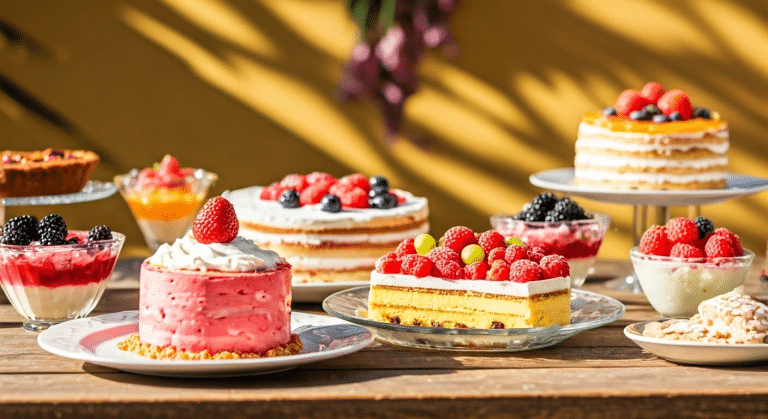
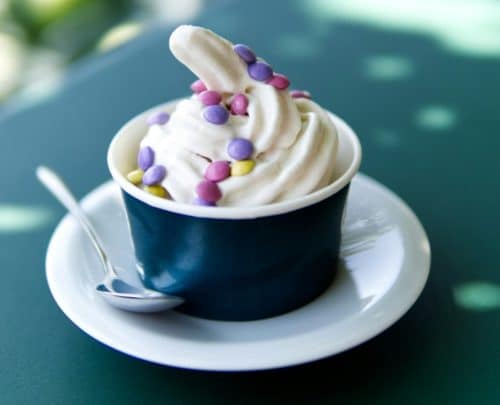
Picture a mall food court on a sweltering June evening. The queue at the frozen yoghurt counter is longer than the one for ice cream, and the couple ahead of you are deep in debate over mango versus Belgian chocolate. The machine swirls out something that looks, sounds and behaves exactly like soft serve. A scoop of crushed Oreo lands on top. Somewhere at the back of your mind, a small voice asks the obvious question: if this tastes this good, how is it meant to be the lighter choice?
That voice has a fair point. Frozen yoghurt has spent decades being sold as ice cream’s virtuous cousin, and like most family reputations, this one only holds up halfway.
Table of Contents
Key Takeaways
- Frozen yoghurt is a fermented milk dessert that is pasteurised and churned much like ice cream, not simply yoghurt that someone left in the freezer.
- Per 100 grams, frozen yoghurt and vanilla ice cream contain almost identical amounts of sugar. The real difference between them is fat, not sugar.
- Live probiotic cultures often do not survive pasteurisation after fermentation, so a “probiotic” claim on the tub is worth checking against the label.
- You can make a respectable batch at home using hung curd, a blender and your freezer. No ice cream machine is required.
- Shrikhand and a chilled glass of lassi are India’s own yoghurt based desserts, and they are worth knowing about before you reach for a froyo cup.
Summer in India runs long, and the instinct to reach for something cold that feels healthier than ice cream is a real one, especially if you are cooking for kids, watching your own sugar intake, or simply tired of dessert feeling like a guilty decision. Knowing what is actually in that cup changes how you order it, how often you eat it and whether it is worth making at home instead.
Frozen yoghurt, often shortened to froyo, is a frozen dessert made by fermenting milk with live bacterial cultures, then blending that yoghurt base with sweeteners, stabilisers and sometimes extra milk fat before churning and freezing it, the same way ice cream is churned.
What Exactly Is Frozen Yoghurt Made Of?
Frozen yoghurt starts as cultured milk, usually skim or low fat, fermented with the same two bacterial strains used in everyday dahi: Lactobacillus bulgaricus and Streptococcus thermophilus. Manufacturers then blend this yoghurt base with sugar, stabilisers such as guar gum or pectin, and occasionally a little extra cream for body, before churning it the way ice cream is churned.
That churning step matters more than people assume. If you have ever tried freezing leftover curd at home expecting something like froyo, you will know the result is closer to a slab of ice than a dessert. Without fat or a stabiliser holding the ice crystals apart, plain frozen dahi turns grainy and hard within hours. You can read more about what regular curd brings to the table in our Top 15 Yogurt Benefits for Wellness Boost guide, since most of those benefits depend on the yoghurt staying unfrozen and unprocessed.
Where Did Frozen Yoghurt Actually Come From?
Frozen yoghurt was invented in New England in the early 1970s, sold under the name Frogurt and served in scoops like ice cream. The dessert did not become a cultural fixture until 1981, when TCBY opened the first self serve frozen yoghurt shop in Little Rock, Arkansas, and turned a niche health food into a mall staple within a few years.
That timeline is worth sitting with for a moment, because India had its own yoghurt desserts centuries before an American shop ever dispensed soft serve from a machine. Shrikhand, the strained yoghurt dessert from Gujarat and Maharashtra, has been finishing festival meals long before froyo existed as a category. Source: International Frozen Yogurt Association.
Is Frozen Yoghurt Really Healthier Than Ice Cream?
Frozen yoghurt is genuinely lower in fat and calories than vanilla ice cream, but it is not meaningfully lower in sugar. The two desserts sit almost neck and neck on that one measure, which quietly undercuts the entire reason most people choose froyo over ice cream in the first place.
Frozen yoghurt (flavours other than chocolate) contains 127 calories, about 3.6g of fat and 20g of sugar per 100g serving. Vanilla ice cream contains roughly 208 calories, 11g of fat and 21g of sugar per 100g. Sources: USDA FoodData Central, frozen yoghurt and USDA FoodData Central, vanilla ice cream.
So the calorie and fat savings are real, particularly if you are watching either number closely. What is not real is the assumption that froyo lets you off the hook on sugar. Pile on cookie crumbs, chocolate sauce or a handful of gummy bears, and whatever advantage the lower fat content gave you disappears within a few spoonfuls.
If a lighter frozen dessert is genuinely the goal, it is worth knowing that India already has one in Badam Kulfi, though kulfi is built on reduced milk rather than yoghurt and tends to run denser and sweeter, so it solves a different problem than froyo does.
Do the Probiotics in Frozen Yoghurt Survive the Freezer?
Some do and some do not, and freezing itself is usually not the culprit. What kills live cultures is pasteurisation carried out after the milk has been fermented, a step several manufacturers use to extend shelf life. A tub that was pasteurised post culturing can legally still say “made with yoghurt” while containing no living bacteria at all by the time it reaches your spoon.
Look for the words “Live and Active Cultures” on the label, which specifically names strains such as Lactobacillus bulgaricus and Streptococcus thermophilus, since manufacturers are not required to disclose bacteria counts otherwise. Source: GoodRx, “Is Frozen Yogurt Good for You?” (2024).
If gut friendly bacteria are the actual goal rather than a cold dessert, a glass of properly fermented lassi will usually beat a froyo cup on this front without the guesswork. Our 15 Lassi Varieties roundup and this Banana Lassi recipe are both built on yoghurt that was never pasteurised a second time.
How Much Sugar Are You Really Scooping Into That Cup?
A half cup serving of plain frozen yoghurt already uses up a meaningful share of a recommended daily added sugar limit, and that is before a single topping goes on. This is not an argument for cutting froyo out entirely. It is an argument for eating it with your eyes open rather than treating it as a free pass.
The American Heart Association recommends no more than 25g of added sugar a day for most women and children, and no more than 36g for most men. A single 100g serving of plain frozen yoghurt can account for roughly 20g of that allowance on its own, before toppings. Source: American Heart Association, Added Sugars.
Froyo’s real selling point was never the sugar count. It was always the lighter mouthfeel, and that part happens to be true.
Frozen Yoghurt vs Vanilla Ice Cream: The Numbers Side by Side
Set the two desserts next to each other per 100 grams, and the picture gets a lot more honest than either tub’s packaging.
| Nutrient (per 100g) | Frozen Yoghurt | Vanilla Ice Cream |
| Calories | 127 kcal | 208 kcal |
| Fat | 3.6g | 11g |
| Sugar | 20g | 21g |
| Protein | 3g | 3.5g |
Data: USDA FoodData Central (FDC IDs 168105 and 167575), linked above.
How Do You Make Frozen Yoghurt at Home Without a Machine?
Making your own froyo means you decide exactly how much sugar goes in, and you skip the post-fermentation pasteurisation question entirely since nothing here gets heated after the curd is made. The method below uses a freezer and a fork instead of a churner, and it works fine in a small Indian kitchen on a weeknight.
Key Ingredients
- 2 cups thick hung curd or Greek yoghurt
- 3 to 4 tablespoons honey or sugar, adjusted to taste
- 1/2 teaspoon vanilla extract (optional)
- 1/2 cup fruit puree, such as mango or strawberry (optional)
- A small pinch of salt
Method
- If your curd is not already thick, hang it in a muslin cloth for 1 to 2 hours to drain off the whey.
- Whisk the drained curd with the sweetener, salt and vanilla or fruit puree until completely smooth.
- Pour the mixture into a shallow, freezer safe container so it sits no more than 3cm deep.
- Freeze for 1 hour, then scrape and whisk vigorously with a fork to break up the forming ice crystals.
- Repeat the scrape and whisk every 45 minutes for about 3 hours, until the mixture turns soft and scoopable.
- Let it firm up undisturbed for a final 30 minutes before serving.
Pro tip: keeping the layer shallow is the real trick here. A thin spread freezes evenly without a machine’s constant churning, while a deep container just gives you a solid block with ice on the outside and slush in the middle.
The most common mistake is skipping the draining step. Curd straight from the fridge carries enough whey to turn icy no matter how often you scrape it, so do not shortcut that hour in the muslin cloth. The second mistake is over-sweetening to compensate for tartness instead of letting the fruit puree do that work, which is how a homemade batch quietly ends up sweeter than the shop bought version it was meant to improve on.
Store-Bought vs Homemade: Which One Actually Wins?
| Factor | Store-Bought | Homemade |
| Sugar control | Fixed by the manufacturer | Fully adjustable to taste |
| Live cultures | Depends on pasteurisation step | Never reheated after culturing |
| Flavour variety | Wide, but standardised | Whatever fruit is in season |
| Equipment needed | None, just a spoon | Freezer, bowl and a fork |
A spoon of shrikhand will out-probiotic most shop-bought froyo on any given day, and it never needed a machine to get there.
So Where Does That Leave Your Next Craving?
The next time that food court machine swirls out a cup of mango froyo with crushed Oreo on top, you will know exactly what you are paying for and what you are not getting. There is nothing wrong with ordering it. Just order it the way you would order any other dessert, as a treat rather than a health decision.
Or skip the queue altogether. Hang some curd tonight, freeze it tomorrow, and call it homemade froyo. Either way, you have earned the spoon.
Frequently Asked Questions
Is frozen yoghurt actually healthy?
Frozen yoghurt is a moderately better choice than ice cream mainly because of its lower fat and calorie content, not because of its sugar content. It can fit into a balanced diet when eaten in sensible portions with light toppings such as fresh fruit. Treating it as a daily habit rather than an occasional dessert is where the health case starts to fall apart.
Is frozen yoghurt the same as ice cream?
Frozen yoghurt and ice cream are different products made from different dairy bases. Froyo starts as cultured, fermented milk, while ice cream starts as sweetened cream with no fermentation step at all. Both are then churned and frozen using similar equipment, which is why they end up looking and behaving so much alike on a counter.
Does frozen yoghurt still have live probiotics?
Frozen yoghurt only retains live probiotics if it was not pasteurised again after the milk was cultured. Checking the label for a “Live and Active Cultures” seal or named bacterial strains is the only reliable way to know, since the word “yoghurt” on its own does not guarantee anything is still alive in the tub.
Can frozen yoghurt upset your stomach?
Frozen yoghurt can occasionally cause mild bloating or discomfort in people who are lactose intolerant, since it remains a dairy product even after fermentation. Versions with live active cultures are sometimes easier to digest because the bacteria have already broken down some of the lactose. Anyone with a known dairy sensitivity should still treat froyo with the same caution as any other milk based dessert.
Can you make frozen yoghurt at home without a machine?
You can make frozen yoghurt at home without an ice cream machine by whisking and re-freezing the mixture every 45 minutes to break up forming ice crystals. The process takes a few hours of occasional attention rather than continuous effort, and a shallow container freezes far more evenly than a deep one. Hung curd, a sweetener and a freezer are really all the equipment this requires.
Photo by Neil Bates on Unsplash