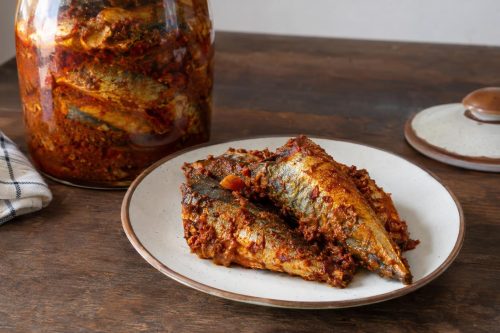
This Pickled Salted Fish Recipe is a preserve-style preparation where mackerel is cured in a vinegar and vodka brine along with a coarsely dry-ground spice paste. The fish is not cooked before pickling. It cures entirely in the jar over several weeks, which gives it a texture and depth of flavour that fresh-cooked fish simply cannot match.
The masala here is ground without water, which keeps it concentrated and helps it cling to the fish. Kashmiri red chillies bring a deep red colour and moderate heat without making the pickle fiery. A large pod of garlic, split between the masala grind and a rough crush sprinkled over the arranged fish, layers the garlic flavour through the whole jar.
When you want to use the pickle, a clean dry spoon is all you need to remove a portion, and a few minutes of shallow frying on each side is enough to finish it.
About the Recipe
The pickling brine here is a combination of vodka and vinegar, and both serve a purpose. The vinegar provides the acidity that preserves the fish and begins to break down the flesh over the curing period. The vodka adds strength to the brine and helps the spices carry through the fish. Feni, a Goan spirit, is listed as an alternative to vodka and would suit the coastal character of this recipe well.
The fish is first washed in diluted vinegar water before any masala is applied. This initial wash cleans the fish and lightly begins the curing process. After coating with the spice paste and turmeric, the fish is packed into a sterilised jar, covered with the remaining liquid and left completely undisturbed for 4 to 6 weeks.
Why You Will Love This Recipe
The strongest appeal of this recipe is that the bulk of the work is done on one day. You wash, coat and jar the fish, and then the pickle does everything else over the following weeks. By the time you open the jar, the fish has absorbed the chilli, garlic and vinegar through to the bone, and a few minutes of shallow frying gives you something with a crust and an intensity that a freshly marinated fish fry cannot replicate. If you enjoy Dry Fish Pickle, this wet-cured version offers a similarly bold result with a softer, more yielding texture.
Cooking Tips
The single most common beginner mistake with this recipe is not ensuring the fish is fully submerged in the vodka and vinegar. Any part of the fish sitting above the liquid can spoil the entire jar. Use a sterilised weight or pack the fish tightly enough that the liquid covers everything. Also, always use a completely dry spoon when removing fish from the jar. Even a small amount of water introduced into the jar can cause the pickle to go off before it is finished.
Top Tips
- Grind the chillies, ginger, cumin, peppercorns and garlic without adding any water. A dry grind keeps the masala thick and helps it coat and stick to the fish properly.
- Sterilise the jar thoroughly before use. Wash it with hot water, dry it completely in a warm oven, and let it cool before packing the fish.
- After arranging the fish in the jar, press it down firmly and check that the vodka and vinegar mixture covers every piece. Top up with more vinegar if needed.
- Always use a clean, dry spoon each time you open the jar. Moisture from a wet spoon is the fastest way to spoil a pickle that has been curing for weeks.
- Do not rush the curing time. Four weeks is the minimum. Six weeks gives the spices more time to work through the fish and the flavour will be noticeably deeper.
- Shallow fry only the quantity you need at the time. The fish keeps well in the jar but loses its pickled character once it has been fried.
Serving and Storing Suggestions
Shallow fry the pickled fish on both sides for a few minutes until the exterior is lightly crisped. Serve it alongside plain steamed rice, which balances the sharp, spiced flavour of the pickle well. It also works as a strong side with a simple dal. Store the jar in a cool, dry place away from direct sunlight. Once opened, always reseal tightly and ensure the remaining fish stays submerged in the brine. Use a dry spoon every time without exception.
Similar Recipes
Nutrient Benefits
Mackerel is a good source of protein and provides omega-3 fatty acids along with vitamins B12 and D. Garlic and ginger contribute small amounts of minerals. Kashmiri red chillies contain vitamin C and give the pickle its colour. Because the fish is cured in vinegar and preserved over several weeks, it is best enjoyed in moderate portions as the sodium and acidity levels in a pickle of this kind are higher than in a freshly cooked fish dish.

Pickled Salted Fish
Ingredients
- 12 to 13, halved Mackerels
- For the masala:
- 30 Kashmiri Red Chillies
- 1 1/2 inch piece Ginger
- 1 pod, large, peeled, crushed Garlic
- 1/2 tblsp Cumin Seeds
- 1/2 tsp Black Peppercorns
- 3/4 tblsp Turmeric Powder
- 1/2 bottle Vodka (or Feni)
- 1 1/4 bottle Vinegar
- 12 to 13 cloves, crushed Garlic
Instructions
- In a bowl combine the vinegar with 3 3/4 bottles of water.
- Wash the fish thoroughly in this and keep aside.
- Grind the red chillies, ginger, cumin seeds, peppercorns and 12 cloves of garlic without using water.
- Mix the fish with this ground masala and turmeric powder.
- Ensure the fish is well coated with the masala.
- Arrange the fish in a clean, sterilised jar and sprinkle the crushed garlic and remaining ground spices over it.
- Pour the vodka and some vinegar over it and ensure the fish is completely submerged.
- Cover and keep aside for 4 to 6 weeks.
- To use, using a clean and dry spoon remove the desired quantity and shallow fry on both side for a few minutes.
- Note: image is for illustration purposes only and not that of the actual recipe.
Sign up for our newsletter
Add Awesome Cuisine as a Preferred Source

Frequently Asked Questions
Can I use a fish other than mackerel for this pickled fish recipe?
Mackerel works well here because it is an oily fish with firm flesh that holds up through the long curing period. Other oily fish with similar firmness, such as sardines or kingfish pieces, could be used. Avoid lean, flaky white fish as they tend to break down too much over 4 to 6 weeks in the acidic brine.
What can I use instead of vodka or feni?
The recipe lists feni as the direct alternative to vodka. Feni is a Goan spirit made from cashew or coconut and would suit this style of pickle very naturally. If neither is available, a neutral grain spirit or even additional vinegar can be used to top up the brine, though the flavour of the finished pickle will differ slightly.
How do I know the pickled fish brine is correct and the fish is safe to eat?
The fish should remain fully submerged in the vinegar and vodka mixture at all times. A properly sealed, sterilised jar kept in a cool dry place and opened only with a dry spoon is the main safety measure. If you see any unusual colour change on the surface of the brine, or if the smell is off rather than sharp and spiced, discard the batch. A well-made pickle will smell strongly of vinegar, chilli and garlic.
Why is the fish washed in vinegar water before the masala is applied?
The initial wash uses vinegar diluted in water to clean the fish thoroughly. This removes any surface impurities and lightly acidifies the fish before the masala coating goes on. It is a standard step in fish pickle preparation and helps the finished pickle stay stable over the curing period.
Can the curing time be shortened to less than 4 weeks?
The 4 to 6 week curing time is what allows the vinegar and spices to fully penetrate the fish. Opening the jar earlier will give you fish that is only partially cured, with an uneven flavour and a texture that has not fully developed. It is worth waiting the full time. If you need a quicker fish pickle, look at a recipe specifically designed for a shorter cure rather than adjusting this one.