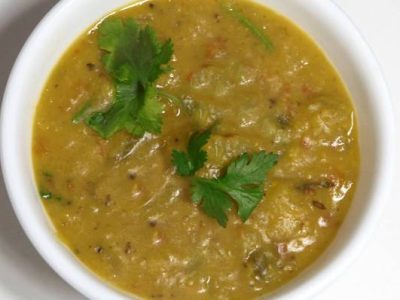
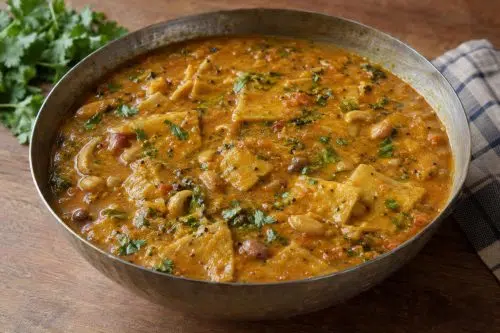
Dal Dhokadi is a traditional Gujarati one-pot dish that brings together two things most Indian kitchens always have on hand: dal and roti dough. The spiced wheat flour pieces, called dhokadi, are rolled thin, cut into small portions and dropped straight into the boiling tuvar dal. They absorb the tamarind-tomato gravy as they cook, turning soft while still holding their shape. The result sits somewhere between a thick dal and a light dumpling dish. It is substantial enough to serve as a full meal with rice, and it reheats well the next day with very little effort. If you enjoy a Gujarati spicy dal, this recipe takes that base a step further by cooking the dhokadi directly in the pot.
About the Recipe
Tuvar dal is pressure cooked until soft, then simmered in a tempering of ghee, oil, mustard seeds, cinnamon, cloves and asafoetida. Pureed tomato, tamarind extract, brown sugar and chilli powder go in next to build the gravy. The wheat flour dough is seasoned with turmeric, chilli powder, ajwain and salt, kneaded to a firm roti-like consistency, rolled out and cut into pieces before being added to the boiling dal. Ten minutes of boiling is enough for the pieces to cook through. Groundnuts and cashewnuts add texture throughout. If you like the idea of a dal with something extra in the pot, a Dal Kadhi is worth a look too, though the flavour here is richer and more robust.
Why You Will Love This Recipe
The dhokadi pieces cook inside the dal itself, so they carry the full flavour of the tamarind, tomato and spice base all the way through. You are not cooking two things separately and combining them at the end.
The groundnuts and cashewnuts give every spoonful something to bite into, which keeps the dish from feeling like a plain dal. It is also genuinely filling. One serving with rice is a complete meal, and the quantities here are generous enough for a family.
It is the kind of dish that is often even better the next day once the dhokadi pieces have had time to settle in the gravy.
Cooking Tips
The most common beginner mistake is making the dough too soft. It should be firm, close to a chapati dough, so the pieces hold their shape in the boiling dal and do not dissolve.
Roll the rotis thin before cutting them. If the dal thickens too much before you add the dhokadi, stir in a little more water. Once the pieces go in, keep the heat at a steady boil for the full ten minutes and avoid stirring too aggressively, or the pieces will break apart.
Taste the dal for salt and sweetness before adding the dhokadi. Adjusting afterwards is harder once the pieces are in.
Top Tips
- Keep the wheat flour dough firm, similar to roti dough. A soft dough will cause the dhokadi pieces to fall apart in the boiling dal.
- Roll the rotis as thin as you can before cutting. Thicker pieces take longer to cook and can remain doughy in the centre.
- Add the dhokadi pieces only after the dal is at a full boil. Adding them to a warm or gently simmering dal will make them sticky and clumped.
- Taste the dal for the balance of sweet, sour and spicy before the dhokadi goes in. Brown sugar, tamarind and chilli powder all need adjusting at this stage.
- Do not cover the pan tightly once the dhokadi is in. A partial cover allows steam to escape and keeps the boil active without the dal boiling over.
- If reheating the next day, add a small splash of water before warming, as the dhokadi pieces will have absorbed more liquid overnight.
Serving and Storing Suggestions
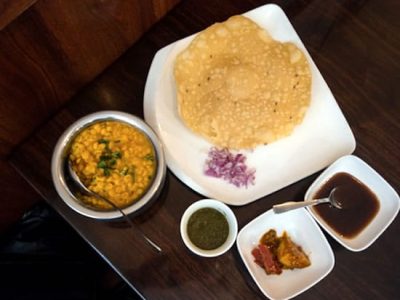
Serve Dal Dhokadi hot or warm, ladled over plain steamed rice. It works as a complete meal on its own, though a simple papad or pickle alongside is a common pairing.
Leftovers keep well in the refrigerator for up to two days. Reheat gently on the stovetop with a little added water, as the dhokadi pieces continue to absorb the gravy as it sits. Stir carefully during reheating to avoid breaking the pieces. Freezing is not recommended, as the texture of the dhokadi changes significantly once frozen and thawed.
Similar Recipes
Nutrient Benefits
Tuvar dal is a good source of plant protein and dietary fibre, which makes this dish more filling than a plain grain-based meal. Groundnuts add further protein, and the wheat flour dhokadi contributes complex carbohydrates. Cashewnuts bring in minerals including magnesium and zinc. Together, the dal and wheat flour in one pot cover a reasonable range of nutrients without needing additional sides.
Dal Dhokadi (Spicy Dal Gravy)
Ingredients
- 500 gms Tuvar Dal
- 50 gms Cashewnuts
- 100 gms Groundnuts
- 400 gms Wheat Flour
- 3 to 4, chopped and pureed Tomatoes
- 5 to 6, slit or chopped finely Green Chillies
- 3 to 4 tblsp Red Chilli Powder
- 200 gms Brown Sugar
- 5 to 6 tblsp Green Chilli Paste
- 2 tblsp Turmeric Powder
- 2 tblsp Garam Masala Powder
- Asafoetida - a pinch
- 2 tblsp Mustard Seeds
- 2 tblsp Tamarind Extract
- 5 Cloves
- 2 tsp Ajwain
- 3 to 4 sticks Cinnamon
- 1 cup, chopped Coriander Leaves
- 7 to 8 tblsp Ghee
- 10 tblsp Oil
- Salt as per taste
Instructions
- Sift the wheat flour.
- Add 1 tblsp turmeric powder, 2 tblsp chilli powder, ajwain and salt. Mix well.
- Add oil and knead the flour to a roti like consistency.
- Pressure cook the dal till 3 whistles. Remove and keep aside.
- Heat ghee and oil in a pan.
- Add the mustard seeds, cinnamon and cloves.
- Once the mustard seeds splutter, add coriander leaves and green chillies.
- Add a pinch of asafoetida.
- Add the cooked dal and mix.
- Add brown sugar, tamarind extract, groundnuts, cashewnuts, chilli powder and garam masala powder.
- Mix thoroughly.
- Add turmeric powder, pureed tomato and 3 to 4 cups of water.
- Add salt and allow it to boil.
- Make small/medium rotis and cut them into pieces.
- Add these into the boiling dal and continue to boil for 10 minutes.
- Remove and keep aside.
- Garnish with coriander leaves.
- Serve hot or warm with rice.
Sign up for our newsletter
Add Awesome Cuisine as a Preferred Source

Frequently Asked Questions
What does dhokadi mean in this recipe?
Dhokadi refers to the small pieces of spiced wheat flour roti that are cooked directly in the dal. The dough is seasoned with turmeric, chilli powder, ajwain and salt, rolled out like a thin roti, cut into small portions and dropped into the boiling dal. They cook for about ten minutes, absorbing the flavour of the gravy while staying soft but holding their shape.
Can I use jaggery instead of brown sugar?
Yes. Jaggery is the more traditional choice in Gujarati cooking and works well here. Use roughly the same quantity by weight, though jaggery can vary in sweetness depending on the type, so taste as you go and adjust. Powdered or grated jaggery dissolves more easily into the hot dal than a solid block.
How do I know when the dhokadi pieces are fully cooked?
After ten minutes of steady boiling, the pieces should be soft all the way through with no raw doughy centre. Press a piece lightly against the side of the pan. If it gives easily without resistance, it is done. If you rolled the pieces thin, ten minutes is usually sufficient. Thicker pieces may need an extra two to three minutes.
My dal became very thick after adding the dhokadi. What should I do?
This is common, especially if the dal was already on the thicker side before the pieces went in. Add hot water a little at a time and stir gently. Add it before the pieces are fully cooked so the extra liquid has time to be absorbed into the gravy. Avoid cold water, as it can stop the boil and affect how the dhokadi cooks.
Can this dish be made without ghee?
You can replace the ghee with additional oil, though the tempering will taste noticeably different. Ghee carries the flavour of the mustard seeds, cinnamon and cloves into the dal in a way that oil does not quite replicate. If you need a dairy-free version, use a neutral oil throughout. The dish will still be flavourful given the quantity of spices, tamarind and tomato in the gravy.