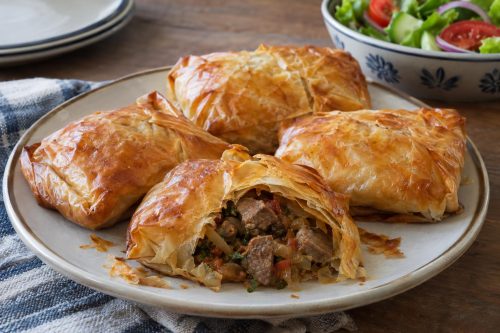
This Lamb in Filo recipe produces four individual pastry parcels, each holding a well-seasoned lamb filling inside crisp, golden filo. The lamb is cooked slowly with onion, tomato, salt, pepper and water for about an hour until tender and most of the liquid has evaporated. The filo is layered and folded envelope-style around the meat, brushed with melted unsalted butter at each stage, then baked for 25 to 30 minutes. You get a satisfying crunch on the outside and a soft, flavourful filling inside.
About the Recipe
The recipe uses two sheets of baklava filo per parcel, stacked and folded to give the pastry enough body to hold the filling without tearing. Cool the lamb mixture completely before wrapping. Warm filling softens the filo and makes it hard to handle. Brushing butter on the edges seals the parcel shut during baking, and lightly greasing the trays stops the base from sticking. The oven temperature of 180C gives the filo time to colour evenly.
Why You Will Love This Recipe
The contrast between the crisp, flaky pastry and the soft lamb filling inside is what makes this worth making. Because the filling is cooked and reduced before wrapping, there is no risk of a watery or undercooked centre. Each parcel is a self-contained portion, which makes serving easy. If you enjoy lamb in yoghurt curry or other slow-cooked lamb dishes, this filo parcel gives you the same quality of tender meat with a completely different texture and presentation.
Cooking Tips
The most common beginner mistake is wrapping the filling while it is still warm. This softens the filo immediately and the parcel can tear or come apart in the oven. Allow the filling to cool fully at room temperature before assembling. Do not skimp on buttering the edges of each parcel, as this is what holds the filo closed during baking. Work quickly with the filo sheets as they dry out and crack when left uncovered.
Top Tips
- Cool the lamb filling completely before placing it on the filo, otherwise the pastry will go limp and be difficult to fold.
- Keep unused filo sheets covered with a clean damp cloth while you work to prevent them from drying out and cracking.
- Brush the edges of each parcel generously with melted butter so they stay sealed during baking.
- Make sure most of the water has evaporated from the filling before removing it from the heat. A wet filling will make the base of the parcel soggy.
- Lightly grease the baking trays before placing the parcels to prevent sticking, especially on the buttered base of each parcel.
- Check the parcels at the 25-minute mark. Filo can go from golden to over-browned quickly depending on your oven.
Serving and Storing Suggestions
Serve the parcels straight from the oven with a crisp green salad or a simple tomato and cucumber salad on the side. They are best eaten immediately while the pastry is still crisp.
If you have leftovers, store them in an airtight container in the refrigerator for up to two days. Reheat in an oven at 160C for about 10 minutes to bring back some of the crispness. Avoid reheating in a microwave as it makes the filo soft and chewy.
Similar Recipes
Nutrient Benefits
Lean lamb is a good source of protein and provides iron and zinc. Trimming visible fat before cooking keeps the filling lighter. Parsley adds a small amount of vitamin C and vitamin K. Filo pastry is lower in fat than shortcrust or puff pastry, though the butter brushed between layers does add to the total fat in each parcel.
Lamb in Filo
Ingredients
- 2 , thinly sliced Onions
- 25 gms Butter
- 750 gms, cut into 1/2 inch cubes Lean Lamb
- 1 , large, thinly sliced Tomato
- 1 tsp Salt
- 1 tsp Black Pepper
- 225 ml Water
- 2 tblsp, finely chopped Parsley
- For Dough:
- 8 sheets Baklava Filo
- 60 gms, melted Unsalted Butter
Instructions
- Heat butter in a large pan.
- Fry the onions until soft and golden.
- Add the lamb cubes to the pan.
- Cover pan and simmer for 5 minutes, stirring occasionally.
- Add the tomato, salt, pepper and water.
- Bring to a boil.
- Reduce heat and simmer for about 60 minutes or until lamb is tender and most of the water has evaporated.
- Remove from the heat.
- Add parsley and keep aside to cool.
- Open up one sheet of filo and brush with the melted butter.
- Place another sheet of filo over the top.
- Brush one half of this second sheet with butter and fold the 2 sheets over so that they are half their original size.
- Place 1/4th of the meat mixture in the centre of the filo.
- Fold the filo over in envelope-style to enclose the meat and brush the edges with butter to hold them down.
- Continue with remaining meat and pastry until you have 4 parcels.
- Brush the surface of each with any remaining butter.
- Lightly grease 2 baking trays and place 2 parcels on each.
- Place in a preheated oven to 180C/350F and bake for 25 to 30 minutes or until the pastry is golden.
- Remove from oven.
- Serve with a salad of choice.
Sign up for our newsletter
Add Awesome Cuisine as a Preferred Source

Frequently Asked Questions
Can I prepare the lamb filling a day ahead?
Yes, and it is actually helpful to do so. Cook the filling, allow it to cool, then refrigerate it overnight in a covered container. Cold filling is firmer and easier to portion onto the filo without spreading. Take it out of the refrigerator about 15 minutes before you plan to assemble the parcels so it is not completely stiff.
What is baklava filo and can I use regular filo pastry instead?
Baklava filo is a slightly thicker variety of filo pastry commonly used in Middle Eastern pastries. Regular filo pastry from a supermarket works perfectly well here. The sheets may be thinner, so you can add a third sheet per parcel if you find the layers tear easily during folding.
My filo kept tearing when I tried to fold it. What went wrong?
Filo dries out very quickly once exposed to air. If you are not working fast enough, the sheets become brittle and crack. Keep all unused sheets covered with a clean damp cloth while you assemble each parcel. Also make sure the filling is cool and not overly wet, as moisture from a warm or liquid-heavy filling can cause the pastry to tear from the inside.
How do I know when the lamb is cooked properly during the simmering stage?
The lamb is ready when the cubes are tender enough to cut easily with a spoon and most of the 225 ml of water has evaporated. This takes about 60 minutes on a low simmer. If there is still a lot of liquid in the pan after 60 minutes, continue simmering with the lid off for a few more minutes until the mixture is nearly dry. A wet filling will make the base of the parcel soggy after baking.
Can I freeze the assembled parcels before baking?
Yes. Assemble the parcels, place them on a lined tray and freeze until solid, then transfer to a freezer-safe container. When ready to bake, place them directly on greased trays from frozen and bake at 180C for 35 to 40 minutes, checking that the pastry is golden and the filling is heated through. There is no need to thaw them first.